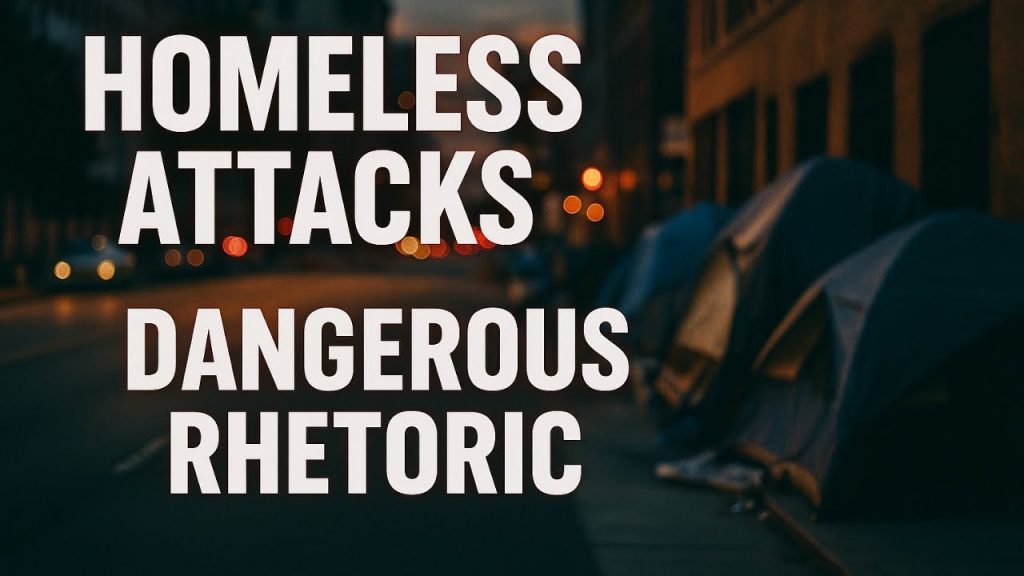
The title “Homeless and Dangerous Rhetoric” shines a light on a pressing issue in political discourse today—the intersection of homelessness, societal attitudes, and the dangers of inflammatory rhetoric. As homelessness rates rise in many urban areas, the discussion surrounding this crisis has become increasingly polarized, with politicians and commentators using the plight of the homeless as a talking point in their larger agendas.

Recent years have seen a significant uptick in homelessness across the United States. Factors contributing to this crisis include economic instability, the lack of affordable housing, and the impacts of the COVID-19 pandemic. In cities like Los Angeles and San Francisco, encampments of homeless individuals have become a common sight, prompting varied responses from local government leaders and communities. Some advocate for compassionate solutions that prioritize housing and supportive services, while others promote a more punitive approach, calling for the removal of encampments and tougher law enforcement measures.
This environment has led to an alarming trend in rhetoric, where politicians and public figures often depict the homeless population with a sense of fear. Descriptions of homelessness increasingly draw associations with crime and danger, which not only misrepresent the vast majority of individuals experiencing homelessness but also perpetuate stigma and discrimination. The way homelessness is discussed in public forums can significantly influence public perception and policy decisions, potentially leading to harmful outcomes for vulnerable populations.
Political candidates and parties must navigate this contentious terrain thoughtfully. The rhetoric surrounding homelessness does not exist in a vacuum; it reflects broader societal attitudes and can feed into a cycle of marginalization. As constituents become more engaged in addressing homelessness, a critical dialogue is needed on how language shapes policy and affect the lives of thousands who find themselves without shelter.
Engaging meaningfully about homelessness is essential not only for effective policymaking but also for fostering a community that prioritizes dignity and respect over divisiveness. As public interest grows, so does the responsibility of those in power to use their platforms to advocate for constructive and compassionate solutions.
Where to Learn More
- National Coalition for the Homeless – A leading organization advocating for the rights of homeless individuals in the U.S.
- U.S. Department of Housing and Urban Development – Federal department that provides data and resources on homelessness and affordable housing initiatives.
- Pew Research Center – Provides research and analysis on societal issues, including homelessness and public perception.
- American Psychological Association – Explores the psychological impact of homelessness and stigma associated with it.
- Brookings Institution – Offers expert analysis on urban development, poverty, and homelessness policies.