
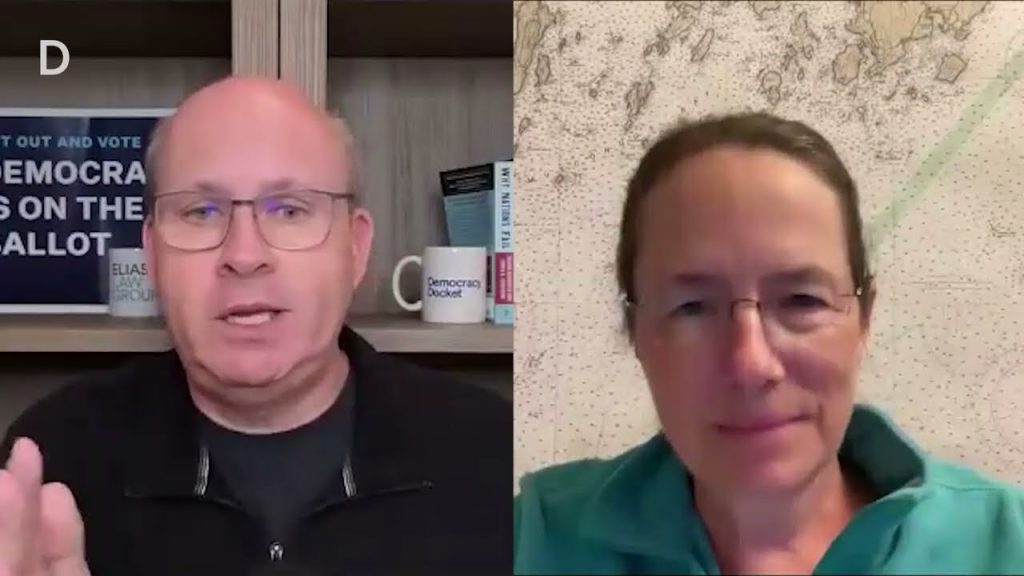
In a stunning critique of contemporary politics, historian and political commentator Heather Cox Richardson argues that the Republican Party is undermining the foundations of American democracy. Titled “Republicans Are Killing Democracy,” her latest discourse delves deep into the alarming trends and actions taking place within the party, suggesting a departure from values fundamental to democratic governance.

The assertion comes at a critical time in U.S. politics, especially as the nation grapples with increasing polarization and public disenchantment with the electoral process. Following the 2020 presidential election, which saw unprecedented challenges to election integrity and the legitimacy of results, Richardson’s remarks resonate with many who are concerned about the safeguarding of democratic norms.
One of the central themes in Richardson’s analysis is the GOP’s embrace of authoritarian tactics and rhetoric. The rise of misinformation, voter suppression laws, and the relentless questioning of election integrity have prompted fears that democracy in America is at a tipping point. With several states enacting stringent voting laws under the pretext of combating fraud, critics argue that these measures disproportionately affect minority and low-income voters, effectively silencing a segment of the electorate.
Historically, the Republican Party has championed principles like individual liberty and government accountability. However, Richardson’s critique highlights a significant shift towards more autocratic strategies in an effort to maintain power. This shift raises questions about the future of bipartisanship and constructive dialogue in U.S. governance, which have been eroded by increasing extremism on both sides of the aisle.
Moreover, Richardson contextualizes her argument within the framework of a broader global trend where democratic institutions are facing challenges from populist movements. She draws parallels between the U.S. political landscape and international examples, underscoring the necessity of vigilance to protect democratic ideals.
As appointed custodians of democracy, it becomes imperative for American citizens to reconsider the implications of partisan actions that might jeopardize the electoral framework. Richardson’s bold assertion invites viewers and readers alike to reflect on these critical issues and their potential repercussions for the future of American democracy.