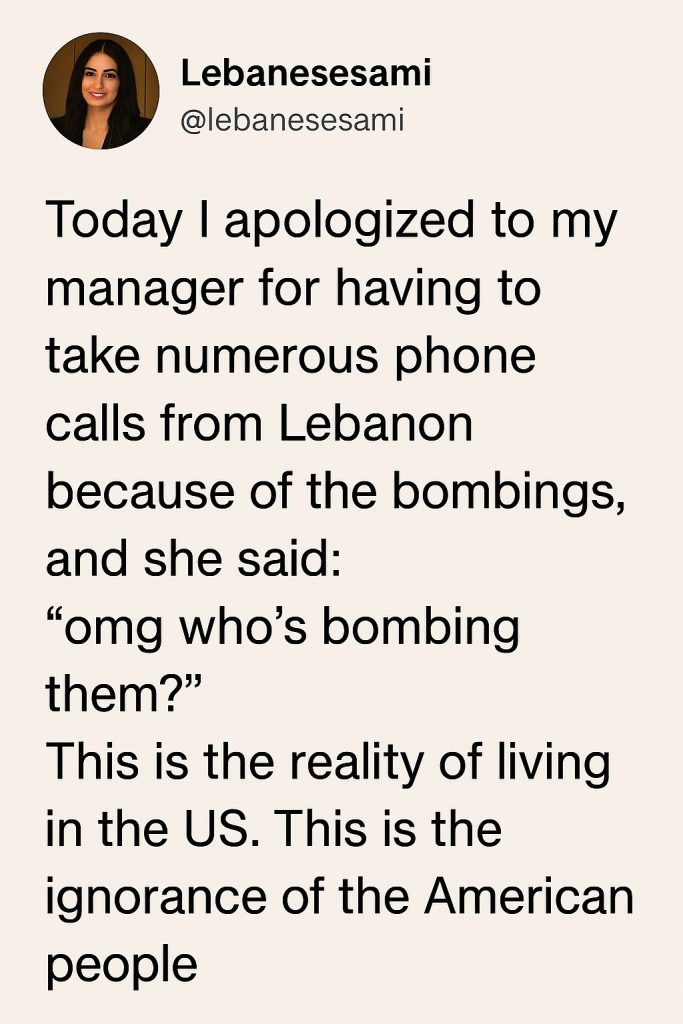
In a recent viral social media post, a Lebanese professional shared a touching moment of vulnerability and empathy after apologizing to their manager for the frequent phone calls related to the ongoing crisis in Lebanon. The incident sheds light not only on the personal toll the conflict is taking on those connected to the region but also on the growing awareness and compassion in workplaces around the world.
The post features a simple yet powerful exchange. The employee explained that they had to take multiple urgent phone calls from Lebanon amid recent bombings, which interrupted their workday. Apologizing for the disruption, they were met with an empathetic response from their manager, who asked, “omg who’s bombing?” This question, seemingly casual, underscores the reality that many outside Lebanon are only just becoming aware of the severity of the situation.
Lebanon has faced a series of violent events in recent months that have deeply affected its people, many of whom maintain close family and business ties abroad. For expats and the diaspora community, these emergencies often mean constant contact with loved ones and increased anxiety — challenges that spill over into their professional lives. The viral post resonates with many who experience similar struggles balancing emotional distress with workplace expectations.
Experts in workplace psychology emphasize the importance of empathy and flexibility during times of crisis. Dr. Layla Mansour, a psychologist specializing in trauma and work-life balance, notes, “Humanitarian crises and natural disasters affect employees worldwide, even if they are miles away. Managers who demonstrate understanding can foster resilience and loyalty.”
This viral interaction is also a reminder of the critical role social media plays in raising awareness of global conflicts. Many users commenting on the post expressed gratitude that the manager’s response reflected kindness rather than frustration. It offers a hopeful example that personal connections to international events can increase sensitivity and solidarity rather than alienation.
As Lebanon continues to grapple with political instability, economic hardship, and violent episodes, the global community is witnessing how such challenges ripple far beyond its borders. The brief but significant manager-employee conversation highlights the human faces behind headlines — individuals striving to maintain their lives amid upheaval.
In light of the increasing frequency of international crises, organizations worldwide are encouraged to provide resources and support for employees affected by global events. Compassionate communication, flexible scheduling, and mental health support are critical tools to help workers manage the complex emotions that arise during such difficult times.
Ultimately, this viral post is a poignant call for empathy and awareness. It reminds us that behind every news story of conflict is a personal story of family, fear, and hope — experiences that ripple across continents and connect us all.
Where to Learn More
- Lebanon Explosions Highlight Crisis Deepening – BBC News
- Lebanon’s Escalating Crisis and Its Impact on Civilians – Human Rights Watch
- Supporting Employees During Humanitarian Crises – American Psychological Association
- Latest Updates on Lebanon Bombings – CNN