A remarkable individual has ingeniously powered an electric car using a DIY battery pack crafted from discarded vapes, highlighting the abundance of valuable resources that often go to waste every day.
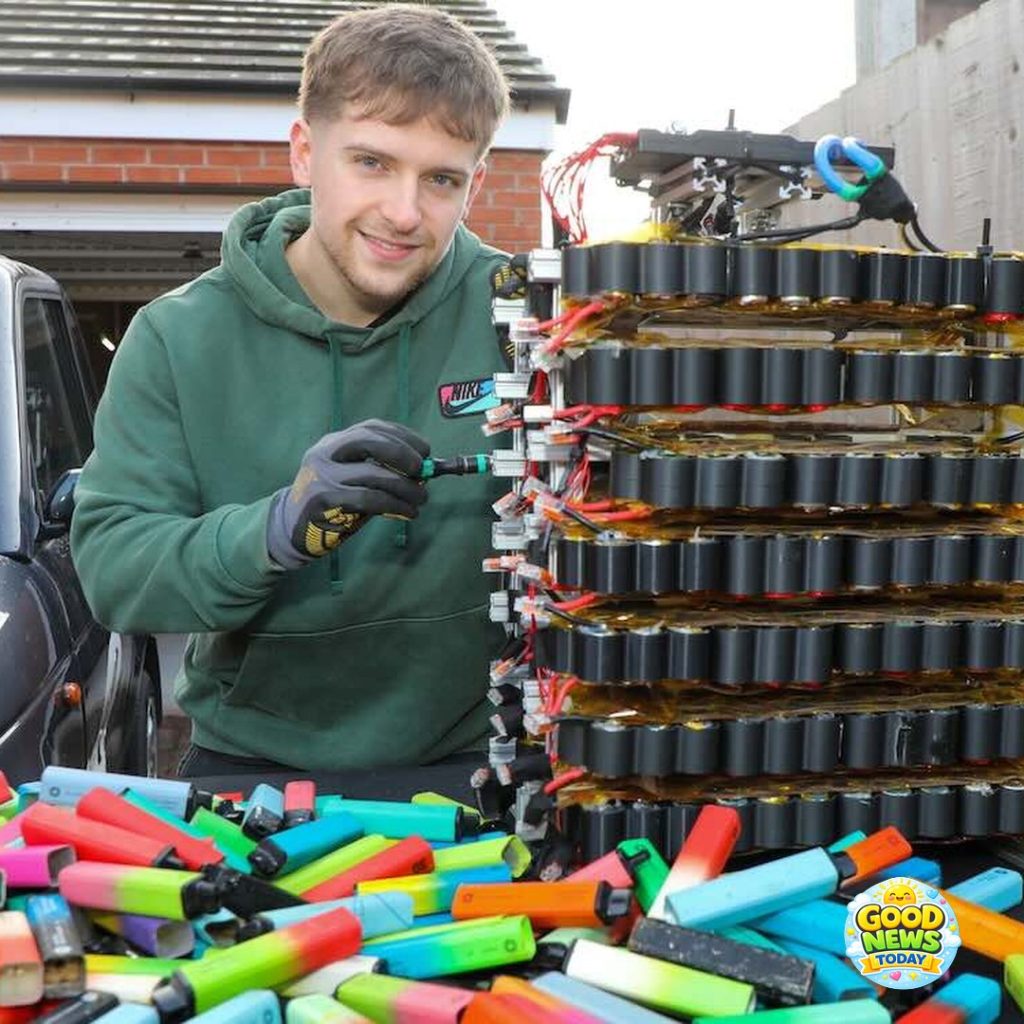
Last year, it was reported that Chris Doel had meticulously extracted lithium batteries from 500 disposable vapes, which he refers to as “fully rechargeable,” to create a power bank substantial enough to supply electricity to his home.
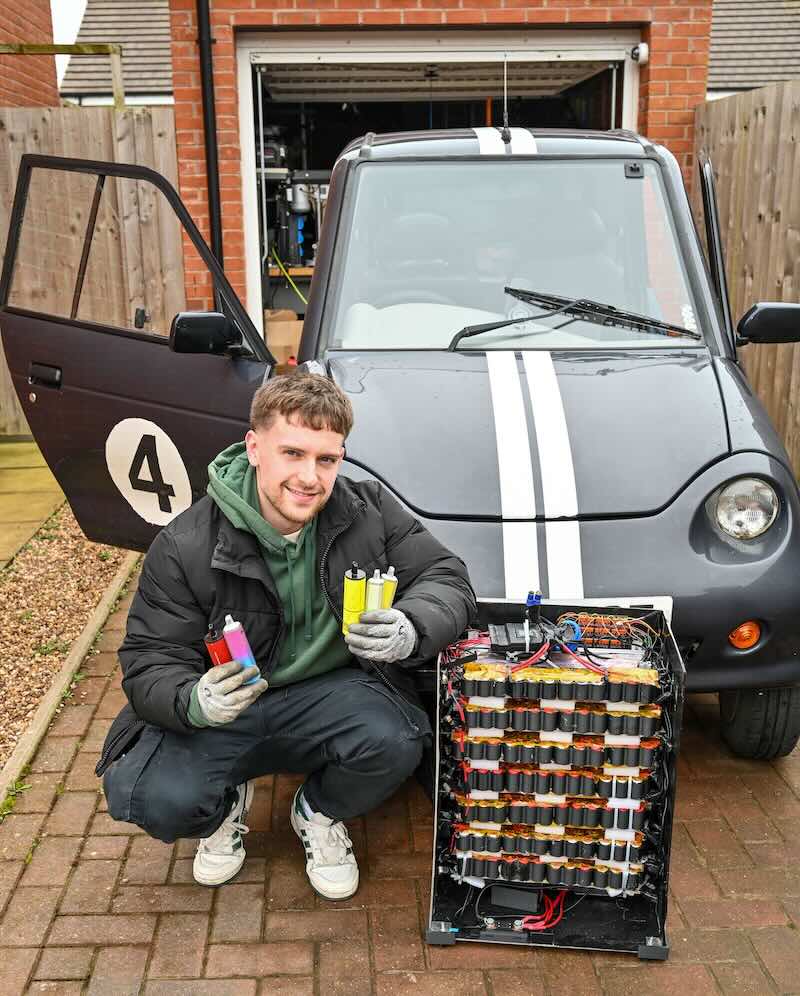
Not one to stop there, the 27-year-old engineer from Warwickshire, England, decided to repurpose the battery pack for an adventurous trip in an electric car. He acquired a 2007 G-Wiz, famously dubbed the worst car of the year by Top Gear, for just £800 and dedicated five months to this exciting project. He finally took it for a test drive last month.
Chris, who humorously refers to himself as “the engineer equivalent of a mad scientist,” documented this exhilarating journey on his YouTube channel, which boasts an impressive 164,000 subscribers. (Check out his latest car video below!)
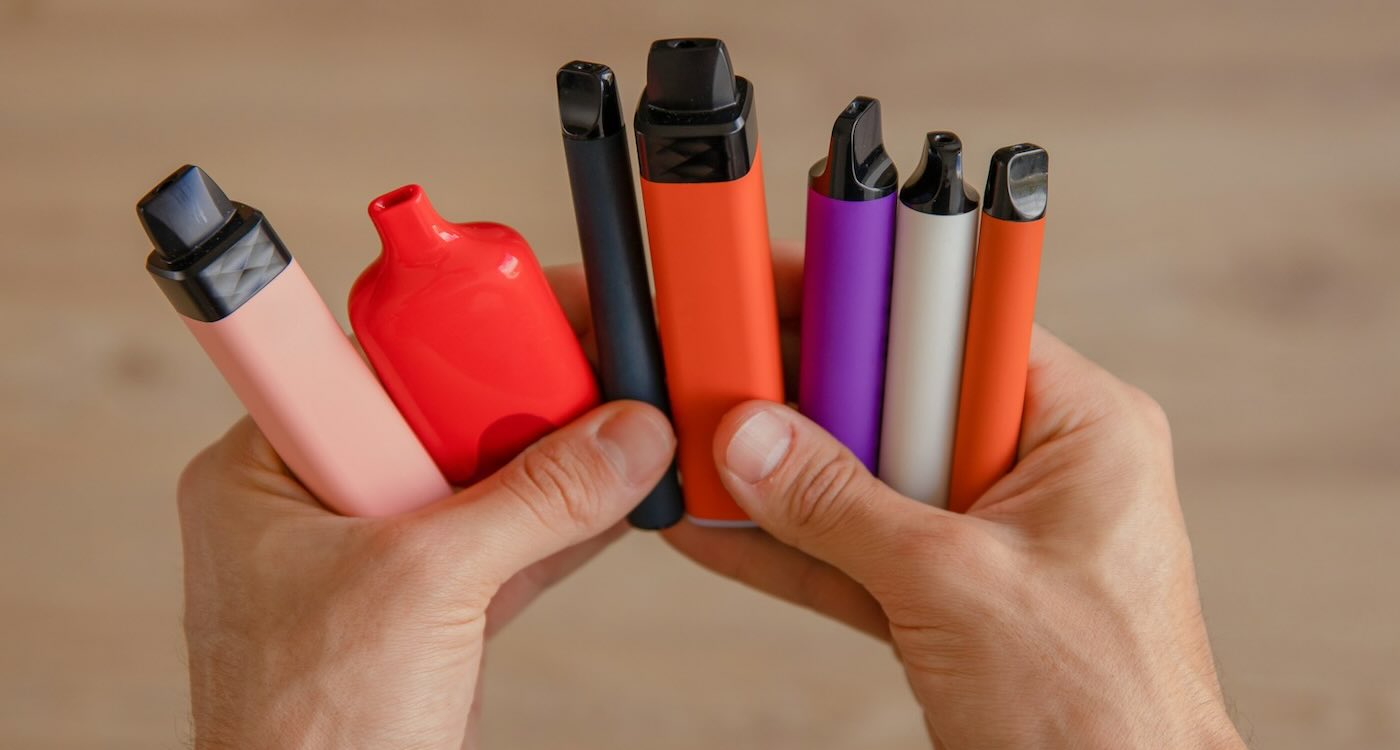
Last May, he visited a local vape shop and inquired if they would be willing to donate their “returns” for his home battery project. To his delight, he walked away with bags filled with 2,000 vapes.
Over six months, during his spare time outside Birmingham, Chris diligently extracted the rechargeable lithium batteries from these devices. He then designed a 3D printed case to group 500 cells wired in parallel and connected in series, resulting in a powerful battery pack.
This impressive pack successfully powered his home for an astounding eight hours before running out of juice. With that achievement under his belt, he eagerly set his sights on his next ambitious project: the car.
“I was discussing with a colleague my desire to power a vehicle, but since EVs typically have such large batteries, I thought it would never be feasible,” Chris shared. “Then, my colleague had the brilliant idea of using the G-Wiz, which has a 48v battery, making it compatible with my power wall.”
This micro-car only requires a battery with a voltage of 48v—significantly lower than Tesla’s 400v. While it has a maximum speed of just 50 mph, it comfortably seats two adults and two small children.
The modified car ran for two hours, covering an impressive 18 miles, all powered by the vape batteries. Chris ensured he was covered by insurance, paying approximately $700 for a year of liability coverage. He remarked, “Considering the unique nature of the battery pack made entirely from vape cells, it was incredibly reasonable.”
Chris dedicated five hours daily after work and an impressive 12 hours each weekend for five months, rewiring the car and sorting out the necessary legal paperwork before finally taking it out for a spin.
“I stripped it all back to redo the wiring, ensuring it was sturdy and reliable. I created a robust enclosure as a precaution,” he explained.
Chris’s innovative project not only showcases his engineering skills but also serves as an inspiring reminder of the creative possibilities that lie within recycling and repurposing materials that would otherwise be discarded.