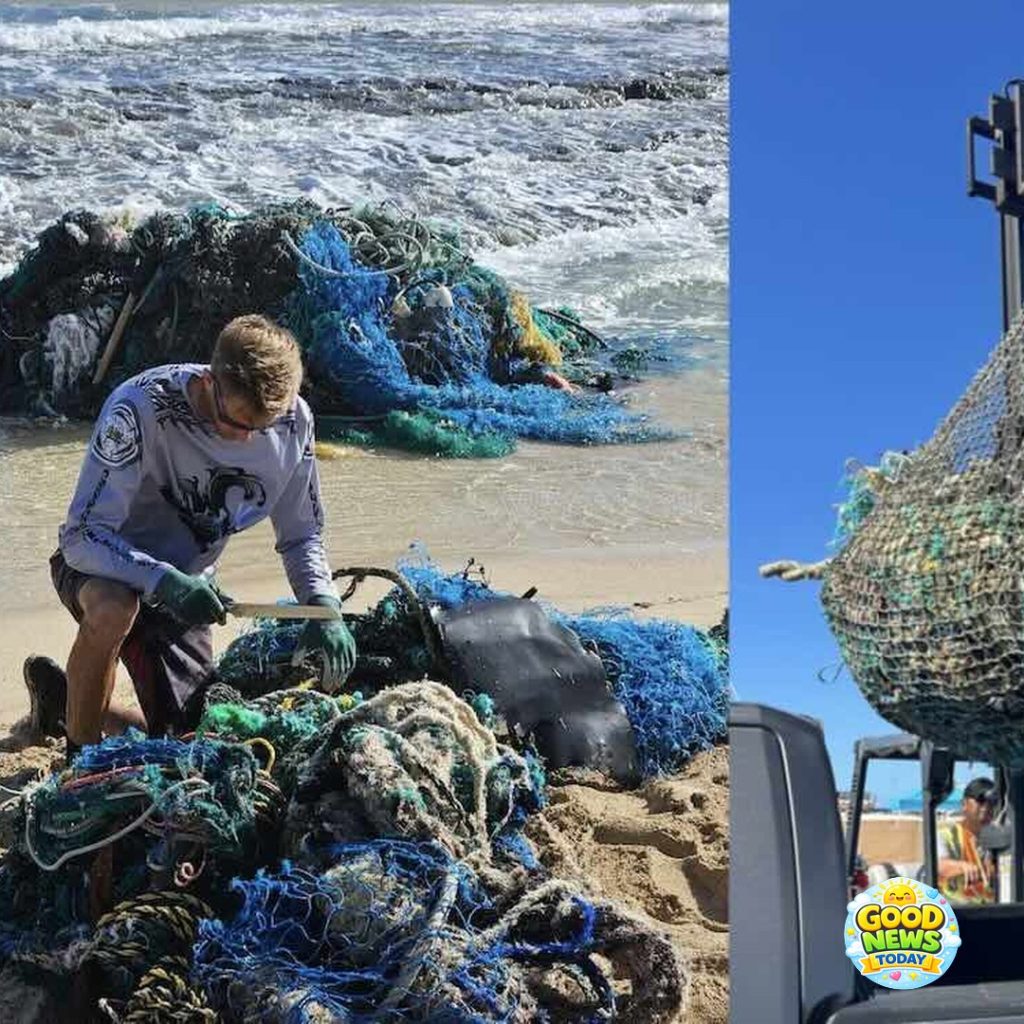
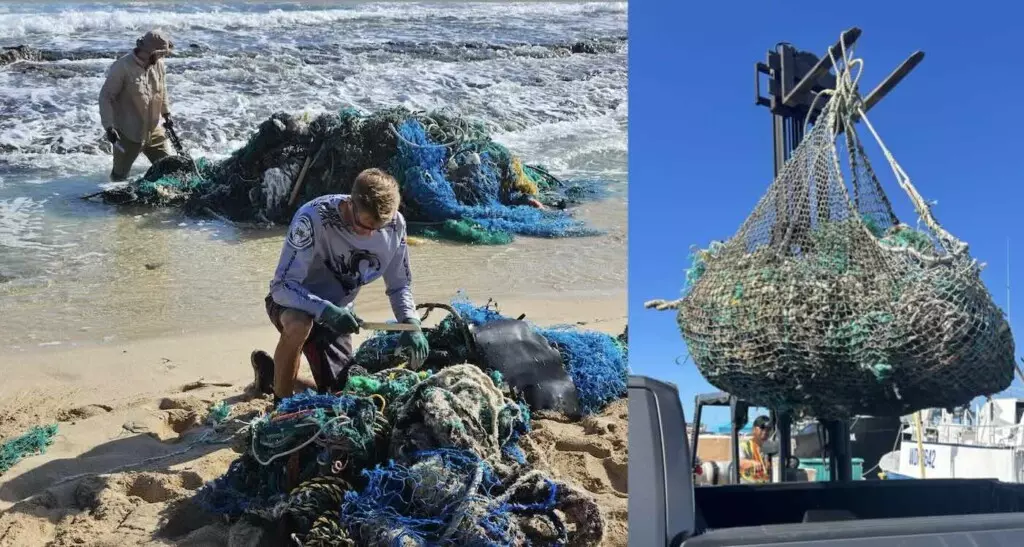
In an inspiring effort over the past three years, Hawaiʻi Pacific University’s “Bounty Project” has successfully removed an impressive 185,000 pounds (84 metric tons) of abandoned fishing gear from the North Pacific Ocean. This initiative cleverly transforms commercial fishing trips into valuable opportunities for ocean cleanup.
By retrieving nets, lines, and floats before they can drift onto reefs, shorelines, or pose a threat to endangered marine life, the Bounty Project stands out as one of only three known initiatives tackling the debris in the remote North Pacific Garbage Patch.
Launched in November 2022 by the University’s Center for Marine Debris Research (HPU CMDR), the Bounty Project is based on a simple yet effective idea: engage the fishermen who are already working at sea to be part of the solution.
While some irresponsible fishing practices lead to harmful “ghost gear,” the project emphasizes the importance of economic incentives. Through partnerships with the Hawaiʻi Longline Association and the Hawaiʻi Department of Land and Natural Resources, eligible commercial fishermen receive compensation for retrieving derelict gear during their regular fishing activities. This proactive approach ensures that debris is removed from the ocean rather than waiting for it to wash ashore.
“It’s amazing that we are nearing the 200,000-pound mark of gear removed from the ocean through this project,” remarked HPU CMDR Project Manager Katie Stevens. “The enthusiasm and commitment from the commercial fishers as stewards of the ocean has been truly inspiring.”
Supported by a 2022 grant from the National Oceanic and Atmospheric Administration (NOAA) Marine Debris Program, along with matching funds from Ocean Conservancy, the Bounty Project has enhanced its capacity for gear removal and strengthened its recovery systems and partnerships.
Mark Manuel, NOAA Marine Debris Program’s Pacific Islands Region Coordinator, highlighted the project’s innovative approach: “Partnering with commercial fishers for a solution maximizes both efficiency and environmental benefits, making this initiative stand out.”
A total of 77 commercial fishermen have conducted over 690 removals of ghost gear, ensuring that the items retrieved are either reused, recycled, converted for energy recovery, or disposed of responsibly.
Remarkably, non-longline fishermen have removed gear within 12 hours of first detection 88% of the time, effectively preventing debris from causing repeated damage to sensitive habitats.
The project also includes monthly monitoring of delicate reef habitats, such as Kāneʻohe Bay, which facilitates rapid-response recovery efforts when derelict gear poses an immediate threat.
Hank Lynch, a participating fisherman, shared, “The financial incentive has fostered friendly competition among us, leading to a swift response in removing nets from reefs and giving corals a better chance at survival.”