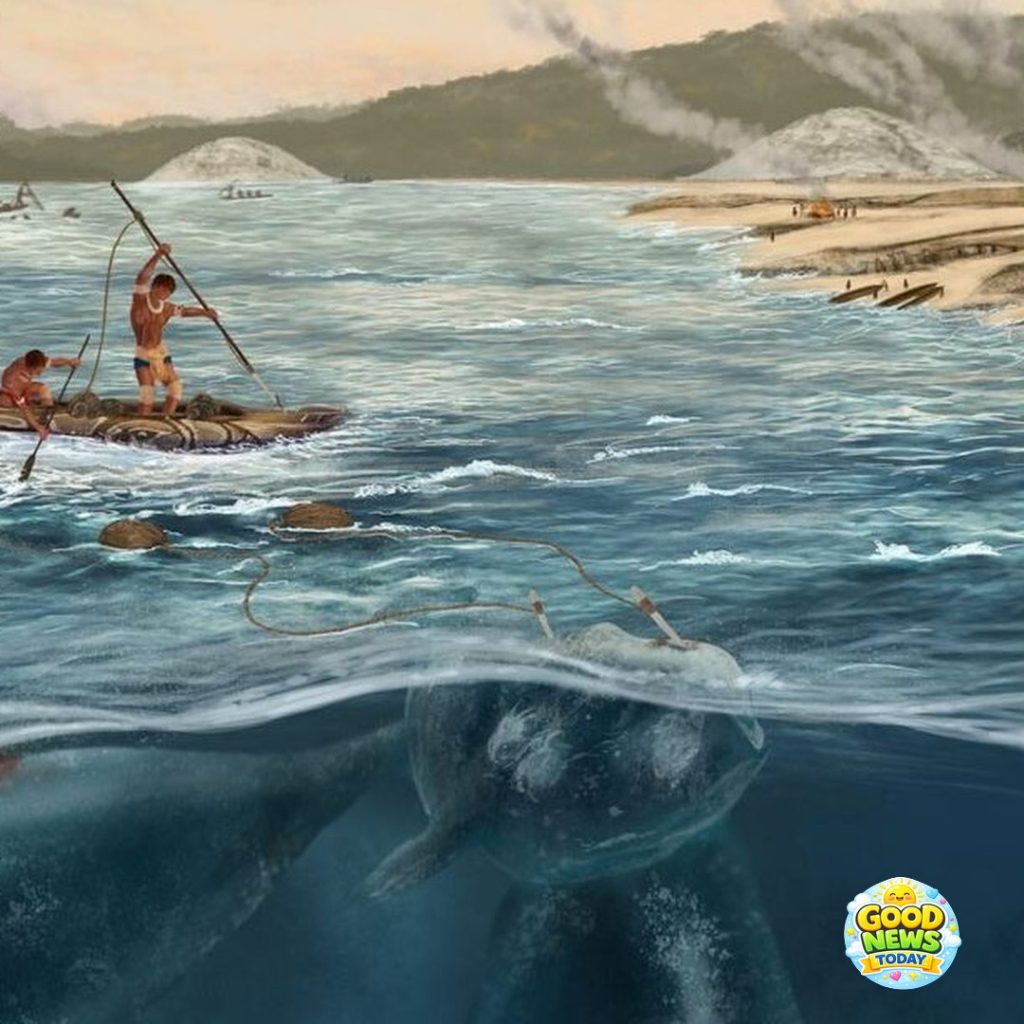
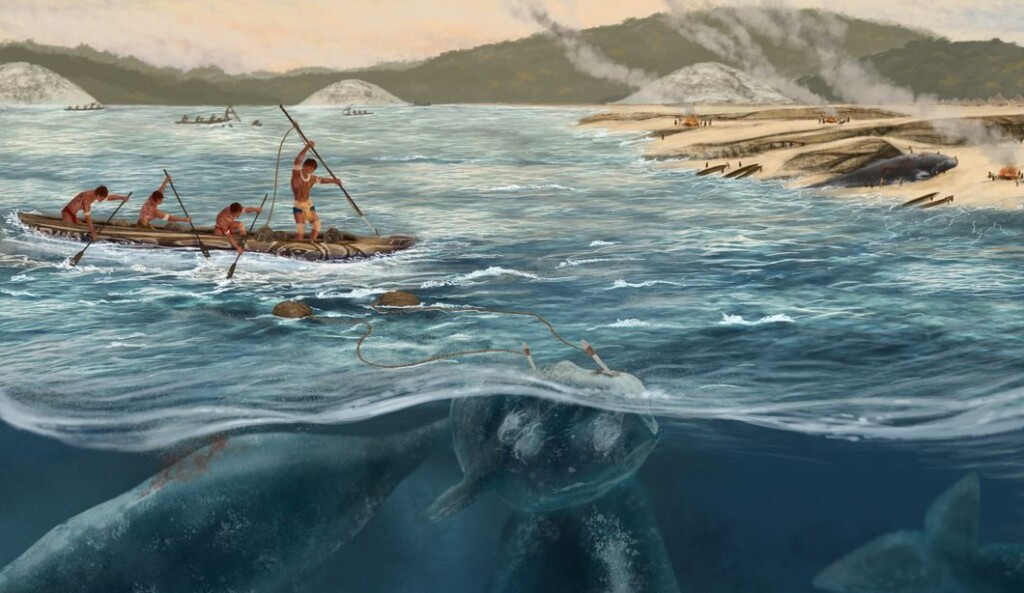
How does one hunt a whale using a boat constructed from logs tied together with vines and a harpoon fashioned from animal bone? This intriguing question arose for Spanish researchers who uncovered fascinating evidence in a museum located in southern Brazil, revealing that indigenous peoples were engaged in the whaling of massive baleen whales, such as the humpback, a remarkable 5,000 years ago—long before the advent of sailing and metallurgy.
A recent study analyzing these museum artifacts suggests that the communities in this region held whales in high esteem, not only as valuable game but also as the focal point of a significant and possibly sacred activity: whaling.
The evidence was unearthed from the site surrounding Brazil’s Babitonga Bay, where extensive coastal development from 1940 to 1960 led to the dismantling of numerous man-made shell mounds, known as “sambaquis.” Archaeologists recovered around 9,000 artifacts from these mounds, which were subsequently stored in a local museum. Among these treasures were whale bones found interred alongside human skeletons.
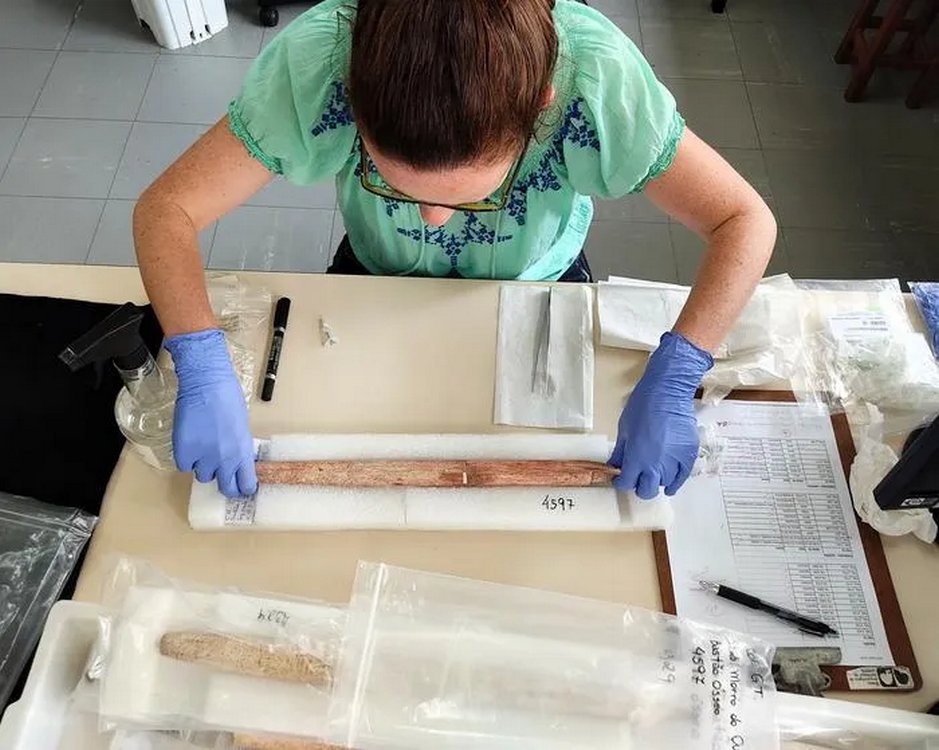
Years later, a collaborative effort by researchers from Spain and Brazil brought renewed attention to these artifacts. According to Smithsonian Magazine, André Carlo Colonese, one of the researchers, was captivated when he first glimpsed the whale bones. “The curators went in back and brought out dusty boxes with whale bone artifacts inside,” Colonese shared with Science. “The moment they took them out, I said, ‘Guys, these are harpoons.’”
Utilizing cutting-edge techniques, Colonese, a study co-author from the Autonomous University of Barcelona, and his colleagues confirmed that the harpoons were crafted from the bones of southern right whales, humpback whales, sei whales, and even the majestic blue whale, the largest creature on the planet.
Given the size of these magnificent beings, it’s no surprise that the harpoons were impressively long—longer than the forearm of lead author Kristina McGrath. “The data reveals that these communities possessed the knowledge, tools, and specialized strategies to hunt large whales thousands of years earlier than we had previously assumed,” McGrath stated.
Interestingly, it is believed that whaling practices began among postglacial societies in North America approximately half as many years ago. Previously, it was thought that the sambaqui builders crafted their tools from deceased whales that had washed ashore—the most logical explanation considering the immense force needed to spear such a giant from a raft in a time before iron tools were available.
With a lifestyle heavily reliant on marine resources, one can envision the monumental significance of capturing a whale—a truly invaluable resource worthy of great celebration.
“You can imagine a big feast where everyone enjoys a bounty of meat and blubber, while simultaneously collecting oil,” Colonese remarked to National Geographic. “The oil can be stored for extended periods and used as fuel.” This remarkable find not only sheds light on ancient practices but also highlights the deep connection humans have had with the ocean and its majestic inhabitants throughout history.