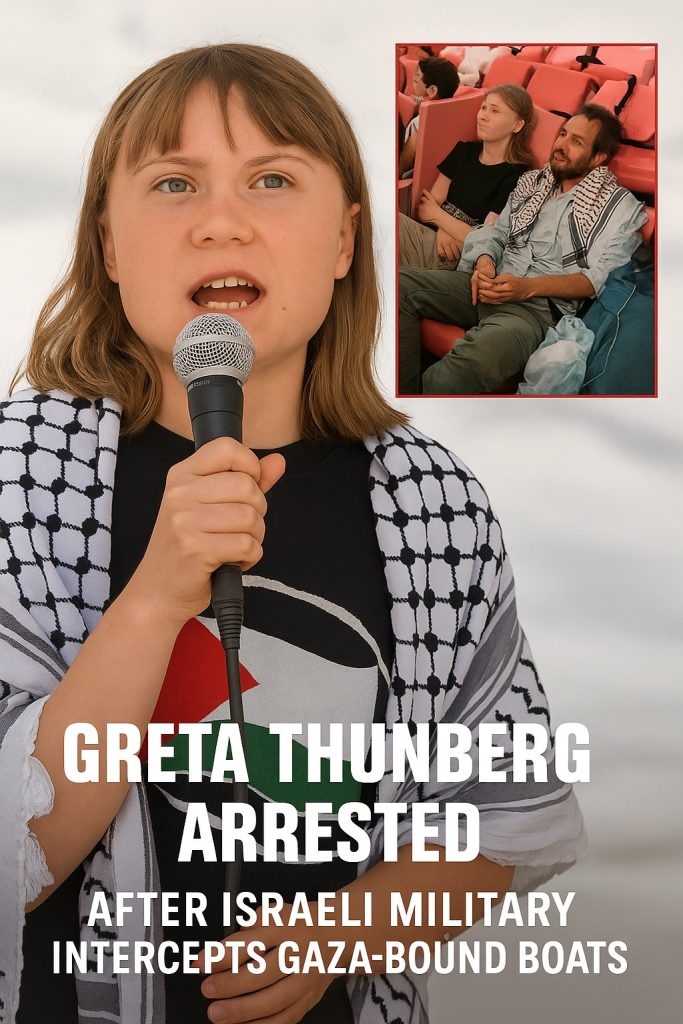
In a dramatic turn of events, renowned climate activist Greta Thunberg has been detained along with dozens of other activists after their vessels were intercepted by Israeli military forces during the largest attempted Gaza-bound flotilla in recent history. The incident unfolded in international waters, capturing global attention and igniting fervent discussions on social media.
The flotilla, composed of multiple boats aiming to bring humanitarian aid to the beleaguered region of Gaza, set sail with the hopes of challenging the restrictions placed by Israel on maritime access. However, Israeli naval forces acted swiftly to halt the vessels, citing security concerns and violations of maritime law. As a result, activists aboard the ships found themselves in a precarious situation, leading to the detention of over 50 individuals, including Thunberg, who has become an emblematic figure in the climate justice movement.
The organizers confirmed that only one vessel remains at sea, reportedly just a few miles from Gaza before contact was lost. Speculation surrounds the fate of this last boat as concerns grow for the safety of both the vessel and its occupants. Eyewitness reports indicate that the situation is tense, with the world watching closely to see how it unfolds.
As news of Thunberg’s detention spread, social media erupted with reactions. Supporters praised her courage and commitment to pressing social issues beyond climate change, while critics questioned the safety and legality of the flotilla’s mission. A viral image accompanying these discussions features the words “GRETA THUNBERG ARRESTED AFTER ISRAELI MILITARY INTERCEPTS GAZA-BOUND BOATS,” amplifying calls for her release and sparking debates over the political implications of the interception.
Thunberg, who gained international recognition for her advocacy on climate change, has been increasingly vocal on various global issues, including human rights. This incident illustrates not only the multifaceted nature of her activism but also the intersection of environmental and humanitarian crises, a reminder that these global challenges are often interconnected.
Humanitarian organizations have already voiced their concerns over the Israeli interception, stating that it undermines the critical need for aid to reach vulnerable populations in Gaza. Activists assert that the boats were carrying essential supplies, including medical equipment, food, and other necessities, aimed at alleviating the ongoing humanitarian crisis in the region.
International responses to the flotilla’s interception range from calls for condemnation to demands for increased dialogue around Gaza. Activists and officials alike are urging the Israeli government to reconsider its naval blockade policies and allow humanitarian assistance to reach those in need. The global community is now poised to respond to the developments, as the fate of the remaining vessel and its passengers hangs in the balance.
As the world awaits further updates on the situation, Greta Thunberg and her fellow activists’ risks underscore the enduring fight for justice and human rights in the face of adversity. Activists and their supporters continue to rally online, using hashtags and coordinated efforts to bring awareness to their plight and the issues they represent.
Where to Learn More
- “Israeli forces intercept Gaza-bound flotilla, detaining activists including Greta Thunberg” – BBC News
- “Activists Fear Humanitarian Crisis in Gaza After Flotilla Arrest” – Reuters
- “Greta Thunberg Among Activists Detained After Gaza Flotilla Intercepted” – Al Jazeera
- “Live Updates: Israel Intercepts Flotilla, Detains Activists” – CNN
- “A Cruzade for Justice: Thunberg and Activists Detained During Gaza Mission” – The New York Times