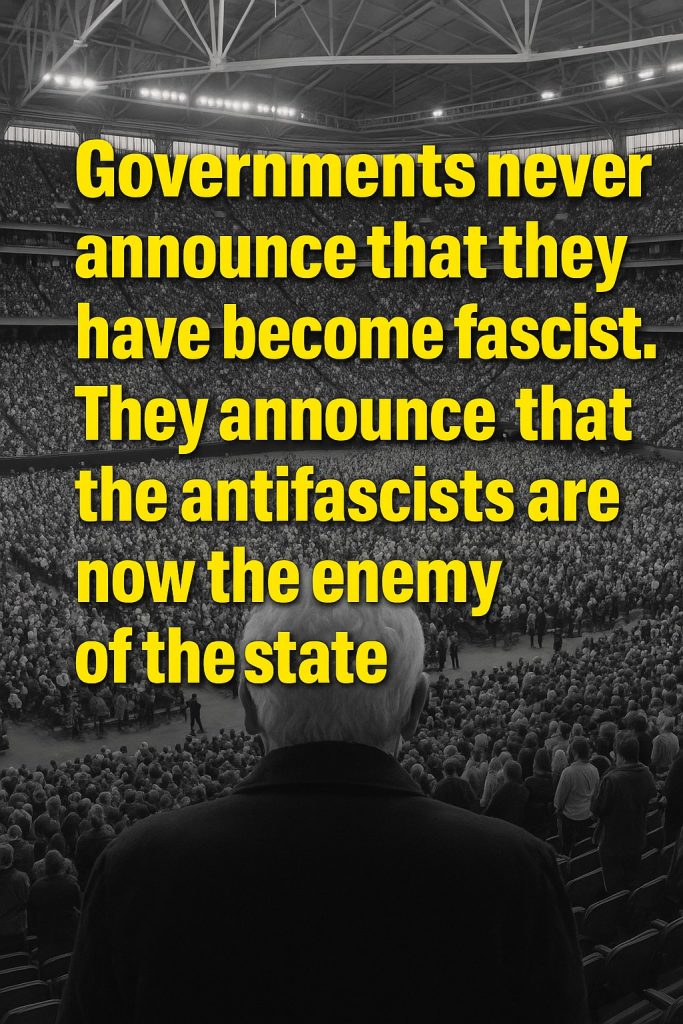
In an age dominated by social media, powerful messages can go viral in an instant. One recent graphic, featuring the chilling declaration that “Governments never announce that they have become fascist” and that “the antifascists are now the enemy of the state,” has sparked a global conversation about the state of civil liberties and political freedoms. The image, shared widely across various platforms, has resonated particularly with those who advocate for democracy and human rights.
This provocative statement captures the essence of a modern paradox: the blurring line between government authority and citizen dissent. As political landscapes shift worldwide—often in alarming directions—many citizens have begun to question the very essence of their governments’ mandates. Gone are the days when authoritarianism was only a concern in distant lands; now, it seems these worries are creeping closer to home.
Historically, governments have rarely branded themselves as fascist. Instead, they often cloak their actions in the language of law and order, framing dissenters as threats to national security. The assertion that “the antifascists are now the enemy of the state” is a potent reminder of how language and perception are wielded in the political arena. It’s a warning shot that is reverberating in many corners of the globe where leaders are tightening their grip on power, often under the pretext of responding to perceived threats from those who advocate for social justice and equality.
This scenario has unfolded in various forms, from arrests of peaceful protestors to the implementation of laws stifling free speech. For example, in many countries, legislation designed to curtail disruptions to public order has been controversially interpreted to target activists, labeling them as extremist or anti-state actors. Such tactics raise serious ethical questions: Can a government truly claim to be democratic while systematically dismantling the very foundations of dissent?
The viral image also evokes a strong response among various groups and individuals. Many antifascist organizations view it as a rallying cry to defend their positions against any attempt at silencing opposing voices. As protests and movements gain momentum across the world, close scrutiny of government tactics becomes vital. The challenges are compounded, as social media serves as both a tool for mobilization and a battleground where ideas are contested in real-time.
The implications of these trends extend beyond national borders. Global cooperation is essential to ensure that human rights are not trampled beneath the boots of authoritarianism. Activists warn that complacency could lead to the normalization of oppressive practices. Thus, citizens across the world are being urged to stay vigilant and engaged.
As we navigate this complex terrain, it’s crucial to foster informed dialogue about the rights of individuals versus the roles of governing bodies. Citizens must not only question the actions of their governments but also protect the freedoms that create a just society. In this volatile climate, the conversation surrounding the dynamics of state power vs. citizen rights is more relevant than ever.
As calls to action continue to surface, the viral image stands as both a catalyst and a reminder that the fight for freedom, equality, and justice is ongoing. Whether through peaceful protest, digital activism, or public discourse, the collective resolve to push back against oppression remains resolute.
Where to Learn More
- Governments vs Antifascists: Global Concerns – Human Rights Watch
- Free Speech and Activism in Danger – Amnesty International
- The Rise of Fascism: A Threat to Rights – The Guardian
- World Leaders Crack Down on Dissent – BBC News