The White House has officially announced that the United States federal government is set to shut down following a critical failure in the Senate to pass a much-needed spending bill. This news, which was shared through social media channels, has sent shockwaves across the nation, highlighting the ongoing struggles within Congress to find common ground on federal funding.
After intense negotiations, Senate leaders were unable to garner the necessary votes to approve the bill aimed at keeping federal agencies funded beyond the current fiscal year. As the clock ticks down, the ramifications of this shutdown loom large, affecting countless Americans who rely on government services and programs.
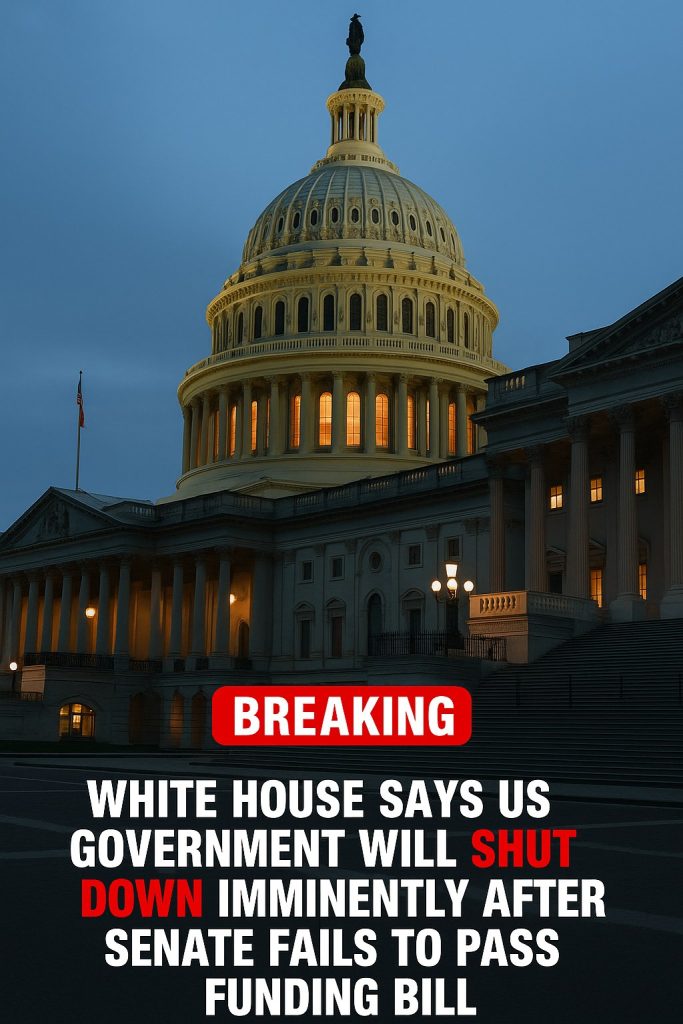
The announcement was highlighted in a striking image shared widely on social media, showcasing the Oval Office with the caption, “BREAKING: White House says US government will shut down imminently after Senate fails to pass funding bill.” The urgency of the situation is palpable, raising questions about the political dynamics at play and the potential consequences for government employees and citizens alike.
President Biden, responding to the announcement, expressed disappointment over the Senate’s inability to reach a consensus. “This impasse not only puts federal workers at risk of furlough but also compromises essential services provided to American families,” he stated in a press briefing. White House officials are now mobilizing efforts to mitigate the impacts of the impending shutdown and are urging bipartisan cooperation in resolving the fiscal crisis.
During a time when issues such as inflation, healthcare, and national security are at the forefront of public concern, the failure of congressional leaders to agree on fiscal policies has left many citizens frustrated and anxious about the role of their government. As federal workers and other stakeholders brace for extended repercussions, discussions about the length of the shutdown and its specific impacts are ongoing.
The repercussions of a government shutdown are profound. Essential services such as Social Security payments, veterans’ benefits, and many other federal programs may face delays or interruptions. National parks and federal museums could close their doors, impacting local economies. Furthermore, thousands of federal employees may face furloughs, leading to financial uncertainty.
Political analysts suggest the implications of this shutdown could ripple through the upcoming elections, affecting the favorability of those involved in the standoff. “Voters remember these moments,” said political strategist Jenna Reynolds. “The blame game will soon begin, and it will be interesting to see how each party navigates the fallout.”
As of now, the clock is ticking, and both sides of Congress have increasingly indicated that urgent conversations are necessary to avert this crisis. The American public is watching closely, with many hoping for a swift resolution to ensure that vital government functions remain intact.
As the nation awaits the next steps, the question remains: how will Congress address this setback, and what will it mean for the future of governmental efficacy and public trust?
Where to Learn More
- Senate Fails to Pass Funding Bill, Government Shutdown Looms – The New York Times
- Government Shutdown Imminent After Senate Block – The Washington Post
- Explainer: Imminent Government Shutdown and Its Impacts – ABC News
- US Government Shutdown: All You Need to Know – BBC News