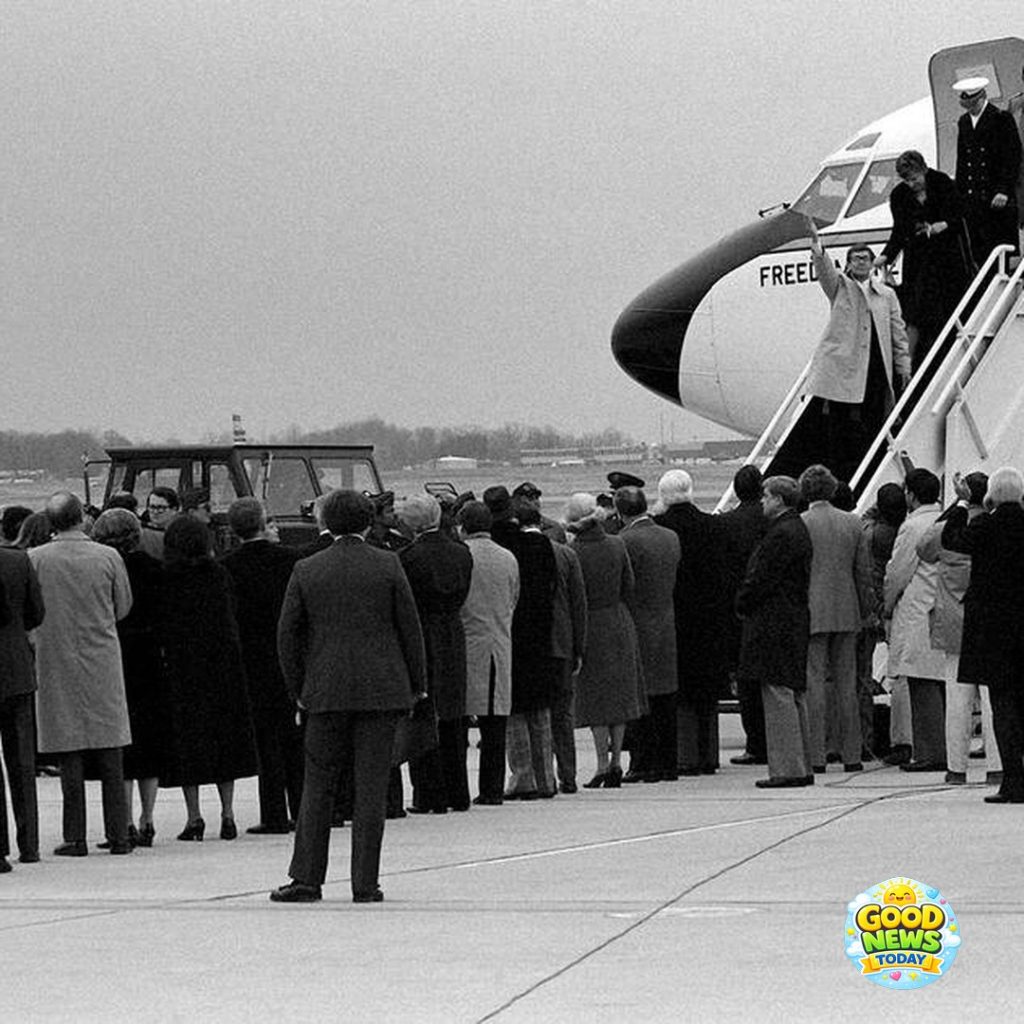
On this day, 45 years ago, a momentous event unfolded as the newly-established revolutionary government of Iran released all 52 American hostages to U.S. officials, just moments after Ronald Reagan took the oath of office as president. An Algerian airliner facilitated their journey to Algiers, where they were formally handed over to Warren M. Christopher, the U.S. representative, in a heartfelt gesture of gratitude towards the Algerian government for their role in resolving the crisis.
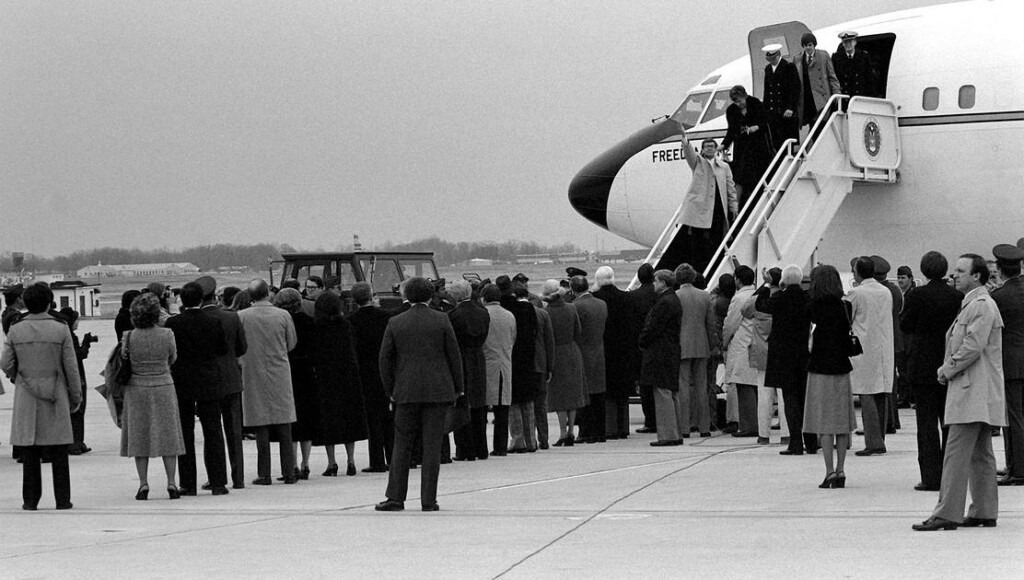
From Algiers, the former hostages were flown to Rhein-Main Air Base in West Germany, then transported to an Air Force hospital in Wiesbaden, where they were welcomed by former President Carter, who acted as an emissary. Following medical examinations and debriefings, they embarked on another flight, making a refueling stop in Ireland. Just ten days later, they were celebrated with a ticker-tape parade through New York City’s Canyon of Heroes, a fitting tribute to their resilience.
The timing of the hostages’ release has sparked numerous theories. Some suggest that Iran deliberately chose Reagan’s inauguration to ensure that former President Carter wouldn’t be able to claim credit for their freedom, given the tense relations between them. Carter had previously authorized the ill-fated Operation Eagle Claw, aimed at rescuing the hostages. Unfortunately, the mission was derailed before it could even commence due to a sandstorm that caused a catastrophic crash of the helicopters involved.

Regardless of the circumstances, it is widely acknowledged that the negotiations led by Carter’s Administration played a crucial role in securing the hostages’ release, bringing a long-awaited sense of relief and closure.

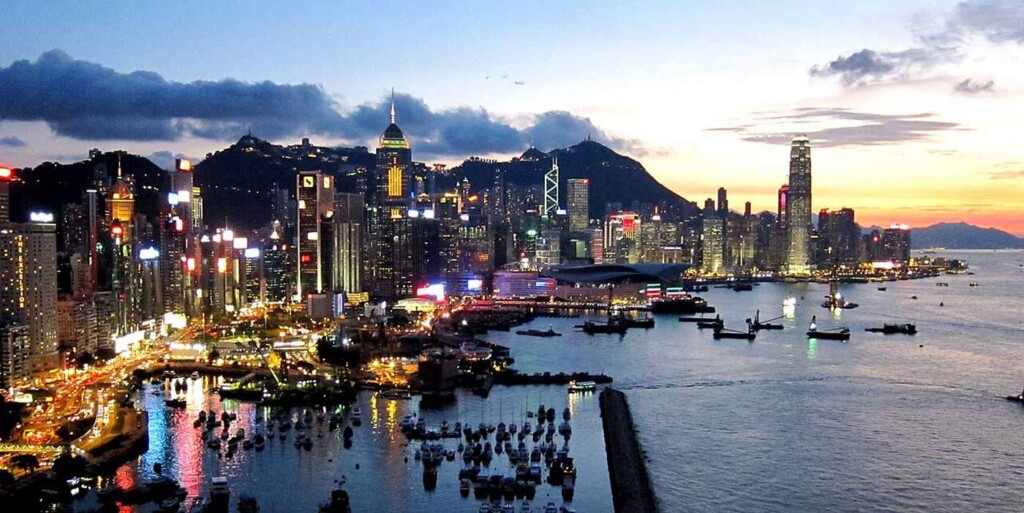
In addition to this significant event, January 20 marks another historic occasion. 185 years ago, the British Empire first established its presence on Hong Kong Island. This strategic location, combined with its deep-water port, transformed Hong Kong into a bustling trading hub. The collaboration between British and Chinese influences turned this once-quiet area into a vibrant economic powerhouse and a unique destination.
Initially, the island served as an international port for Western sailors, merchants, and adventurers, with the majority of its early inhabitants being mainland Chinese. Despite their crucial role in the burgeoning economy, they had little to no political representation. As Governor Edward Stubbs noted, the Chinese community exhibited an astonishing indifference to public affairs.

During World War II, the Japanese occupation was met with minimal resistance, yet Hong Kong continued to thrive economically, eventually emerging as one of the four “Asian Tigers” in the post-war period, showcasing its resilience and adaptability.