
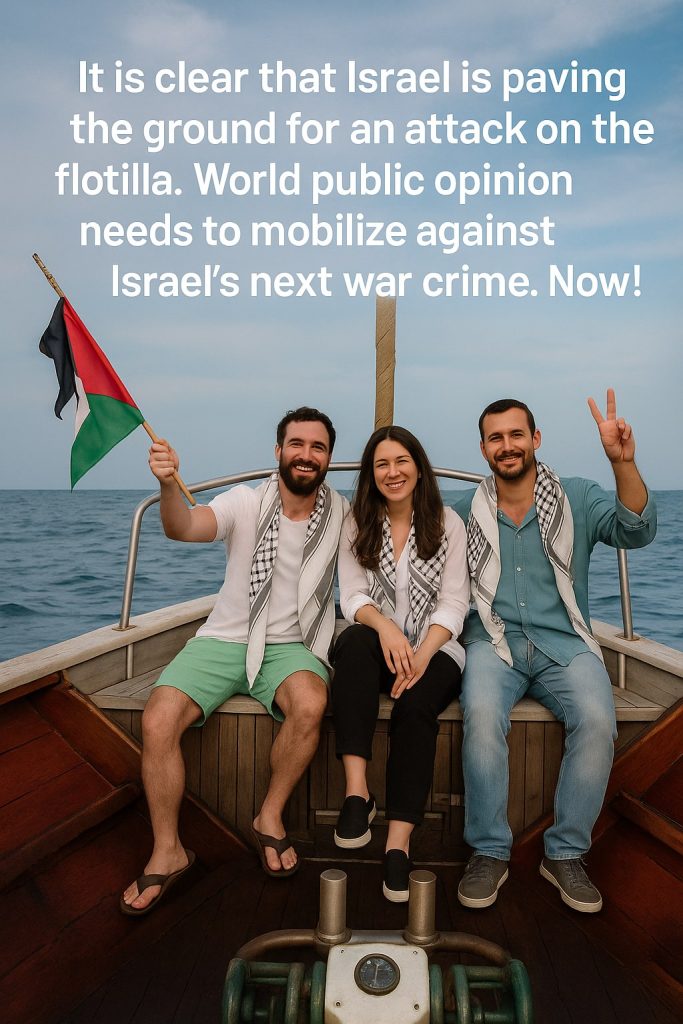
The call for solidarity rings louder as tensions escalate in the Eastern Mediterranean. A viral social media movement is gaining momentum, asserting that Israel is preparing for an impending military action against a humanitarian flotilla aimed at delivering aid and supplies to Gaza. Users across platforms are now mobilizing public opinion to react decisively to what many are branding as a potential “war crime.”
Activists allege that intelligence and military movements indicate a possible assault on the flotilla, which is organized to challenge the ongoing blockade of Gaza. This blockade, in place since 2007, has been a focal point of humanitarian and political crises, with reports of dire shortages of essential supplies and services. As reports circulate about Israel’s military readiness, voices from across the globe are calling for immediate action.
“It is clear that Israel is paving the ground for an attack on the flotilla,” states an urgent tweet shared thousands of times since the weekend. “World public opinion needs to mobilize against Israel’s next war crime. Now!” This fervent call to action is resonating particularly among human rights advocates, scholars, and activists, who are attempting to rally international oversight and intervention before any military confrontation occurs.
The flotilla, known for its past attempts to breach the blockade, considers itself a symbol of peaceful resistance. Previous operations were met with direct confrontation from Israeli naval forces, leading to international outrage and numerous humanitarian criticisms. The 2010 Gaza flotilla incident, which resulted in the deaths of nine activists, remains a stark reminder of the perilous nature of these missions. As such, many are expressing grave concerns about the potential for renewed violence.
Social media users and prominent activists are mobilizing a digital campaign aimed at garnering global attention. Hashtags such as #StopTheFlotillaAttack and #HumanRightsAreUniversal are trending, echoing demands for accountability and justice. “We need to make noise,” one activist tweeted. “Every voice counts in calling for peace. The world cannot stand silent while lives hang in the balance.”
The international community’s reaction to Israel’s actions has been notably mixed. While numerous entities advocate for a humane approach to Gaza, political ramifications prevent consensus on intervention. Some world leaders have called for dialogue and restraint, whereas others accuse Israel of excessive force in dealing with Palestinian entities.
Beyond the looming threat of military action, this moment calls into question broader geopolitical dynamics and the role of social media as a conduit for activism. As calls for intervention proliferate, it remains to be seen whether world leaders will heed the voices rising from public spheres globally.
As tensions mount, the urgency to act and demand accountability grows. Activists stress that participation in public discourse and peaceful protests can amplify calls for protection of vulnerable populations in Gaza and patronize efforts to halt militarized confrontations. The unfolding situation reflects a critical juncture in international relations, human rights advocacy, and the essential role ordinary people can play in shaping public policy.
Where to Learn More
- Israel’s Potential Attacks on Humanitarian Flotillas – Human Rights Watch
- Israel’s Humanitarian Obligations in the Gaza Strip – Amnesty International
- Rising Tensions as Gaza Flotilla Plans Begin – Al Jazeera
- Israel’s Military Maneuvers and the Gaza Flotilla – The Guardian
- Israel-Gaza Flotilla Conflict: A Historical Overview – BBC News