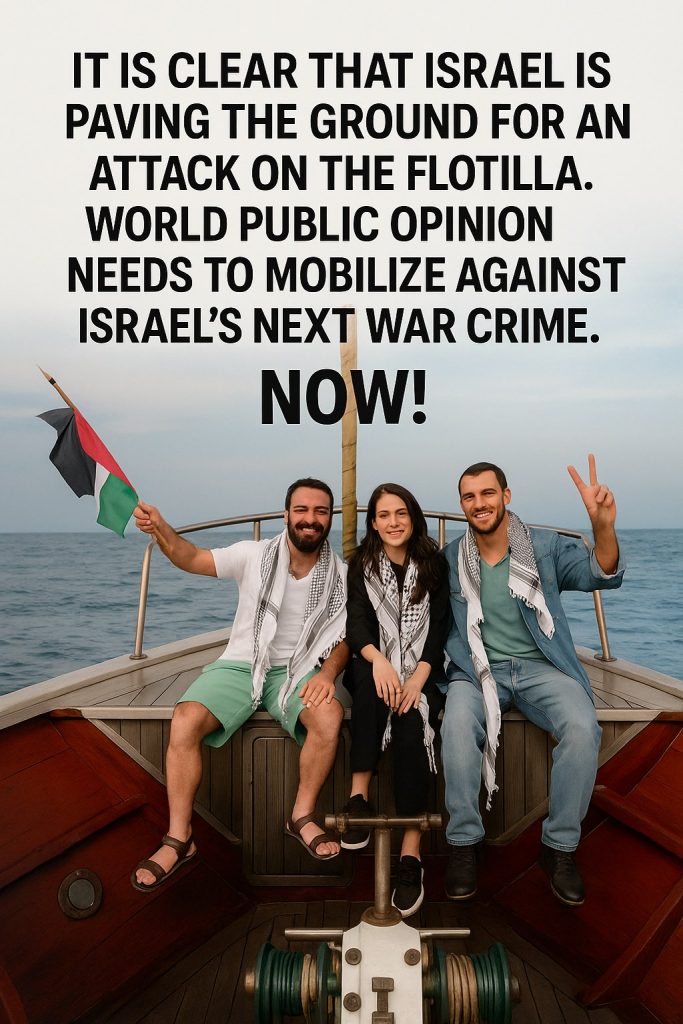
As tensions escalate in the Gaza region, a statement circulating on social media has ignited fierce debate and concern regarding Israel’s potential military actions against a humanitarian flotilla. The post claims that Israel is “paving the ground for an attack on the flotilla,” warning that global public opinion must mobilize against what it describes as “Israel’s next war crime.”
The “Freedom Flotilla” has long been a symbol of resistance and humanitarian aid aimed at delivering essentials to the people of Gaza, often blocked by Israeli naval forces. Activists and supporters of the flotilla are urging the international community to take a stand, fearing that an assault could result in severe civilian casualties and further deterioration of the already fraught humanitarian situation.
Over the last decade, similar flotilla initiatives have led to widespread condemnation of Israeli operations, particularly following the deadly Mavi Marmara incident in 2010, where Israeli forces stormed a Turkish ship carrying activists and supplies, resulting in multiple fatalities. The impact of that event still resonates, as activists continue to rally worldwide, seeking to shed light on the ongoing humanitarian crisis in Gaza.
Social media users have reignited the conversation on platforms such as Twitter and Facebook, sharing updates and calling for action. Posts emphasizing the need for global solidarity include hashtags like #StopIsraeliAggression and #FreedomFlotilla, mobilizing supporters around the globe. The viral nature of these posts underscores a growing impatience with the situation and a call for accountability regarding international human rights.
Many raising concerns are echoing what they see as a pattern of military aggression displayed by Israel towards civilian vessels attempting to aid those in dire need. Human rights organizations and advocates are increasingly vocal, arguing that any assault on the flotilla would not only violate international law but also constitute a serious breach of humanitarian norms.
Critics of Israel’s government argue that the impending action is part of a broader strategy to maintain a blockade that has significantly hampered the daily lives of Gaza’s people. The Israeli government, however, maintains that its naval operations are purely defensive, asserting the need to prevent the smuggling of weapons and materials that could pose threats to its national security.
As the date of the flotilla’s planned departure approaches, international observers are closely watching the situation unfold. Global leaders, including members of the European Union and various United Nations representatives, are urged to intervene and ensure that any effort to disrupt humanitarian initiatives is met with diplomatic resistance.
With grassroots movements gaining momentum and public protests being organized across various countries, it is evident that a significant portion of the global populace is prepared to advocate for the protection of human rights and humanitarian efforts in the region. The mobilization of world opinion will likely play a crucial role in shaping responses to the inevitable escalation that could arise from this charged atmosphere.
Calls for accountability and transparency soar, emphasizing the role of global citizens in challenging state-sponsored violence. As the flotilla prepares for its mission, activists insist that international oversight and immediate action are essential in preventing another deadly confrontation.
Where to Learn More
- Israel May Be Paving the Way for Flotilla Attack – Haaretz
- Freedom Flotilla: Humanitarian Aid or Militarized Challenge? – Al Jazeera
- BBC Special Report: Gaza’s Ongoing Humanitarian Crisis – BBC News
- Amnesty International Urges Action Against Flotilla Attacks – Amnesty International