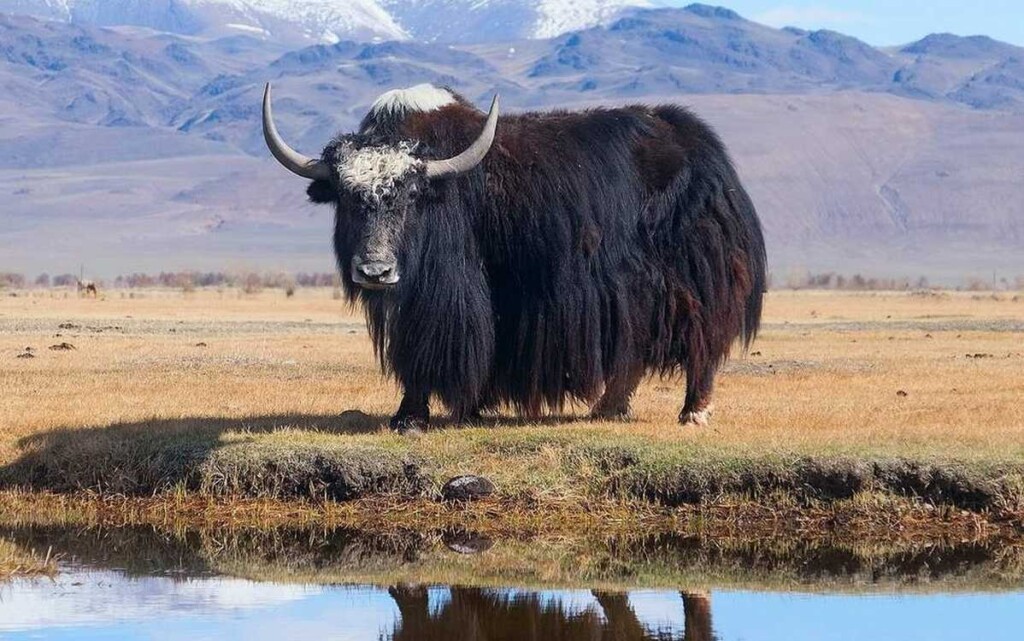
A remarkable gene that allows animals like yaks to thrive in high-altitude settings could pave the way for innovative treatments for multiple sclerosis (MS), according to encouraging findings from a mouse study.
This genetic mutation, which enables yaks to adapt to environments with significantly lower oxygen levels, may play a crucial role in repairing nerve damage associated with conditions such as MS and cerebral palsy, both of which currently lack effective cures.
The myelin sheath serves as a vital protective layer surrounding nerve fibers in the brain and spinal cord, facilitating communication through nerve signals throughout the body. In MS, the immune system mistakenly targets and destroys this essential sheath, leading to debilitating symptoms such as paralysis. Furthermore, insufficient oxygen during fetal brain development can harm the myelin layer, contributing to conditions like cerebral palsy in newborns. Aging-related reductions in blood flow to the brain can also damage myelin, potentially leading to vascular dementia.
A groundbreaking study published in the journal Neuron has uncovered a naturally occurring pathway that encourages regeneration following nerve damage. This discovery holds promise for developing new treatments for diseases like MS by utilizing molecules that naturally exist within the human body, as highlighted by the research team from China.
“Evolution is a wonderful gift from nature, offering a diverse array of genes that enable organisms to adapt to their surroundings,” remarked Professor Liang Zhang, the study’s corresponding author from Shanghai Jiao Tong University School of Medicine. “There is still so much to learn from naturally occurring genetic adaptations.”
The research team noted that prior studies have shown that animals residing on the Tibetan Plateau, which sits at an average altitude of 14,700 feet, possess a mutation in a gene known as Retsat. Scientists believe this mutation helps yaks and Tibetan antelopes sustain healthy brain function despite prolonged exposure to low oxygen levels.
Zhang and his colleagues set out to explore whether this mutation could protect against myelin sheath damage. They exposed newborn mice to low-oxygen conditions that simulated altitudes exceeding 13,000 feet for approximately one week. “Mice possessing the Retsat mutation demonstrated significantly improved performance in learning, memory, and social behaviors compared to those with the standard gene version,” he explained. “Brain analyses indicated that these high-altitude gene mice had enhanced myelin levels surrounding their nerve fibers.”
The team then assessed whether the Retsat mutation could facilitate the repair of myelin sheath damage similar to that observed in MS. Their findings revealed that in mice with the mutation, the myelin sheath regenerated “much faster and more completely” following injury, showcasing the potential of this genetic breakthrough.