
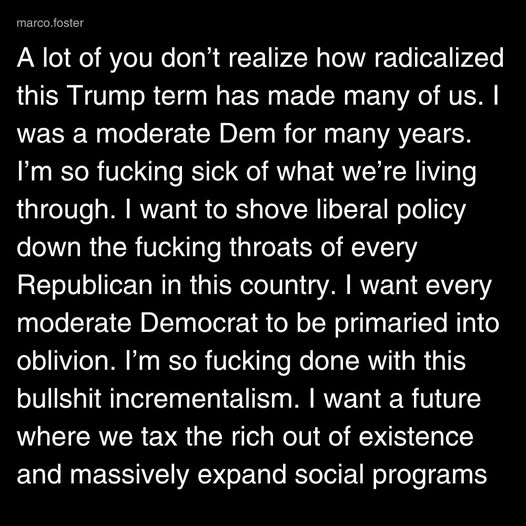
The political landscape in the United States has experienced profound shifts over the past decade, fueled largely by the polarizing rhetoric and policies during Donald Trump’s presidency. A recent viral social media post captures this transformation vividly, with one user sharing how they, once a moderate Democrat, now see their views radically altered.
The message, accompanied by an image of text stating, “A lot of you don’t realize how radicalized this Trump term has made many of us,” resonates with countless Americans who have experienced similar shifts. The author confesses, “I was a moderate Dem for many years. I’m so f***ing sick of…” illustrating a sense of frustration, disillusionment, and anger that has been building among individuals across the political spectrum.
During Trump’s tenure, many Americans reported heightened feelings of distrust and resentment toward political institutions and media outlets, fueling a more extreme stance on both sides of the aisle. The social media post underscores how the toxic rhetoric, combative politics, and controversial policies pushed some moderates into more radical territories—particularly over issues like immigration, gun rights, and government authority.
Political analysts suggest that this shift is not merely about individual opinions but a reflection of a broader societal polarization. As discourse became more confrontational and identity politics intensified, those once willing to seek common ground found themselves pushed further into ideological corners. Many individuals who historically leaned moderate or centrist found themselves alienated, feeling that their values no longer aligned with the mainstream political narrative.
This phenomenon has had real-world consequences, from increased political activism to heightened tensions during elections and protests. The social media post’s openly candid tone exemplifies how personal experiences during the Trump era have shaped a new, more radicalized political identity for many Americans. Such narratives challenge traditional notions of liberal/moderate/conservative boundaries and suggest a deepening divide that may persist well beyond Trump’s presidency.
While some argue this radicalization is a reaction to policies perceived as harmful or unjust, others warn it risks undermining democratic dialogue and unity. As this political realignment continues, experts emphasize the importance of fostering conversations that bridge divides and promote understanding amid ongoing polarization.