
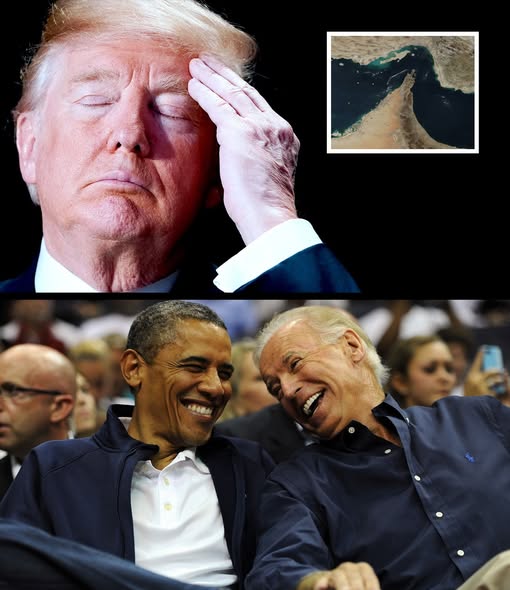
In an astonishing turn of events, the man who famously authored “The Art of the Deal” and turned the world of business into a battlefield is now reportedly offering to unfreeze a staggering $20 billion in Iranian assets. The goal? To reopen the Strait of Hormuz — a vital waterway that was left wide open before recent conflicts — as part of a bold attempt to de-escalate tensions, even as critics question the efficacy of such a move.
This development has ignited widespread scrutiny and sharp irony within international circles. President Donald Trump, whose tenure was marked by aggressive foreign policy shifts and a penchant for unconventional negotiations, is now seemingly trying to buy his way out of a crisis he arguably helped deepen. His administration’s approach has previously involved walking away from the Iran nuclear deal—the 2015 agreement that lifted sanctions in exchange for strict nuclear inspections—and reimposing harsh sanctions that isolated Iran economically. Now, amidst escalating tensions, he appears ready to pour hundreds of millions more into a weaker arrangement, sparking criticism about the true motives behind the move.
Adding fuel to the fire, Trump recently made headlines when he referred to the Strait of Hormuz as the “Strait of Iran,” effectively handing what was previously a strategic passage back to Iran’s control — a move that many see as a geopolitical blunder. Under the Obama-era nuclear deal, the U.S. lifted sanctions on Iran’s frozen assets and paid $1.7 billion to settle old debts, a deal harshly criticized by Trump and his allies at the time as a “total giveaway” to Iran’s regime. The agreement was rooted in verified nuclear limits and meticulous international inspections, providing a framework of safeguards that critics argue are missing in the current proposals.
Now, critics question what’s truly at stake. Iran has declared the Strait of Hormuz “open for commercial vessels,” yet has imposed strict, state-controlled routes near its coastline — a move that underscores the fragile balance of free navigation in the region. While President Trump has claimed victory, asserting that such statements are a “win,” the U.S. continues to enforce a naval blockade on Iranian ports, keeping military tensions high and overcast the prospects for lasting peace.
The irony lies not just in the geopolitical spectacle but also in the echoes of Trump’s past business strategies. Once celebrated as a master negotiator in the boardrooms of Atlantic City, his approach to foreign policy mirrors the “walk-in, blow-up, and then pay more” playbook — destabilize what’s working, then pour money into patching the cracks. The question remains: at what cost, and who ultimately bears the debt? The world watches as the same man who turned casinos into symbols of financial ruin now tries to navigate a diplomatic minefield, risking not only global stability but also the credibility of diplomatic negotiations.
As international leaders grapple with these unfolding developments, one thing is clear: the game of high-stakes diplomacy has become as unpredictable as a casino floor, with the world’s economic and security interests hanging in the balance.
Where to Learn More
- Trump Offers to Unfreeze $20 Billion in Iranian Assets in Bid to Reopen Strait of Hormuz – The New York Times
- Analysis: The Irony of Trump’s Latest Iran Negotiation Tactics – The Washington Post
- Iran Declares Strait of Hormuz Open Amid Tensions with US – BBC News
- Conflict and Diplomacy in the Gulf: The New Stage of US-Iran Relations – Al Jazeera