
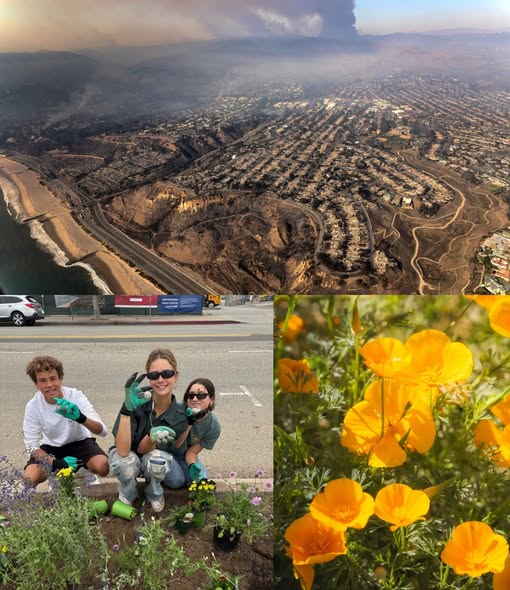
Last January, the hillside neighborhoods of Los Angeles’s Palisades and Eaton Fire zones were transformed into scenes of devastation. Over 16,000 homes damaged or destroyed, 28 lives lost, and more than 200,000 residents evacuated—these fires marked one of the deadliest and most destructive wildfire seasons in recent California history. Driven by increasingly extreme weather conditions—hot, dry, and windy days amplified by approximately 1.3°C of global warming—climate scientists now link these blazes to human activity, primarily the burning of fossil fuels.
However, the story didn’t end there. In the wake of the destruction, an alarming new threat emerged: lead and other dangerous contaminants from the scorched soil. Soil testing across the burn zones uncovered unsettling levels of lead—ranging from 81 to 200 parts per million in over 500 properties. Elevated concentrations of arsenic, cobalt, and chromium—known carcinogens—also appeared, posing serious health risks, especially to children and pregnant women. Shockingly, the Army Corps of Engineers declined to conduct soil testing within the burn areas, breaking from standard federal protocol, leaving families to fend for themselves in matters of health and environmental safety.
Enter an extraordinary community-led movement that is turning devastation into regeneration. It all began with a mother, her two teenagers, and a handful of volunteers—who, after witnessing the destruction firsthand, decided to take action. They hand-rolled thousands of seed bombs—small, clay-encased morsels filled with native plant seeds, compost, and clay. The technique is simple: toss the seed bombs onto bare, contaminated soil. The clay shields the seeds from immediate harm, and when it rains, nature takes over.
What started as a personal act of grief quickly blossomed into the “Seed Bomb Project,” a grassroots initiative that brought together schools, community groups, and local businesses. Dana Goodyear, writing for National Geographic, recounts her own experience returning to the site of her former home—standing amid scraped concrete and broken dreams—when she and her son Rummy threw handfuls of seed bombs into the void. “We wanted to help it heal,” she recalls.
Over time, the project gained momentum. Workshops were held across neighborhoods, with volunteers of all ages learning to craft seed bombs. Community donations flowed in—compost from local companies, native seeds from seed banks—and people from all walks of life took part in reforesting what once seemed like irreparable damage. Remarkably, certain native plants like bush sunflowers have demonstrated an unexpected capacity: they absorb heavy metals such as arsenic and lead from contaminated soils, effectively acting as natural bio-remediators. As a result, these wildflowers are not only beautifying the landscape but actively detoxifying it from toxic pollutants.
This spring, the once bleak and scarred hillsides are now bursting with vibrant poppies, sunflowers, and yarrow—proof of nature’s resilience and community ingenuity. In a landscape where federal cleanup efforts have fallen short, local volunteers have shown that collective action can foster healing and hope. These efforts symbolize what working communities have always known: resilience doesn’t come from top-down policies alone, but from the hands of ordinary people refusing to give up on their neighborhoods.
As climate change continues to threaten to undo the fragile balance of ecosystems and communities, grassroots initiatives like the Seed Bomb Project stand as a shining example of how hope and action can grow from the ashes. They remind us that while billionaires and governments debate solutions, ordinary people can—and do—make a profound difference, turning devastation into a vibrant, living testament to renewal.