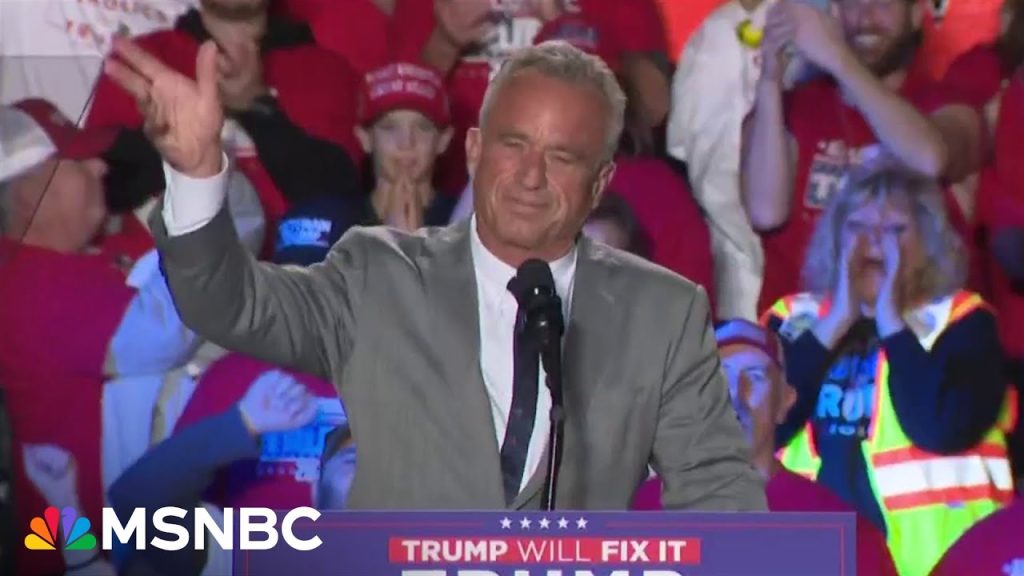
In a recent discussion, a former Health Secretary raised eyebrows by describing the prospect of Robert F. Kennedy Jr. leading a major health agency as “absolutely terrifying.” This alarming comment underscores the intense scrutiny and debate surrounding Kennedy’s potential role in public health administration, particularly amid a politically charged landscape in the United States.

Robert F. Kennedy Jr., known for his outspoken views on vaccines and public health policy, has long been a controversial figure, both within environmental activism and the medical community. As a prominent anti-vaccine advocate, Kennedy has consistently challenged mainstream public health guidelines, a stance that has drawn significant attention and criticism. His history of questioning vaccine safety has led many in the medical field to raise red flags about his suitability for a leadership role in health institutions.
The context for the former Health Secretary’s remarks is rooted in a broader debate about trust in government agencies tasked with safeguarding public health, an issue that has become magnified during the COVID-19 pandemic. As vaccine misinformation surged, the credibility of health organizations was tested against a tide of skepticism. Critics argue that placing someone with a documented history of opposing established health science could further erode public confidence at a time when clear and trusted guidance is essential.
This commentary reflects a growing concern among public health officials about the implications of Kennedy’s leadership on policies related to vaccination, disease prevention, and health education. Supporters of Kennedy argue he brings much-needed scrutiny to health policies traditionally taken at face value, advocating for more rigorous examinations of pharmaceutical practices. On the other hand, the former Secretary’s chilling prediction raises questions about the potential ramifications of such leadership on public health initiatives, especially in a post-pandemic world where vaccine uptake and public trust are critical.
With these contrasting views, the conversation surrounding RFK Jr. is emblematic of the larger national dialogue on health, science, and politics—a discussion that continues to evolve as America grapples with the legacies and future of its health agencies. This latest commentary adds fuel to the fire, prompting both support and opposition as America watches closely how these dynamics unfold.