
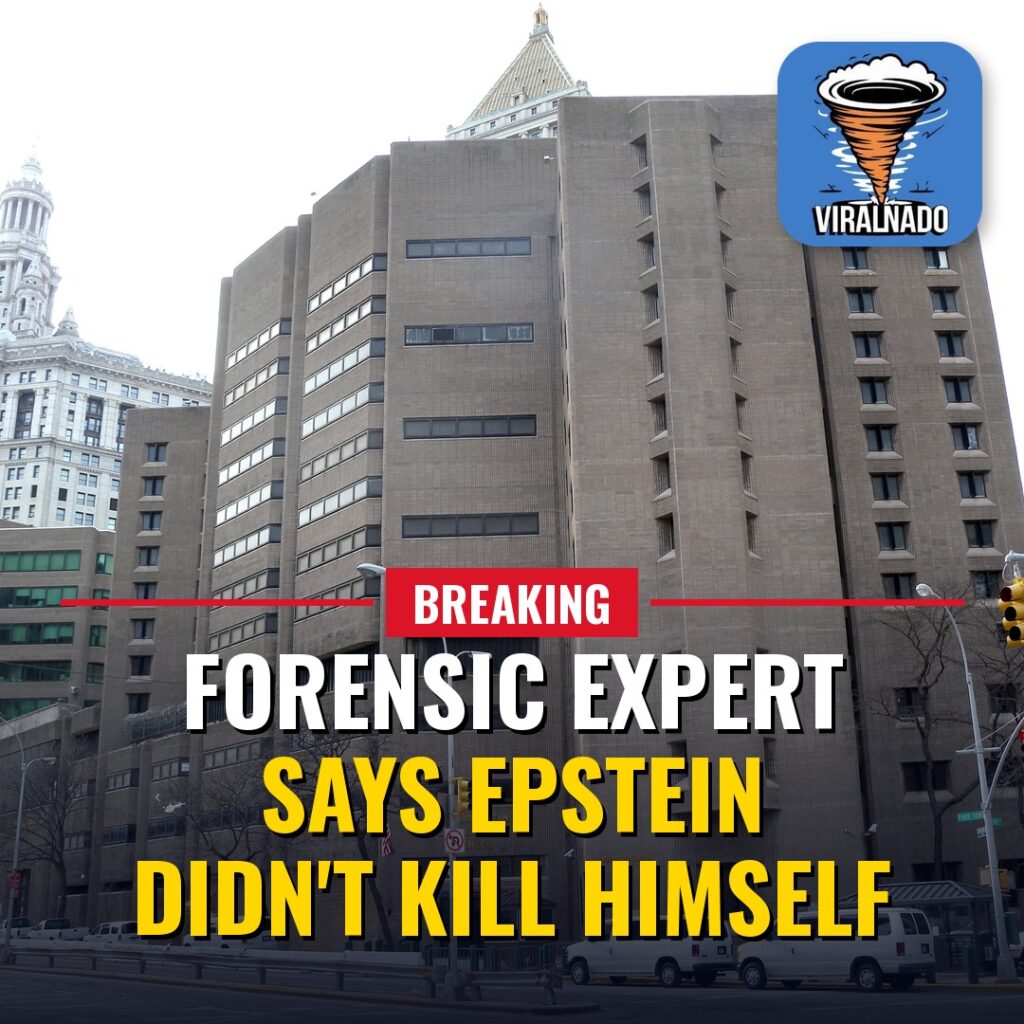
A prominent forensic expert says Jeffrey Epstein did not die by suicide in his Manhattan jail cell in 2019, and that the injuries documented in the official autopsy are more consistent with a homicide. Officials who have already investigated the death — including the New York City medical examiner, the Justice Department’s inspector general, and the FBI — have not changed their conclusion that he did.
Dr. Michael Freeman presented his analysis Monday at the Middle Temple, a London legal society, and discussed it with BBC Newsnight. After reviewing the New York City medical examiner’s file — including autopsy photographs provided by Epstein’s brother, Mark Epstein — Freeman said the injuries “are not explained by a suicidal hanging” and are most consistent with “homicidal strangulation.”
“I believe that the evidence is most consistent with an assault, a ligature strangulation from behind and then most probably using that same ligature to suspend the body from the bunk bed.”
Dr. Michael Freeman, speaking to the BBC
Who Michael Freeman is
Freeman is editor-in-chief of the Journal of Forensic and Legal Medicine and a tenured associate professor of forensic medicine and epidemiology at Maastricht University Medical Center in the Netherlands. He is also an affiliate professor at Oregon Health & Science University and a former David Jenkins Professor of forensic and legal medicine at the Faculty of Forensic and Legal Medicine of the Royal College of Physicians in London. He holds a medical doctorate from Umeå University in Sweden and a Ph.D. in epidemiology, completed a forensic pathology fellowship, and is a fellow of the Royal College of Pathologists. He has testified as a cause-of-death expert in high-profile cases, including the murder of George Floyd.
He worked on the analysis with Anders Eriksson, a professor of forensic medicine at Umeå University, and Itiel Dror, a researcher who studies bias in forensic decision-making, CBS News reported. Freeman said he did not examine Epstein’s body, that his review was independent, and that he was not paid by Mark Epstein, who has long rejected the official suicide ruling. His findings have not been peer-reviewed. Freeman told CBS News a journal rejected the paper, with reviewers saying it was not appropriate to criticize a medical examiner’s findings in a peer-reviewed publication, and that he plans to resubmit.
What Freeman says the file shows
Freeman told the BBC and CBS News that some marks on Epstein’s neck did not match a typical hanging injury, and that a second, lower mark would be difficult to explain if the body had simply been suspended from a single anchor point. He also pointed to a deep hemorrhage in the left shoulder, facial injuries he said appeared consistent with being struck, and what he described as possible fingernail marks above the ligature line, which he argued could fit an attempt to pull a ligature off the neck.
He built a biomechanical reconstruction from autopsy photos and from a prison guard’s later description of how Epstein was found. Some injuries, he said, were consistent with hanging — but not all of them. “We have too many other injuries that are not explained by any suicidal hanging,” he told CBS News. Asked who might have killed Epstein if his reading is correct, Freeman said he has “no idea.”
The official findings have not changed
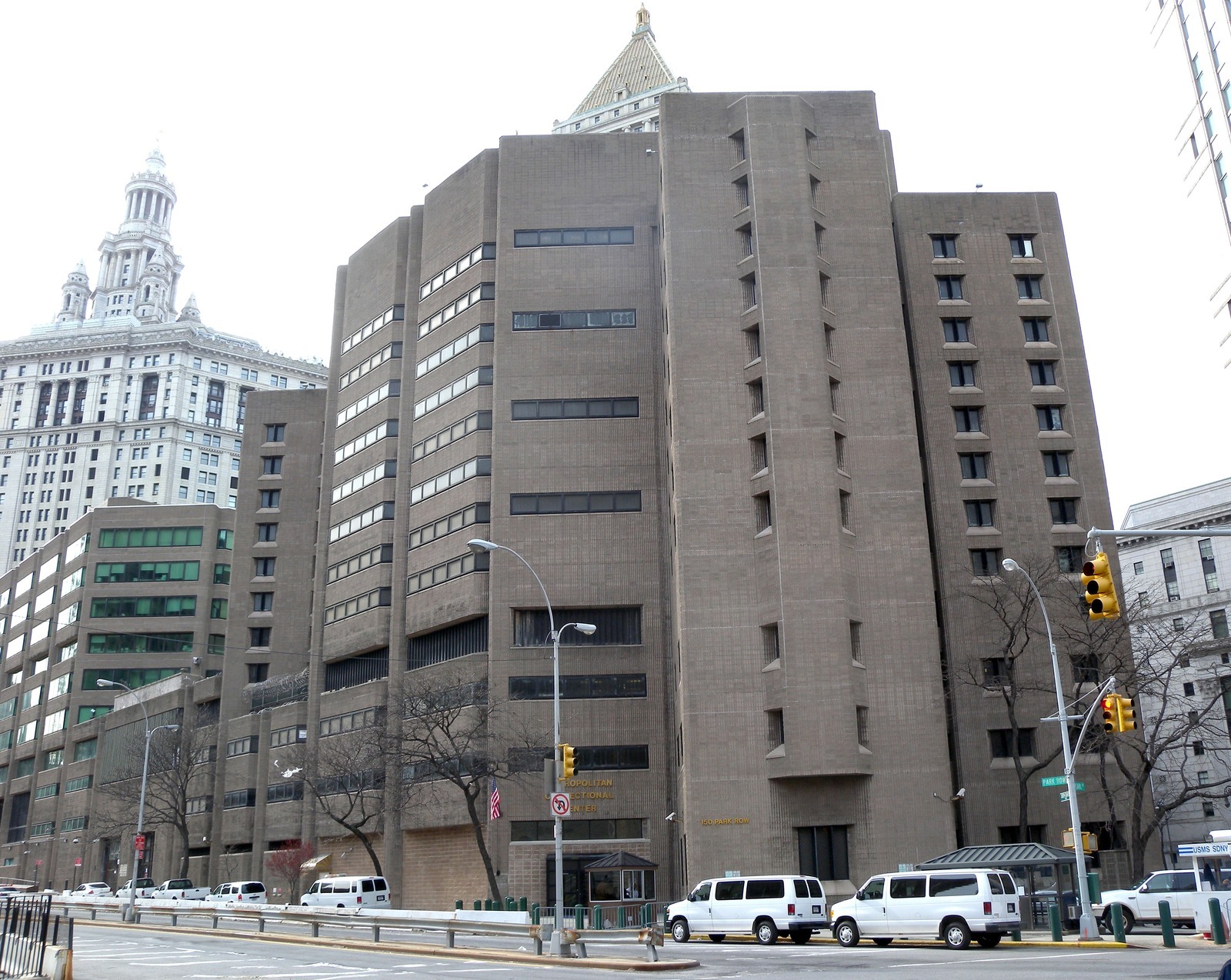
Epstein was found dead on Aug. 10, 2019, in his cell at the Metropolitan Correctional Center in New York, where he was being held on federal sex trafficking charges. The New York City Office of Chief Medical Examiner ruled the next day that the cause of death was hanging and the manner of death was suicide. Then-Chief Medical Examiner Dr. Barbara Sampson has previously said, “I stand firmly behind our determination of the cause and manner of death for Mr. Epstein.”
The office has not withdrawn that ruling. A spokesperson told CBS News on Monday, “Our office stands by its determination.” In a statement to Newsweek the same day, the office repeated: “Cause of death: Hanging. Manner of death: Suicide.”
The medical examiner who performed the autopsy later told the Justice Department’s Office of the Inspector General that Epstein’s injuries were consistent with suicide by hanging, not homicide by strangulation, and that there was “no evidence of defensive wounds” typically seen in strangulation. According to the inspector general’s June 2023 report, “Epstein did not have marks on his hands, broken fingernails or debris under them, contusions to his knuckles that would have evidenced a fight, or, other than an abrasion on his arm likely due to convulsing from hanging, bruising on his body.”
What the Justice Department and FBI have already concluded
The inspector general’s 2023 investigation documented serious failures by Bureau of Prisons staff at the jail, including missed security checks, staffing shortages, and problems with surveillance cameras. Those failures left Epstein alone and unmonitored for hours. But the inspector general said it “did not uncover evidence contradicting the FBI’s determination regarding the absence of criminality in connection with Epstein’s death.” The FBI, which investigated whether anyone committed a crime in connection with the death, concluded there was no criminality in how he died.
In July 2025, the Justice Department and the FBI released a memo after what they described as an exhaustive review of the Epstein files. The memo again concluded that Epstein died by suicide, saying that finding was consistent with the medical examiner’s 2019 autopsy, a 2019 position taken by federal prosecutors in New York, and the inspector general’s 2023 report. The FBI said it reviewed video from the common area of the Special Housing Unit and that, from about 10:40 p.m. on Aug. 9, 2019, when Epstein was locked in his cell, until about 6:30 a.m. the next morning, nobody entered any of the tiers in that unit.
Other reviews, and an earlier outside opinion
Freeman’s report is not the first outside challenge to the suicide ruling. In 2020, forensic pathologist Dr. Michael Baden — hired by Mark Epstein — also said neck injuries raised doubts about the official finding and told CBS’s “60 Minutes” the evidence he saw pointed more toward homicide. Baden’s review, unlike Freeman’s, was paid work for the family.
A New York Times investigation published in June 2026, based on tens of thousands of pages of records and Epstein’s own handwritten jail notes, reported that he had written about and discussed suicide in the weeks before his death and had attempted it at least once, and possibly more than once. CBS News, citing that reporting, also noted that almost none of the forensic experts the Times interviewed believed the manner of death could be settled conclusively from the medical evidence alone.
The bottom line
A credentialed forensic expert, after a year with the autopsy file, says the official suicide ruling does not fit the injuries. He did not examine the body, his paper has not been peer-reviewed, and he does not claim to know who would have been responsible if he is right. The New York City medical examiner’s office is standing by its original determination. So did the Justice Department’s inspector general in 2023, and so did the FBI and Justice Department in their 2025 review.