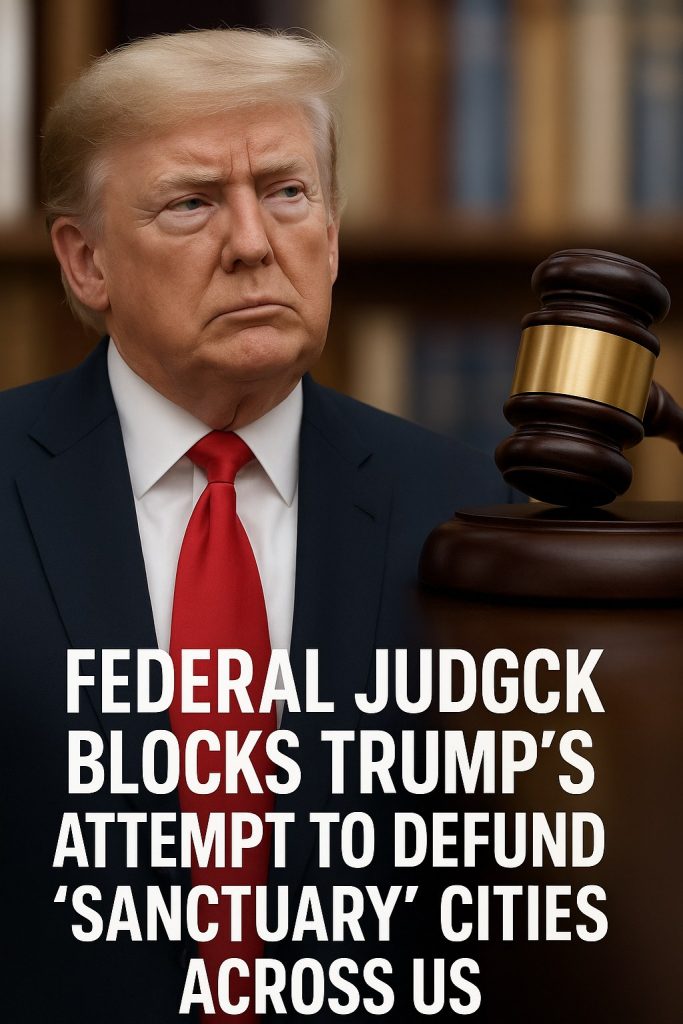
A federal judge has delivered a major legal setback to the Trump administration by ruling that President Donald J. Trump cannot withhold federal funding from 34 cities and counties that have adopted “sanctuary” policies limiting cooperation with immigration enforcement.
The ruling, issued late last week, marks a significant blow to the administration’s persistent efforts to pressure local governments into assisting federal immigration authorities. The judge’s decision prevents the administration from cutting funds as a punitive response to sanctuary policies, which typically restrict local law enforcement from using resources or personnel to enforce federal immigration laws.
Background of the Case
Since taking office, President Trump has aggressively targeted sanctuary jurisdictions through various executive orders and funding directives, aiming to compel compliance with federal immigration priorities. In 2023 and 2024, these efforts escalated, with the administration announcing plans to withhold millions in federal grants from selected cities and counties identified as sanctuary jurisdictions.
Sanctuary policies, championed by many local leaders, are intended to foster trust between communities and local law enforcement by ensuring that immigration status does not influence cities’ willingness to report crimes or cooperate with residents. These policies have been controversial and a hot-button issue politically, with strong opinions on both sides.
The federal government designated 34 cities and counties nationwide for the funding cuts, citing their lack of full cooperation with Immigration and Customs Enforcement (ICE) and other federal agencies.
The Judge’s Rationale
The federal judge overseeing the case ruled that the administration’s attempt to withhold funding was unlawful, emphasizing that the executive branch cannot unilaterally impose conditions on federal grants without clear congressional authorization. The judge noted that federal funds must be distributed consistent with statutes passed by Congress and that the president’s directive circumvented established legal processes.
In the ruling, the judge wrote that punishing local governments through financial coercion, without Congressional backing, infringes upon the separation of powers and exceeds executive authority. This decision reaffirms the standards that safeguard municipal autonomy and the limits on federal interference in local governance.
Reactions and Implications
City and county officials who have adopted sanctuary policies welcomed the ruling as a victory for local self-determination and community safety. Many argue that their policies not only protect immigrant populations but also encourage cooperation with law enforcement by reducing fear of deportation among residents.
Legal experts view this ruling as a crucial precedent that restricts the executive branch from leveraging federal funding as a political tool against jurisdictions with whom it disagrees on immigration policy. It underscores the judiciary’s role in checking potential executive overreach.
On the other hand, critics of sanctuary policies and some federal officials express frustration, arguing that the ruling undermines efforts to enforce immigration laws uniformly and protect national security.
Next Steps
The Trump administration has not yet announced whether it will appeal the ruling. The outcome of any appeals process could further shape the landscape of immigration enforcement and federal-local relations in the coming months.
Meanwhile, this ruling provides a clearer legal framework for sanctuary cities and counties defending their policies against federal funding threats. It also highlights the ongoing tensions in American immigration policy and the complex interplay between federal authority and local governance.
As sanctuary city debates continue to influence political discourse nationwide, this judicial decision stands as a pivotal moment protecting local jurisdictions from federally imposed financial penalties tied to their immigration enforcement policies.