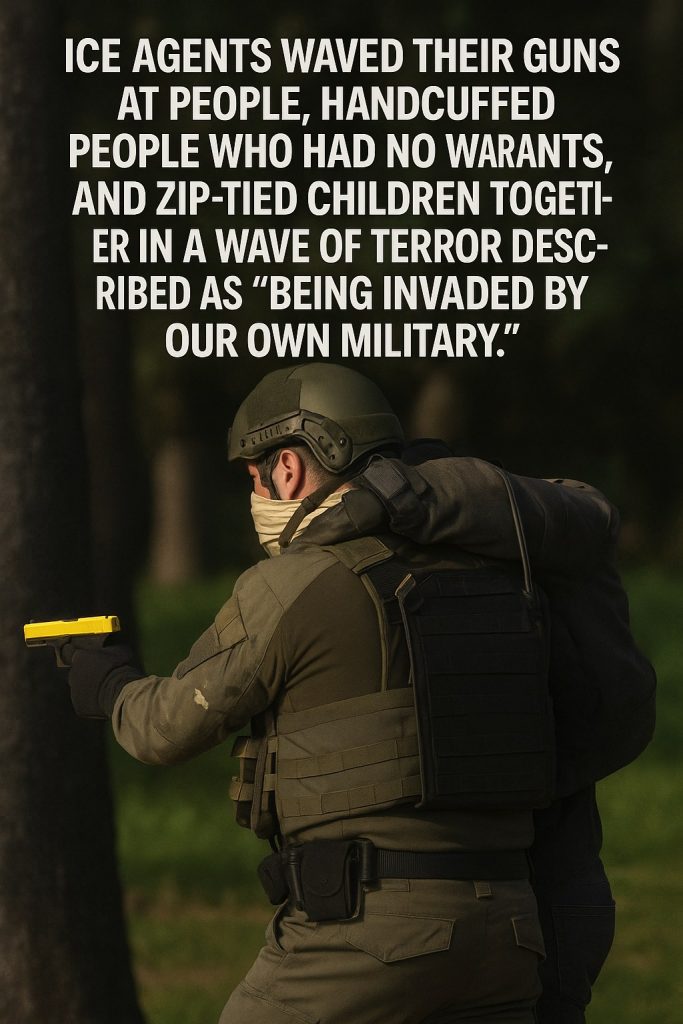
In a series of shocking incidents that many are describing as a military-style offensive in their communities, ICE (Immigration and Customs Enforcement) agents reportedly waved guns at individuals, handcuffed people without warrants, and even zip-tied children together. Witnesses have shared harrowing accounts of these encounters, with some likening the experience to “being invaded by our own military.”
The troubling events unfolded in multiple neighborhoods over recent days, igniting a wave of fear and anger among local residents. Eyewitnesses report that agents stormed areas with aggressive tactics normally reserved for criminal apprehensions, creating a sense of chaos and panic.
One local parent, who wished to remain anonymous, described the scene as surreal. “I’ve never felt more terrified in my own neighborhood,” she explained. “They were yelling and running around with their guns drawn. I saw a child—maybe seven years old—being zip-tied with others; it was horrifying.”
This latest surge in ICE operations marks a stark departure from traditional community policing methods and raises significant questions about the agency’s practices and priorities. Advocates for immigrant rights argue that such tactics contribute to a culture of fear, discouraging families from reporting crimes or seeking help from law enforcement.
Critics of these operations emphasize that the agents are overstepping legal boundaries, with many individuals apprehended expressing confusion and fear regarding their legal status. It appears that many of those taken into custody had no warrants issued against them, further exacerbating concerns about the legality and morality of their detentions.
“This is a human rights issue,” stated Maria Silva, a local activist. “We cannot let our streets be lined with fear and intimidation. Families should feel safe in their own homes—this isn’t just about immigration; this is about the fundamental rights of people in our community.”
The federal agency, however, maintains that such operations are necessary for maintaining national security and public safety, asserting that they are following laws already in place. “ICE continues to enforce the law in accordance with the priorities set by the federal government,” said an ICE spokesperson. “Our agents are trained to handle situations in a professional manner, and we take claims of misconduct seriously.”
Despite ICE’s justifications, public sentiment appears to be turning against the agency, with growing calls for accountability and transparency in their operations. Local officials and community leaders are pressing for immediate reviews and inquiries into the methods used, advocating for a reassessment of ICE’s role in community safety.
As this situation continues to unfold, the implications for public trust in law enforcement could be profound. With communities torn between the need for safety and the desire for human dignity, it is uncertain how these recent events will influence future policies concerning ICE operations and immigrant rights across the nation.