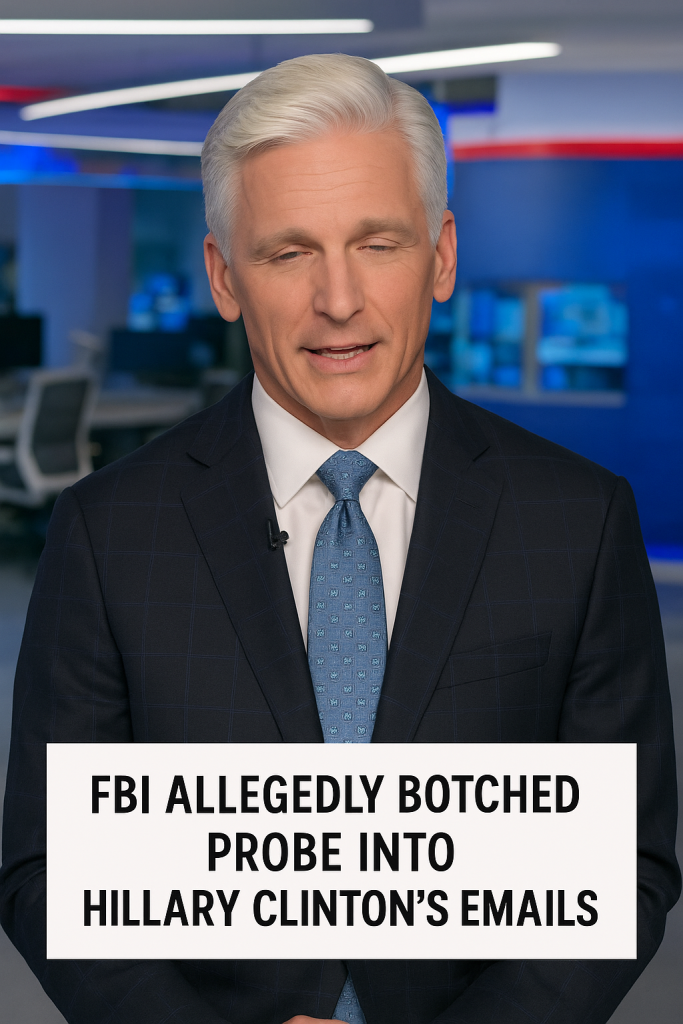
The Federal Bureau of Investigation (FBI) is once again under intense scrutiny following renewed allegations that it mishandled the high-profile investigation into Hillary Clinton’s use of a private email server during her tenure as Secretary of State. These claims have resurfaced amid the ongoing political discourse and recent disclosures that suggest critical errors may have impacted the probe’s integrity.
At the center of the controversy is the allegation that the FBI did not adhere to rigorous investigative standards, potentially compromising the thoroughness and fairness expected in one of the most politically charged inquiries of the last decade. Critics argue that these procedural missteps may have shaped public perception and affected subsequent legal and political outcomes.
According to recent assessments, there were concerns about how evidence was collected, analyzed, and ultimately presented during the investigation. Questions have been raised about the FBI’s decision-making processes, including the assessment of classified information and the handling of key witnesses and documents. Some insiders suggest that these factors contributed to an incomplete picture of the facts, fueling debates over whether justice was truly served.
It is important to remember that this investigation, initially launched in 2015, centered on whether Clinton’s use of a private email server compromised sensitive government information or violated federal guidelines. The probe culminated in a public announcement that no criminal charges would be filed, a conclusion that prompted widespread criticism and polarized public opinion.
Experts analyzing the recent allegations emphasize the potential long-term implications of any investigative errors. They highlight that in matters involving national security and political figures, the accuracy and transparency of a probe are paramount to maintaining public trust. These renewed accusations could lead to calls for further review or even reforms aimed at bolstering FBI protocols in handling similar cases in the future.
The FBI has historically maintained that its investigation into Clinton’s emails was conducted thoroughly and without political bias. However, the new scrutiny underscores ongoing tensions surrounding the agency’s role in politically sensitive investigations and the high stakes involved in balancing law enforcement with impartiality.
In the broader context, this controversy emerges as part of a larger narrative about accountability in U.S. government institutions, especially those tasked with overseeing lawful conduct at the highest levels. Public interest remains high, with many watching closely for any official responses or congressional inquiries prompted by the latest revelations.
While no definitive new findings have yet been disclosed, the spotlight on the FBI’s investigative practices reflects the enduring impact of the Clinton email probe on American political discourse. Whether these allegations will lead to concrete changes or simply add another layer to a complex historical episode remains to be seen.
For now, the nation watches keenly as officials and analysts dissect the past in search of lessons to guide future investigations and preserve the integrity of the justice system.