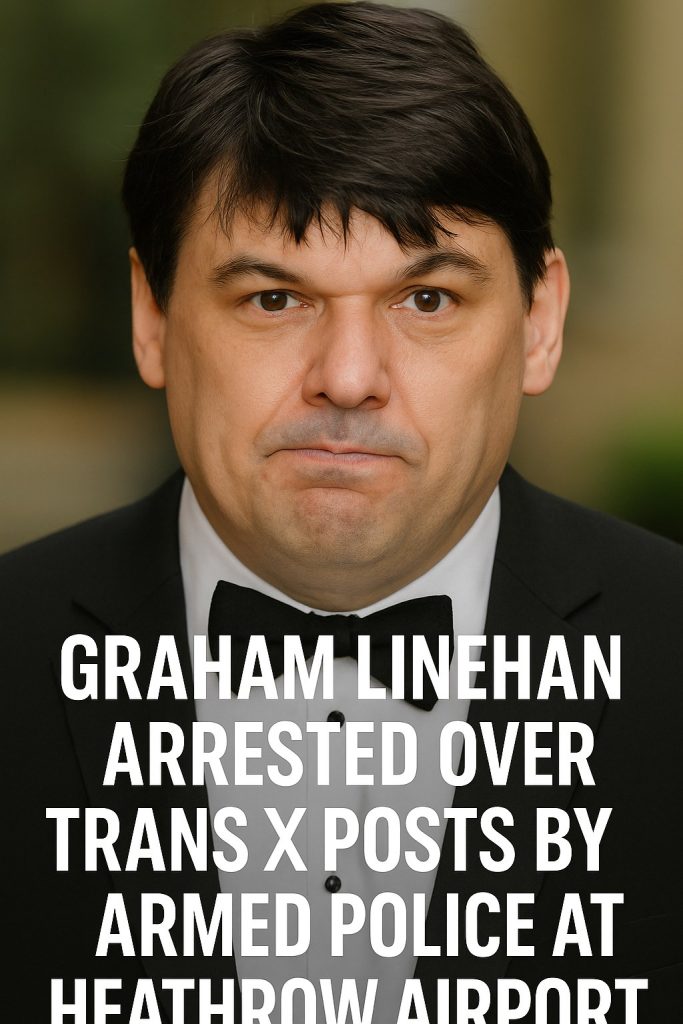
Graham Linehan, the acclaimed creator of the beloved sitcom Father Ted, was recently detained by armed police at London’s Heathrow Airport, sparking widespread discussion and media attention. The detention, which Linehan described as feeling “like being treated as a terrorist,” reportedly stemmed from his controversial social media posts related to transgender issues.
The incident occurred in early 2024 when armed officers stopped Linehan upon his arrival at Heathrow. Sources reveal that the police acted on concerns linked to certain posts he had made online, deemed by authorities to potentially breach laws against harmful or hateful content. Linehan was held for questioning before being released without any charges, according to reports.
This episode has intensified the ongoing debate surrounding freedom of speech and the regulation of online content, especially as it relates to sensitive subjects such as gender identity. Linehan, a prominent figure in the entertainment world, has previously courted controversy for his outspoken views on transgender rights and policies, which many find polarizing.
Background on Graham Linehan and the Controversy
Graham Linehan is widely celebrated for co-creating Father Ted, a sitcom that remains a cultural touchstone with millions of fans worldwide. However, in recent years, Linehan’s vocal stance against certain transgender rights advocacy has drawn significant backlash. He has been suspended from various social media platforms multiple times and has faced calls for accountability over the perceived impact of his rhetoric.
The posts that prompted the Heathrow detention reportedly involved Linehan sharing views critical of current transgender legislation and healthcare practices. UK authorities have been increasing efforts to police harmful online behavior, especially after legislation aimed at curbing harassment and hate speech expanded in scope and enforcement.
Public and Legal Implications
The police’s decision to detain a high-profile individual like Linehan with armed presence has ignited discussion on proportionality and civil liberties. Critics argue that treating him “like a terrorist” might be an overreach and a sign of excessive measures to control social media discourse. Supporters of the police action contend that the enforcement reflects necessary vigilance against content that could incite harm or discrimination.
Legal analysts note this case underscores the challenges facing law enforcement in balancing freedom of expression with the need to protect vulnerable communities online. The UK’s legal framework has evolved to allow stronger intervention against online hate speech but also faces scrutiny on the definitions and thresholds for intervention.
Linehan’s Reaction and Next Steps
Graham Linehan publicly expressed his frustration and shock at the manner of his detention, emphasizing the trauma of being confronted by armed officers. He framed the experience as symptomatic of a broader societal crackdown on dissenting opinions, particularly regarding transgender issues.
At present, no formal charges have been filed against Linehan, and the police investigation details remain confidential. The incident is likely to fuel further debate on the intersection of comedy, public opinion, social media conduct, and law enforcement practices in the UK.
As public conversations around gender identity and expression continue to evolve, cases like Graham Linehan’s highlight the complex challenges in navigating free speech, social responsibility, and the rule of law in an increasingly digital world.