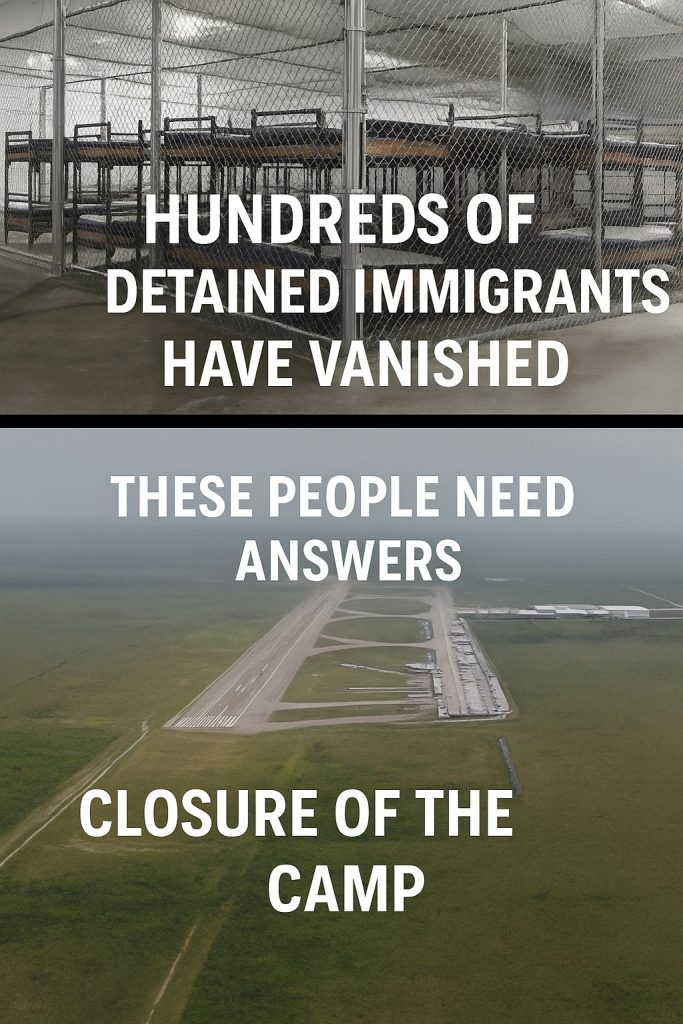
In a shocking turn of events, families and advocates are pressing for answers regarding the alarming disappearances of hundreds of immigrants once detained at the notorious “Alligator Alcatraz” facility in the Florida Everglades. What was once a controversial detention center for approximately 1,800 immigrants has spiraled into a humanitarian crisis, with two-thirds of those detainees now untraceable in government databases.
Reports indicate that as recently as July, individuals held at the facility were recorded in government databases, but now many have simply vanished, prompting both emotional anguish and outrage among their families. With no clear answers from Immigration and Customs Enforcement (ICE) or Florida state authorities, the uncertainty surrounding the whereabouts of these detained individuals has intensified.
Advocates are calling the situation a bureaucratic black hole, describing it as a shocking erasure of vulnerable lives from a system already rife with issues of secrecy and hostility toward immigrants. Groups such as the American Civil Liberties Union (ACLU) have raised alarms regarding gross abuses, failures to communicate vital information to legal representatives, and the troubling pattern of documented disappearances. In this light, the Alligator Alcatraz facility has garnered criticism not only for its treatment of detainees but also for the lack of accountability shown by officials.
Efforts to promote transparency and humane treatment have been met with resistance from state and federal authorities. Allegations of secret and potentially unlawful deportations have raised questions about whether the detainees were deliberately removed from tracking systems to obstruct oversight. This concealment, coupled with ongoing legal maneuvers to maintain the facility’s operations, has sparked outrage among advocates and families alike.
Father Jorge Figueroa, a local religious leader, voiced his concerns, stating, “For many, this facility has become a symbol of abuse and neglect. How can we allow this to continue?” His words echo a growing sentiment that the plight of those detained reflects a broader failure by the system to protect and serve one of society’s most vulnerable populations.
As the crisis unfolds, families and legal representatives are left in the dark. Many fear not only for the physical safety of their loved ones but also worry about their legal status, rights, and the potential consequences of their sudden disappearance. Human rights organizations have called for the immediate closure of the Alligator Alcatraz facility, along with a commitment to reassess and reform the immigration detention landscape.
This ongoing crisis at the Alligator Alcatraz shines a spotlight on the need for systemic change in how the U.S. handles immigration. Advocates argue that more humane and transparent policies are not only necessary but urgent to prevent future abuses and uphold human dignity. Despite the overwhelming call for accountability and reform, the silence from government agencies continues to resonate deeply, leaving families to grapple with their emotional turmoil in the absence of answers.
Resisting the pattern of deflection from federal and state officials, advocates remain determined to amplify their demands for justice. The fate of those who have vanished from the Alligator Alcatraz remains an open wound in the immigration debate, and until their stories are heard, the struggle for transparency and accountability in the system will persist.