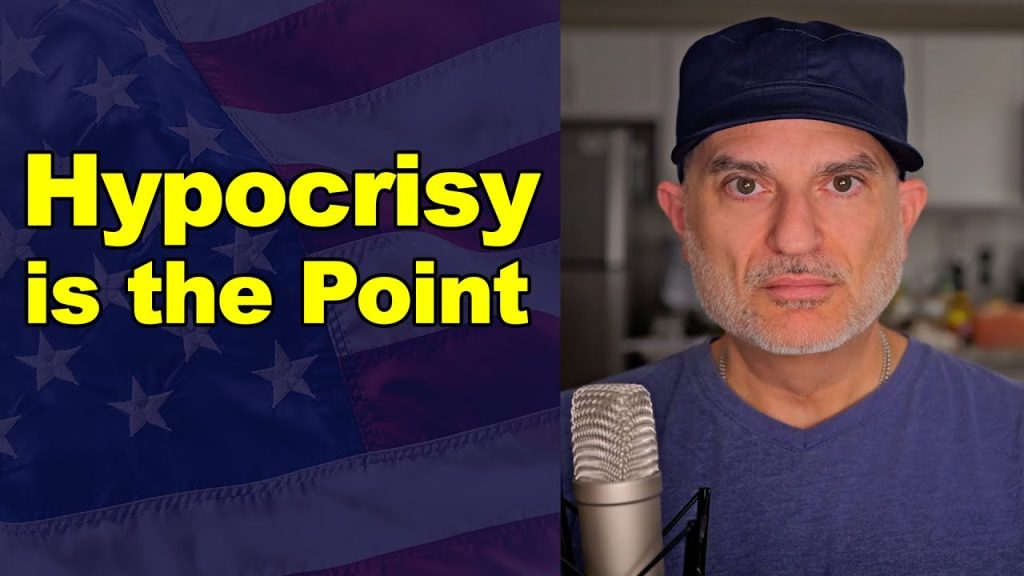
The phrase “Hypocrisy is the Point” immediately invites reflection on the paradoxes and contradictions that permeate modern political discourse. Hypocrisy, in this context, might be understood not merely as a flaw or failing, but as a deliberate strategy employed by political actors to advance agendas, manipulate public perception, or maintain power. This framing challenges the common assumption that hypocrisy is accidental or merely a byproduct of imperfection, suggesting instead that it could be an essential feature of current political maneuvering.

Throughout history, political hypocrisy has been a topic of significant debate. Leaders and parties often espouse values and principles while simultaneously engaging in actions that contradict those commitments. This dissonance raises questions about authenticity, trustworthiness, and accountability in governance. In recent years, the rise of polarized media landscapes and the increasing prominence of performative politics have arguably amplified these dynamics. Politicians and pundits may embrace contradictory stances openly, leveraging them to appeal to different constituencies or to deflect criticism.
The broader political environment includes several factors fueling this phenomenon. The increasing tribalism in many democracies means that loyalty to party or ideology sometimes outweighs the pursuit of consistent policy or truth. Social media platforms incentivize sensationalism and rapid responses, often at the expense of nuance. Moreover, political polarization fosters environments where exposing opponents’ hypocrisy is a common tactic, even if similar behaviors occur within one’s own camp.
Understanding the intentionality behind political hypocrisy is essential to grasp the complex realities of power and influence in the 21st century. It forces citizens and analysts alike to question how democratic accountability can be maintained when contradictions are not just tolerated but potentially instrumentalized. This insight also invites reflection on personal discernment amidst a landscape where fact, rhetoric, and strategic messaging frequently intersect.
Exploring these themes in depth allows for a better appreciation of the challenges facing modern democracies, emphasizing the critical role of media literacy, critical thinking, and robust public discourse to combat cynicism and foster more transparent governance.
Where to Learn More
- Brookings Institution – Research and analysis on political behavior and governance
- Council on Foreign Relations – Insights on political polarization and leadership
- Politico – Up-to-date political news and investigative reports
- The Atlantic – In-depth articles on political culture and democracy
- FactCheck.org – Verification of political statements and claims