In recent weeks, social media has ignited a heated debate over a series of establishments in Europe that display signs reading “No Zionists Allowed.” These provocative messages have drawn both condemnation and support, highlighting larger issues surrounding free speech, political expression, and the Israeli-Palestinian conflict.
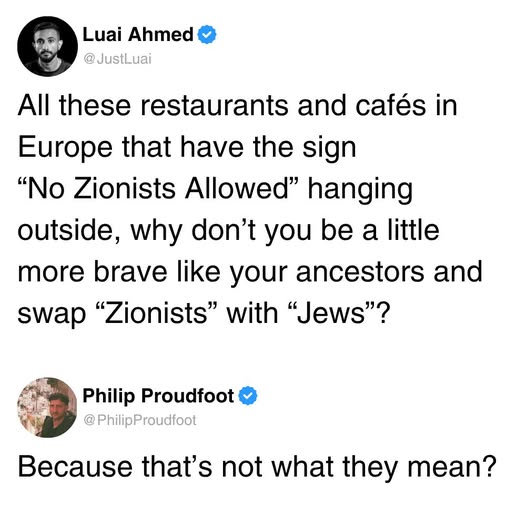
One social media user, @JustLuai, posted an image showing the signs outside several cafés and restaurants across European cities, questioning the bravery — or potential hypocrisy — of such open prejudice. The caption read: “All these restaurants and cafés in Europe that have the sign ‘No Zionists Allowed’ hanging outside, why don’t you be a little more brave like yourself.” This straightforward critique resonates with many who see the signs as a direct form of discrimination, while others argue they are expressions of political stance or solidarity with Palestinian cause.
These establishments, some of which did not respond publicly, have become symbols of a controversial form of protest. Critics argue that such signs promote divisiveness and outright discrimination based on political identity. Human rights advocates emphasize that exclusionary policies in public spaces can foster hostility and undermine social cohesion. Conversely, supporters contend that displaying political sentiments is a form of free expression, especially in countries where heated debates over Israel and Palestine have become common.
The debate extends beyond social media into the streets and international press. Some European cities with large immigrant communities and diverse populations are facing intensified scrutiny about where lines are drawn between free speech and hate speech. Experts note that while individuals and establishments have the right to express their political views, public signage that explicitly excludes a specific group can cross ethical lines and potentially violate anti-discrimination laws.
Nevertheless, the controversy reveals a broader global question: should political and social activism manifest openly in public spaces in such controversial ways? And, perhaps more critically, how do societies reconcile the desire for free expression with the need to prevent hate? As governments and communities grapple with these issues, the rise of openly exclusionary signs in Europe highlights a tense moment of societal introspection amid ongoing conflicts and debates surrounding identity and justice.
Ultimately, what remains clear is that this issue touches on fundamental topics of tolerance, free speech, and the limits of political expression. As it continues to unfold, it will likely serve as a catalyst for important conversations about the boundaries of activism and the role of businesses and individuals in shaping inclusive communities.
Where to Learn More
- European Shops and Restaurants Facing Backlash Over Anti-Zionist Signs – BBC News
- Free Speech or Hate Speech? The Debate Over Palestinian Solidarity Signs in Europe – The Guardian
- Exclusion and Expression: The Rise of Controversial Political Signs in Europe – Al Jazeera
- Human Rights Perspectives on Discrimination and Free Speech – Human Rights Watch
- European Political Movements and Public Sentiment on Israel and Palestine – Euractiv