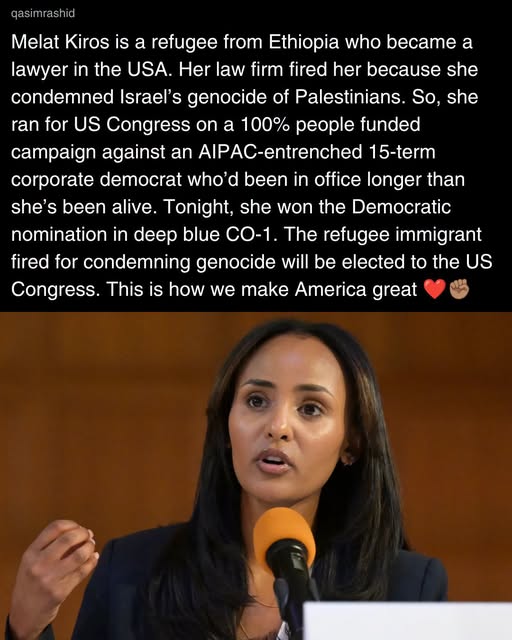
Melat Kiros, a dedicated attorney who arrived in the United States as a refugee from Ethiopia, has found herself at the center of a viral social media controversy after her recent stance condemning Israel’s actions in Gaza led to her firing from her law firm.
Originally fleeing Ethiopia’s turbulent political landscape, Melat Kiros built her life from the ground up, eventually attaining her law degree and establishing herself as a committed legal professional in the U.S. Her journey from refugee to lawyer has inspired many, symbolizing resilience and the pursuit of justice. However, her vocal stance on Israel’s recent military operations has sparked a contentious debate, culminating in her dismissal from her law firm.
According to social media posts and reports, Kiros openly criticized what she described as “genocide” in Gaza, drawing fierce opposition from some quarters while garnering support from others who see her as standing up for human rights. Her comments, shared widely online, have ignited discussions across platforms about freedom of speech, political expression, and professional repercussions faced by advocates speaking out on contentious issues.
In a statement released through her social media channels, Kiros expressed disappointment over her firing, stating, “I believe strongly in standing up against injustice wherever it occurs, regardless of political pressure or personal risk. My hope is that my words inspire a broader dialogue about human rights and accountability.”
Her case raises significant questions about the limits of free expression within professional settings and the extent to which personal beliefs should influence employment. Many voices online are rallying in her support, arguing that her right to voice her opinions is protected under free speech, while others contend her statements might have violated her firm’s policies or ethical standards.
This incident shines a spotlight on the challenging intersection of activism and professional life, especially for individuals from immigrant or refugee backgrounds who often carry the burdens of their countries’ conflicts into their personal and professional identities. Kiros’s story also underscores the pivotal role social media now plays in holding institutions accountable and amplifying marginalized voices.
While legal experts debate the ramifications and the ethics involved, the broader conversation continues about how professionals can or should navigate their personal beliefs in public spheres without risking their careers. Kiros’s experience has become a rallying point for many advocating for free expression and against workplace censorship, especially related to pressing international issues.
As the story develops, attention remains on her case as a potential precedent for how companies handle employees’ political statements and activism. Kiros’s resilience, amidst adversity, highlights the ongoing struggle for truth, justice, and the right to speak out—values that resonate deeply in today’s increasingly polarized world.
Where to Learn More
- Analysis of Free Speech Rights at Work – Reuters
- Refugees as Advocates: Their Challenges and Triumphs – The New York Times
- International Perspectives on the Gaza Conflict – Al Jazeera
- Human Rights Reports on Gaza and International Law – Human Rights Watch