
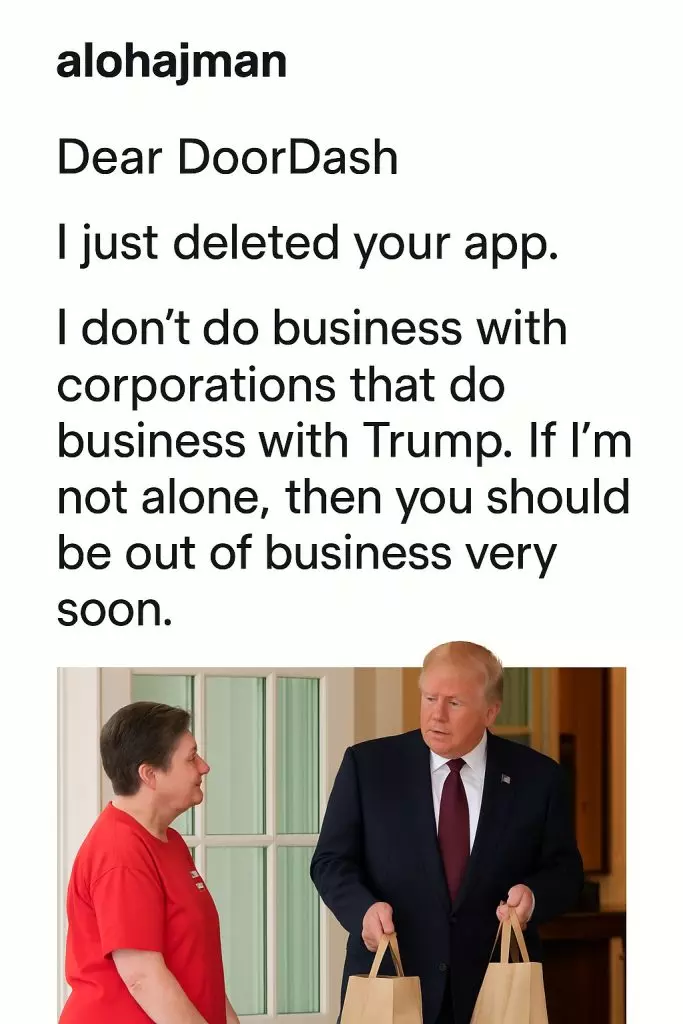
In a rapidly evolving social media controversy, a growing number of consumers are deleting the DoorDash app, citing the food delivery giant’s purported business dealings with former President Donald Trump. The movement gained traction after an image went viral featuring a user named “alohajman,” who posted a candid message stating they had deleted DoorDash specifically because the company does business with Trump.
The message, which read, “Dear DoorDash I just deleted your app. I don’t do business with corporations that do business with Trump. If I’m not alone, then you should be out out of b—,” quickly captured attention across platforms like Twitter and Instagram, igniting renewed calls for corporate accountability and consumer activism.
While DoorDash has not officially confirmed the nature of its dealings with Trump or affiliated businesses, the backlash highlights a growing trend in which consumers closely scrutinize who companies partner with — and how those partnerships align with their values.
What sparked the controversy? The controversy seems to stem from reports that DoorDash may work with some businesses linked to Trump’s ventures, whether directly or through franchise agreements. This association, regardless of how indirect or limited, has prompted some consumers to question the ethics of continuing to support DoorDash.
The user “alohajman” is one among many vocal critics leveraging social media to promote boycotts of companies tied to political figures they oppose. This digital activism taps into a wider trend of “brand accountability,” where consumers demand transparency and alignment with social or political beliefs.
DoorDash, as a major player in the food delivery market, sits in a unique position. Millions rely on its services daily, often making choices based on convenience rather than political considerations. However, given the power of viral social media campaigns, even large corporations can face significant reputational risks.
Industry analysts note that this incident reflects a larger pattern seen over recent years: consumers are no longer passive recipients of advertising but active participants who expect companies to reflect their values. This shift is forcing companies to consider the potential fallout from affiliations and partnerships more carefully.
So far, DoorDash has not released a public statement addressing the viral post or allegations of doing business with Trump-affiliated enterprises. It remains to be seen whether the company will respond to the growing vocal dissatisfaction or choose to focus on its operational services instead.
What could this mean for DoorDash? If the backlash intensifies, DoorDash could face a decline in user engagement or consumer trust, especially if the narrative spreads beyond niche social media circles. Conversely, silence or a lack of transparency might exacerbate the situation, prompting even more users to abandon the platform in protest.
For consumers, this is a reminder of the increasingly complex decisions involved in choosing which companies to support. The incident underscores how deeply intertwined business and politics have become, and how digital activism can influence corporate behavior in real time.
Whether this social media storm will lead to lasting change or simply be another flashpoint in the culture wars remains to be seen. But one thing is clear: in today’s marketplace, brand associations matter—sometimes more than ever.