In a fascinating social media thread that has since gone viral in early 2024, a curious netizen posed the question to medical professionals: “Doctors, what are the dead giveaway signs that someone is faking symptoms?” The post quickly attracted dozens of doctors who shared their experiences and insights, revealing eye-opening patterns and behaviors that often tip off healthcare workers to feigned illnesses in the clinical setting.
According to the collected accounts, recognizing when a patient is faking symptoms—a phenomenon medically known as malingering—can be surprisingly nuanced, requiring both keen observation and medical expertise. From emergency rooms to primary care clinics, doctors unveiled a variety of tells that have helped them discern genuine cases from fabricated ones.
Unrealistic Presentation of Symptoms
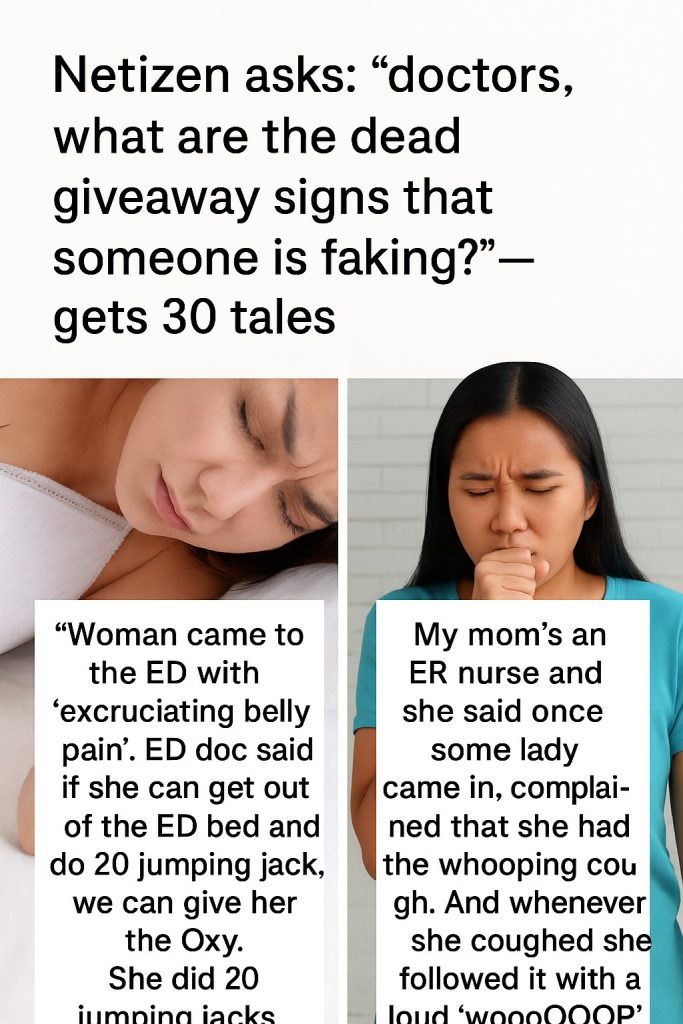
Many physicians noted that when patients exaggerate the severity or duration of symptoms in ways inconsistent with known medical conditions, it raises red flags. For example, one doctor recounted a woman brought to the emergency department with “excruciating belly pain” that failed to align with any diagnostic findings after thorough testing. “The pain description was overly dramatic, shifting locations, and didn’t match typical clinical patterns,” the physician recalled. Such discrepancies often hint that the patient may be simulating their distress.
Inconsistent Medical History and Behavior
Doctors emphasized that patients who give conflicting accounts of their symptoms or medical history can sometimes be fabricating. For instance, a patient might describe severe neurological symptoms but exhibit normal strength and reflexes when examined. Additionally, some patients are found to display symptoms only when clinicians are looking, but less so otherwise, a behavior distinguishable through careful observation.
Unusual Response to Treatment or Tests
A common giveaway lies in how patients respond to medical interventions. Many doctors shared stories of patients who appeared to improve dramatically when given placebos or behaved differently during diagnostic exams designed to test the authenticity of symptoms. Such behavioral clues are often subtle but critical in assessment.
Motivations Behind Faking
Several doctors pointed out that understanding the patient’s motivation—such as seeking prescription medications, avoiding work or legal responsibilities, or gaining financial benefits—can provide context for malingering. One physician noted, “If the story centers strikingly on obtaining narcotics or compensation, it is an important piece of the puzzle.”
30 Medical Tales Shed Light on a Complex Issue
The viral thread includes about 30 detailed accounts from doctors across multiple specialties, highlighting the wide-ranging scenarios where malingering can occur. These stories not only underscore challenges in clinical practice but also the ethical complexities involved in addressing suspected cases without compromising patient care.
While doctors urge caution and empathy, they also stress the need for vigilance. Falsifying symptoms can delay appropriate treatment for real conditions and strain healthcare resources. As one doctor summarized, “It’s a delicate balance between believing patients and evaluating symptoms critically to ensure proper care for everyone.”
This online exchange has sparked widespread discussion among both medical professionals and the general public about the realities of malingering and how the healthcare system manages it. For those intrigued by the interaction, the original post and comments remain a valuable window into the diagnostic detective work doctors must perform daily.