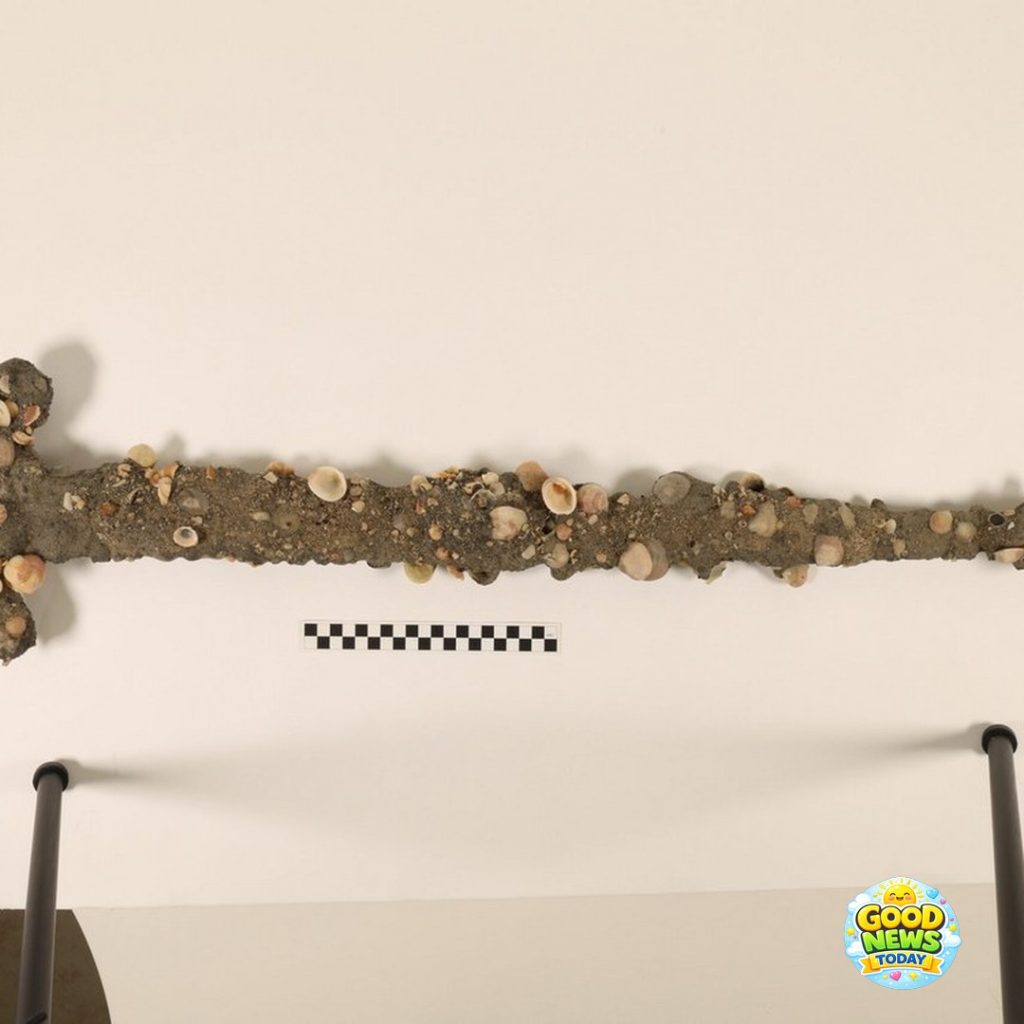
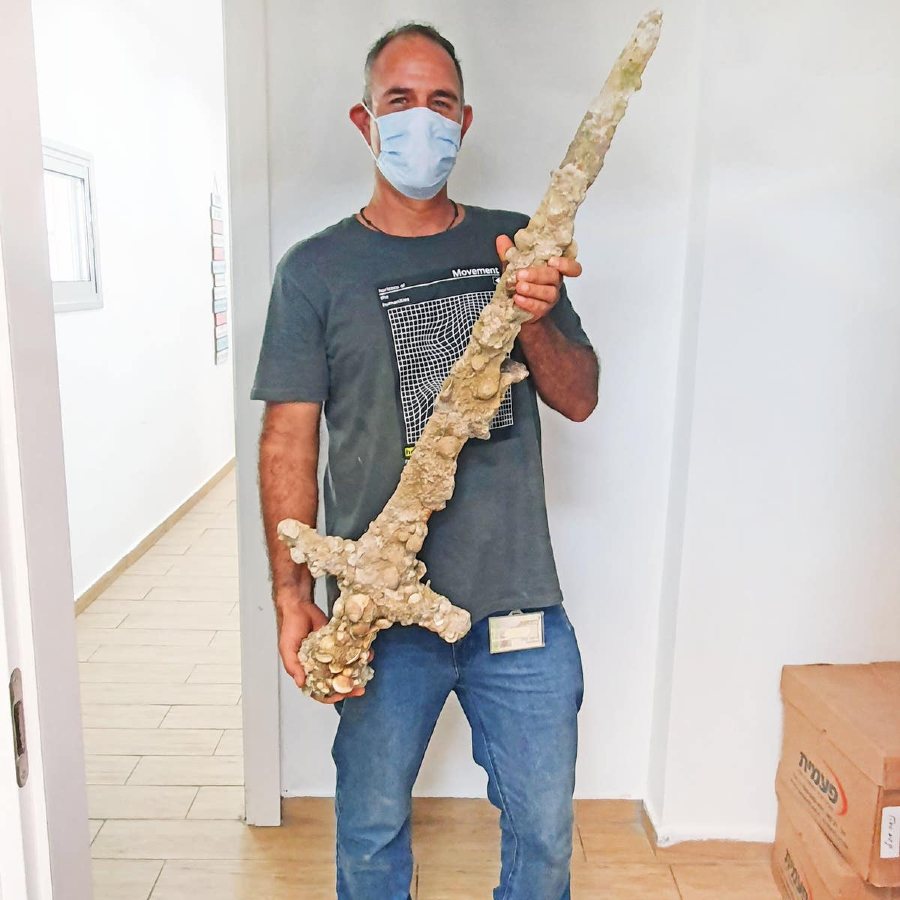
In a remarkable turn of events, diver Shlomi Katzin has made another extraordinary discovery off the Israeli coast—this time, a Crusader sword, just like the one he found five years ago. Initially unearthed in 2021, the first sword appeared as if it had been lost in time, enveloped in shells and sand, reminiscent of a mythical artifact from Atlantis. The shape was unmistakable, and Katzin couldn’t believe his luck.
Now, after an astonishing stroke of fortune, Katzin has come across a second barnacle-covered sword, not far from the site of his first find. This new sword, believed to date back to the 12th century, has been handed over to the Israel Antiquities Authority (IAA) and researchers from the Department of Maritime Civilizations at the University of Haifa, where Katzin is currently studying maritime archaeology.
To learn more about the artifact without causing any damage, experts decided to utilize a CT scanner at a nearby hospital. This innovative approach allowed them to visualize the remnants of the sword hidden beneath layers of barnacles. The scan revealed that only a small portion of the iron blade remained, suggesting that it was likely forged in Europe rather than the Levant. This finding supports the theory that both swords belonged to soldiers engaged in campaigns during the Crusades.
The Crusades, which took place between the 10th and 13th centuries, consisted of three primary attempts by Europeans to seize the Holy Land from Arab control. Interestingly, while Muslim armies fortified the coasts during this period, it was the Europeans who ventured across the seas.
During his dive, Katzin spotted a group of individuals with metal detectors in an area known for historic shipwrecks. Concerned they might be looters, he approached them and, at that moment, noticed the sword standing upright in the sand. Recognizing its significance, he quickly reached out to Professor Debbie Zwickel at Haifa University, who obtained special permission from the IAA to retrieve the sword and prevent it from being lost to looters or environmental damage.
Professor Zwickel expressed her excitement about the discovery, stating, “This is an extremely rare find that sheds light on the Crusader presence along our coasts.” She noted that only a handful of similar swords from this era have been found in Israel, and this latest discovery enhances our understanding of naval activities and the lives of warriors during the Crusader period.
In a world where treasures from the past continue to surface, Katzin’s tale of serendipity serves as a reminder of the fascinating history that lies beneath our seas. Share this incredible story of discovery and adventure!