
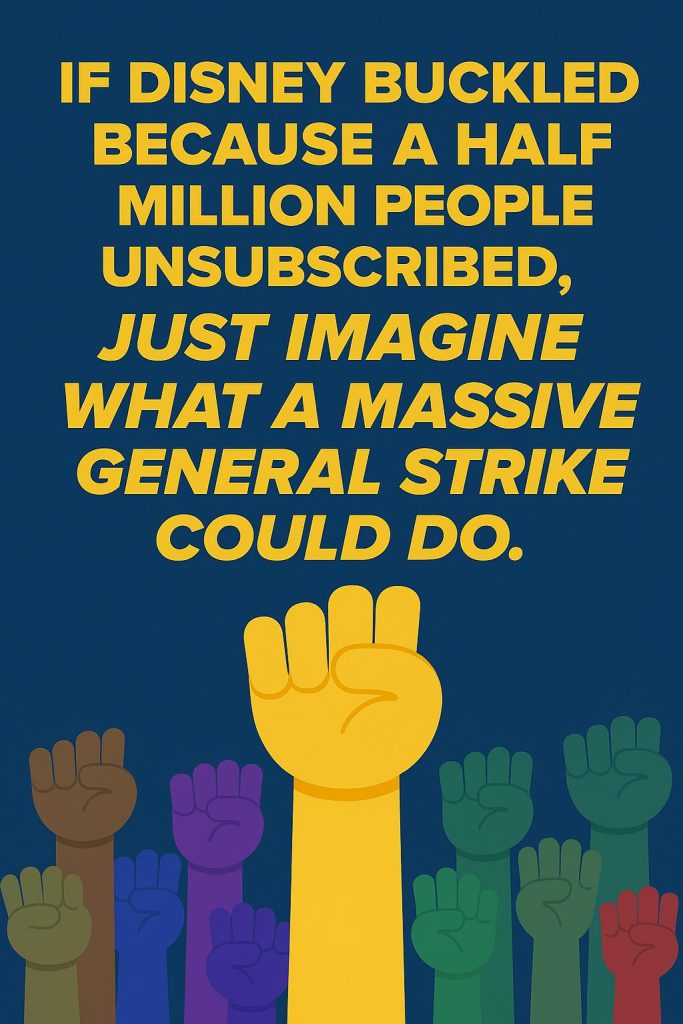
In the wake of Disney’s recent announcement regarding a significant drop in subscribers, social media has erupted with discussions around the implications of collective action. A viral graphic making the rounds on platforms like Twitter and Instagram boldly asserts, “IF DISNEY BUCKLED BECAUSE A HALF MILLION PEOPLE UNSUBSCRIBED, JUST IMAGINE WHAT A MASSIVE GENERAL STRIKE COULD DO.” This statement has ignited a conversation about the potential impact of coordinated efforts in the face of corporate power, raising eyebrows and enthusiasm alike among those advocating for systemic change.
Disney, the entertainment titan renowned for its iconic films and theme parks, reported a staggering loss of over 500,000 subscribers from its streaming service in the last quarter alone. This figure has sent shockwaves through the media industry and led many to question the sustainability of streaming platforms amidst rising competition and changes in consumer behavior. The abrupt canceling of subscriptions has recently become a rallying cry for advocates insisting that consumer choices can wield considerable influence, potentially leading to broader activism and engagement.
The graphic’s message conveys a powerful sentiment; people are increasingly recognizing that their actions—whether by subscribing or unsubscribing—can effect real changes. Supporters of labor movements liken this digital phenomenon to the power of a general strike, where a collective halt to work can lead to demands being met and change set in motion. But could a similar movement take hold in consumer spaces?
As society grapples with economic uncertainty, income inequality, and corporate overreach, the idea of workers banding together to exert pressure on their employers is ever more appealing. The digital realm now complements these movements by allowing consumers to vote with their wallets. With a mere tap or click, subscribers can dramatically affect a company’s bottom line, as shown by Disney’s recent struggles.
The conversation about mass strikes is rooted in historical context—when workers united for common causes, like fair wages or better working conditions, significant changes often followed. The potential correlation between consumer behavior and corporate decisions has ushered in a new era of activism, where individuals feel empowered to take a stand against companies they perceive as straying from their values.
In addition to raising concerns about corporate accountability, the viral graphic raises essential questions about the nature of consumer loyalty. Are individuals willing to give up beloved franchises because of their discontent with business practices? The trend of mass unsubscribing challenges businesses to not only prioritize profits but also to become more attuned to public sentiment regarding their operations and advocacy efforts. This could include prioritizing diversity and inclusion, environmental sustainability, and ethical labor practices.
As the conversation continues to evolve, digital movements are gaining traction, and platforms such as TikTok, Twitter, and Instagram provide a fertile ground for ideas and dialogues that challenge the status quo. Activists argue that greater awareness and unity can indeed lead to substantial changes. So, as consumers reflect on their choices, they may find that their voices, combined with collective action, hold the potential to influence giants like Disney and beyond.
Where to Learn More
- Disney’s Subscriber Loss: Analyzing the Impact – Forbes
- Disney’s Streaming Troubles: What It Means for the Future – The New York Times
- Mass Strikes and Collective Action: Are Consumers Next? – The Guardian
- The Crisis Facing Disney: Understanding Its Subscriber Decline – The Washington Post