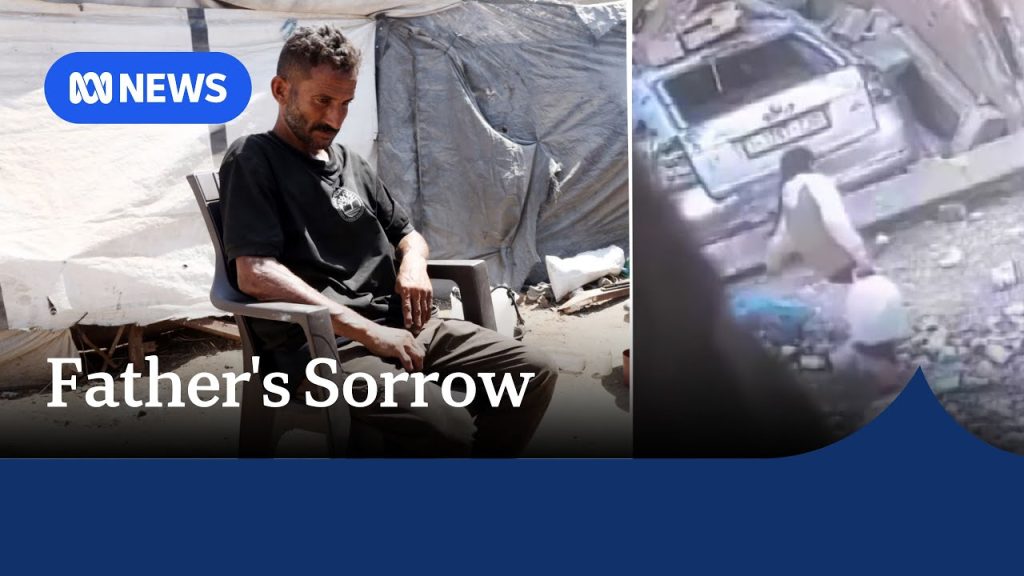
In a heart-wrenching video, Ashraf, a grieving father from Gaza, recounts the pain of losing his 10-year-old daughter, Amina, during an Israeli missile strike in late December. As he struggles to come to terms with his family’s tragic loss, Ashraf’s emotional testimony shines a light on the ongoing humanitarian crisis in the region.

Amina was tragically killed while leaving the Kamal Adwan Hospital to collect water for her family. In the video, Ashraf vividly describes the moments that followed the missile strike, expressing his devastating realization that he would never see his daughter again. “Did I not raise her?” he laments, speaking of the bond he shared with Amina, emphasizing the unbearable heartache that comes with parenting lost under violent circumstances.
The missile attack not only took Amina but also severely injured Ashraf, who recalls the horror of that day as his wife searched for their daughter through the chaos and destruction. When they found Amina, wrapped in shrouds, his wife questioned if she had been martyred, to which Ashraf, grappling with the overwhelming grief, could only respond affirmatively. “There is no life left,” he states emphatically, reflecting on the compounded losses his family has suffered since that day. His wife and one of their sons were killed in another strike just five months later, deepening their tragedy.
This video has resonated deeply within and beyond the Palestinian communities. Human rights organizations, such as Euromed Monitor, have highlighted cases like Amina’s as evidence of the ongoing violence against children in conflict zones. They argue that such incidents exemplify the dire humanitarian implications of military actions that affect civilians. The Israeli military has refrained from responding directly to inquiries regarding the specifics of this incident, further complicating the narrative surrounding the ongoing conflict.
The story of Amina and others like her captures not just a singular tragedy but reflects the broader patterns of violence and territorial strife that have plagued the Israeli-Palestinian conflict for decades. As families continue to experience loss in this manner, the calls for accountability and a ceasefire gain urgency amidst growing international concern.
Ashraf’s haunting words resonate on multiple levels, invoking a universal sense of sorrow and the need for peace. In his hopes of leaving the region behind, he encapsulates the sentiment that many in conflict-ridden areas feel—a longing for peace, safety, and the preservation of innocence, a desire amplified by the heartbreaking stories of children, like Amina, whose lives were cut tragically short.
Where to Learn More
- Al Jazeera – Comprehensive coverage of the Israeli-Palestinian conflict, including humanitarian impacts.
- Human Rights Watch – Reports on human rights violations and humanitarian conditions in conflict regions.
- BBC News – Global news outlet providing analysis and updates on Middle Eastern affairs.
- Amnesty International – Campaigns for the protection of human rights and justice worldwide, including conflicts in Gaza.
- Euromed Monitor – Focuses on documenting human rights in the Middle East and North Africa, emphasizing civilian casualties in conflicts.