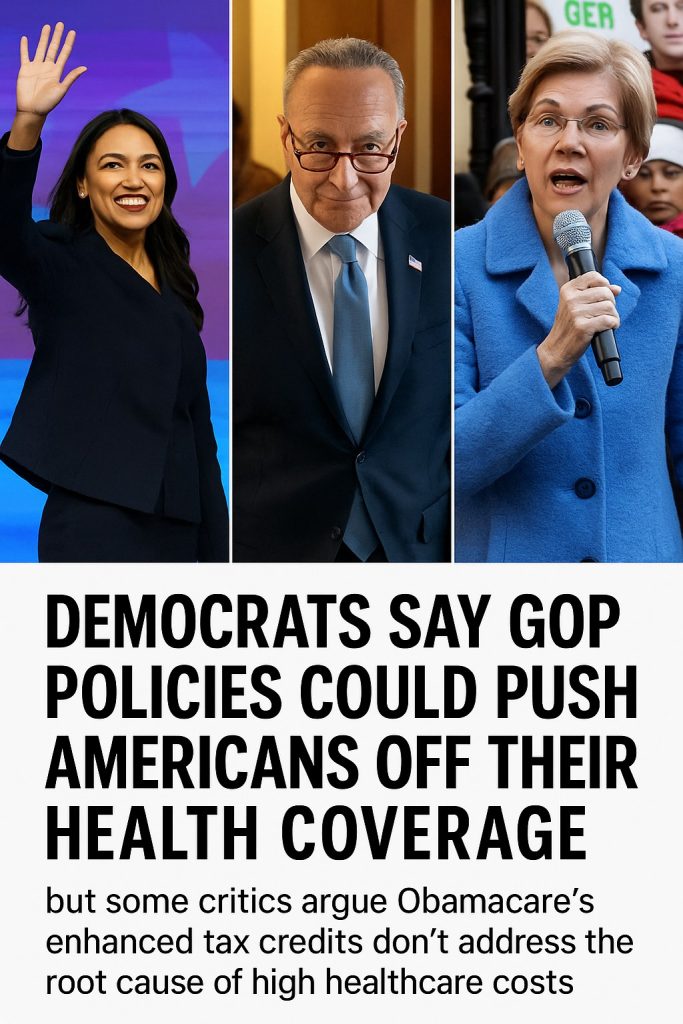
As the political landscape continues to shift ahead of the upcoming elections, a significant debate is brewing over healthcare policies in the United States. Democrats are sounding alarms that recent Republican policies could drive millions off their health insurance, igniting fears of increased vulnerability among already economically strained Americans. Meanwhile, some critics argue that the current system, particularly enhanced tax credits introduced under the Affordable Care Act (ACA), fails to address the deeper issues underlying exploding healthcare costs.
Supporters of the Democratic stance cite new proposals from Republican lawmakers that could cut back on Medicaid and alter the existing framework of the ACA, directly threatening the coverage of millions. With nearly 30 million Americans already uninsured and many more struggling to afford necessary care, the potential fallout from GOP measures raises urgent concerns for public health and economic stability. “Health care should not be a privilege; it is a right,” declared Senator Elizabeth Warren in a recent press conference. “We must protect people’s access to coverage, not put it at risk.”
On the other side of the aisle, critics of existing healthcare reforms point to the enhanced tax credits as an inadequate solution to a systemic problem. “While it’s true that the ACA has helped many, throwing money at the problem does not fix the sky-high prices of healthcare services and medications,” stated Dr. Emily Rodriguez, a health policy expert at the Brookings Institution. This sentiment echoes among a growing number of economists and health advocates who argue for deeper structural reforms instead of temporary solutions to affordability.
The crux of the matter lies in the dramatic increase in healthcare costs over the last decade. Critics argue that tackling high prices is crucial for any sustainable healthcare system. They emphasize the importance of not only extending coverage but also ensuring that care is affordable for all. “We are not going to truly address the issue until we confront the real costs involved in healthcare delivery,” explained Dr. Mark Cai, a healthcare economist. “Tax credits help in the short term but do not fix the underlying problems that make healthcare so expensive.”
The divide on this issue has sparked rigorous debate among voters, with many Americans directly affected by the policies in question. Data from recent polls suggest that while many are initially supportive of enhanced tax credits for low-income families, there is equally significant concern regarding the overall structure and sustainability of the system. “People want coverage, but they also want to know that they can afford the care when they need it,” commented political analyst Sarah Jennings.
As discussions continue ahead of the midterm elections, both parties will need to articulate clear, actionable solutions that resonate with voters. For Democrats, defending the ACA is paramount, while for Republicans, offering alternatives that do not compromise access will prove crucial. The conversation surrounding healthcare in the U.S. is more pertinent than ever, and with lives hanging in the balance, Americans are hoping for a resolution that secures their health without a hefty price tag.
Where to Learn More
- What the Current Health Care Debate Means for America – Brookings Institution
- Health Care Debate Could Turn the Midterms on Their Head – NBC News
- The Affordable Care Act: 10 Years Later – Kaiser Family Foundation
- Americans Say Health Care is Their Top Policy Priority – CNBC
- Healthcare Costs: Are They Ever Going to Reduce? – Washington Post