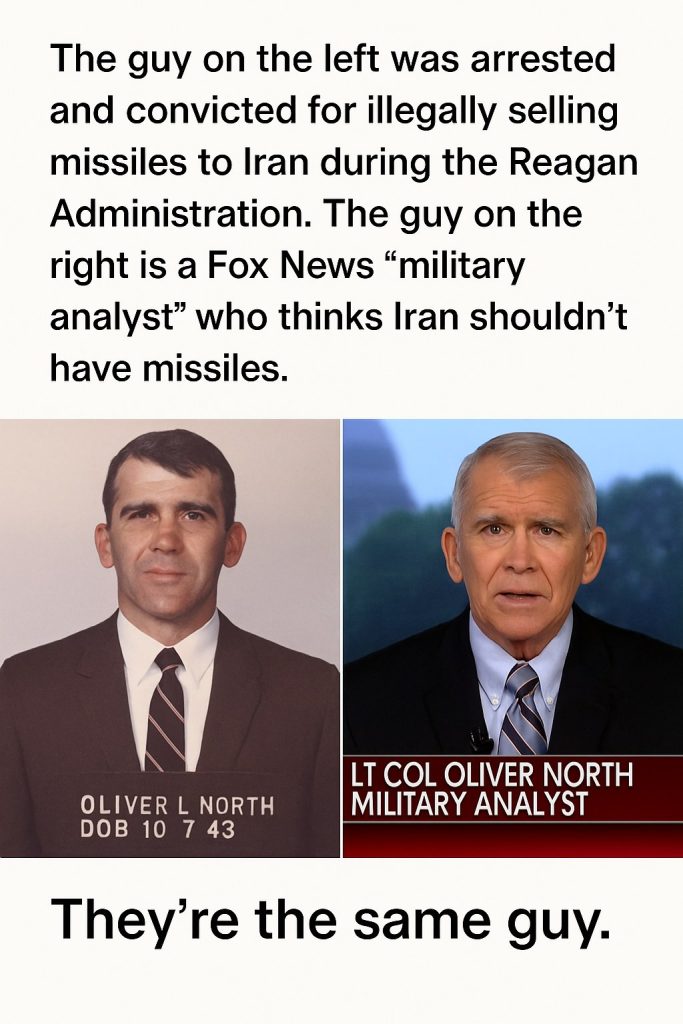
A recently viral image circulating on social media has reignited public interest and debate, capturing a moment inside the Oval Office during the Reagan administration. The photograph features two key figures, one of whom was reportedly arrested and convicted for illegally selling missiles to Iran — a charge stemming from the infamous Iran-Contra affair that shook the United States government in the 1980s.
The image’s caption, shared widely under the handle @iamufohunter, identifies the man on the left as the convicted individual. Although the photo itself doesn’t include official names, historical records help clarify who these figures likely are and why their involvement remains a topic of major controversy.
During the early to mid-1980s, the Reagan administration faced a clandestine scandal where senior officials secretly enabled arms sales to Iran—a country then designated as a state sponsor of terrorism—in hopes of securing the release of American hostages and funding anti-communist rebel groups in Nicaragua known as the Contras.
Oliver North, a National Security Council staff member, is widely recognized as one of the principal architects of the operation. In 1989, North was convicted of charges including conspiracy to defraud the United States and obstruction of justice related to his role in facilitating illegal arms transactions to Iran. While his convictions were later vacated on appeal, the case remains one of the most controversial legal episodes in U.S. political history.
The identification of these men in the photo is a stark reminder of how actions during this tumultuous period sparked a congressional investigation and captivated the nation’s attention through televised hearings.
The man on the right in the viral image has not been explicitly named in the accompanying text, but considering the context, he is likely a senior administration official or advisor involved in or impacted by the operations. The roles and reputations of those photographed serve as a potent symbol of political intrigue and the complex ethical questions surrounding covert government actions.
Beyond the historical facts, this spreading image reiterates how moments frozen in time—such as a candid Oval Office gathering—can resurface decades later with fresh public scrutiny. Citizens today continue to debate the balance between national security, executive power, and accountability, themes that resonate far beyond the 1980s.
While the Iran-Contra affair might seem like a distant chapter in American history, its lessons about transparency, oversight, and the consequences of clandestine foreign policy decisions are still deeply relevant in our current political landscape.
For social media users and history enthusiasts alike, the viral photo offers a visually engaging entry point to explore one of the most dramatic and consequential episodes in late 20th-century U.S. governance.
Where to Learn More
- Iran-Contra Affair – History Channel
- Declassified Documents on Iran-Contra – George Washington University National Security Archive
- Iran-Contra Affair Overview – Encyclopedia Britannica
- Justice Department Background on Oliver North – U.S. Department of Justice