
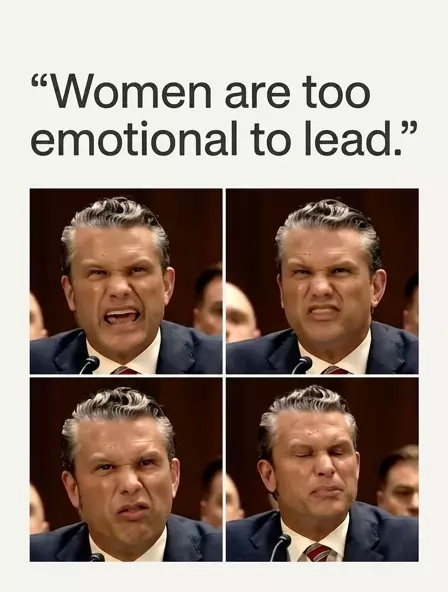
In the age of social media, provocative statements often spark widespread debate, revealing long-standing stereotypes about gender and leadership. Recently, a viral post featuring the quote “Women are too emotional to lead” has reignited conversations about gender bias and the importance of reevaluating traditional assumptions.
The post, attributed to the anonymous user @covie_93, quickly gained traction, with thousands sharing and commenting on the idea that women lack the emotional composure necessary for effective leadership. Critics argue that such statements are rooted in outdated stereotypes that undermine women’s capabilities and contributions across all sectors of society.
Challenging gender stereotypes
Many experts in psychology, sociology, and political science emphasize that emotional intelligence — often associated with empathetic leadership — is a valuable trait in political, corporate, and community settings. Dr. Alicia Grant, a leadership psychologist, explains, “The misconception that women are inherently more emotional than men is not supported by scientific evidence. In fact, research shows that emotional intelligence can enhance decision-making, conflict resolution, and collaboration.”
Historically, women have faced barriers to leadership roles, with societal biases often painted as personal shortcomings. However, studies from institutions like the Pew Research Center highlight that female leaders tend to demonstrate resilience, strategic thinking, and empathy, qualities essential for navigating complex challenges during crises—ranging from economic downturns to public health emergencies.
Conversations sparked by social media posts like @covie_93’s reveal a broader societal struggle with ingrained stereotypes, which can hinder progress towards gender equality. As more women ascend to prominent positions — from political leaders to corporate executives — the narrative must shift away from misconceptions about emotional capacity toward recognizing diverse leadership styles.
Leadership is multifaceted, and emotional strength isn’t exclusive to any gender. Instead, cultivating emotional intelligence—regardless of gender—can lead to more inclusive, compassionate, and effective leadership. Moving forward, society must focus on dismantling stereotypes and supporting individuals’ abilities based on skills and merit rather than outdated notions of gender and emotion.
Where to Learn More
- Women in Leadership: An Updated Perspective – Pew Research Center
- The Emotional Intelligence Revolution: Why Empathy Matters in Business – Harvard Business Review
- Raising Emotional Intelligence in Women and Girls – Psychology Today
- Why Emotional Intelligence is the Key to Success in Leadership – Forbes