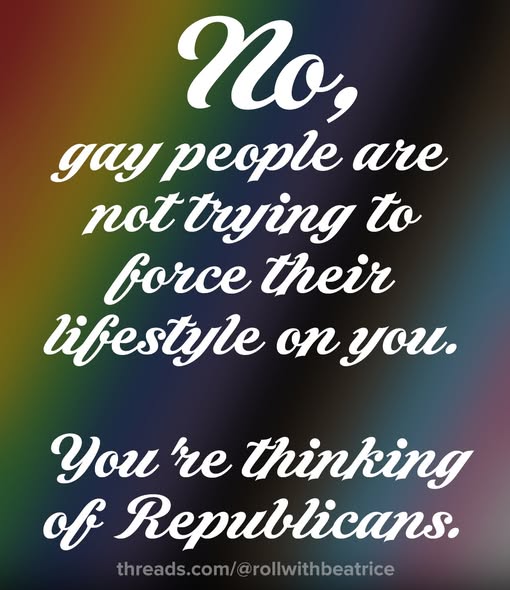
In the ongoing cultural debates surrounding LGBTQ+ rights, a common misconception persists: that advocates for gay rights are attempting to “force” their lifestyle onto others. This misconception was recently highlighted by a viral social media post that quickly garnered thousands of shares and comments. The post features an image with the text, “No, gay are not trying to force their lifestyle on anyone. You’re thinking of Republicans.” — a pointed critique aimed at clarifying misconceptions and urging the public to understand the distinction between advocacy and coercion.
The image underscores a crucial distinction that often gets clouded in polarized discussions. Advocates for LGBTQ+ rights are pushing for equality, acceptance, and the right to live authentically. They are not attempting to impose their identities or beliefs onto others, but rather seeking societal acceptance and legal protections similar to those afforded to other groups.
Many social media users and commentators have echoed this sentiment, emphasizing that choosing to live openly as LGBTQ+ is a matter of personal identity and human rights—not an act of aggression or invasion on anyone else’s lifestyle. “It’s about fairness and respecting individual differences,” said Beatrice Rol, the creator of the viral post, who elaborated on her thread, pointing out that many critics misunderstand advocacy as an attempt to impose values.
This misconception can be traced back to broader political and cultural polarization. Some argue that certain groups, like many Republicans, actively seek to restrict LGBTQ+ rights through legislation or social rhetoric. Others view advocacy as a moral or lifestyle choice, which is a fundamental misunderstanding of the purpose of LGBTQ+ activism — it is about equality, not dominance.
Health professionals, human rights organizations, and sociologists have consistently stated that supporting LGBTQ+ rights enhances societal well-being by fostering inclusivity and reducing mental health disparities among sexual minorities. According to the Human Rights Campaign, “Equal rights for LGBTQ+ individuals are essential to creating a fair, just society.”
It’s vital for the public discourse to move beyond misconceptions and recognize that living openly as LGBTQ+ doesn’t threaten anyone else’s rights or values. Instead, it highlights the importance of accepting diversity and promoting mutual respect.
As social media continues to be a battleground for cultural debates, posts like these help shed light on misunderstandings and promote more nuanced conversations. Clarifying that LGBTQ+ advocacy is about dignity, rights, and acceptance can foster a more inclusive societal outlook, free from unfounded fears or stereotypes.
Where to Learn More
- Understanding LGBTQ+ People – Human Rights Campaign
- LGBTQ+ Issues and Mental Health – American Psychological Association
- LGBTQ+ Rights and Politics – The Advocate
- LGBT Rights and Discrimination – Amnesty International
- LGBT Health Insights – Centers for Disease Control and Prevention