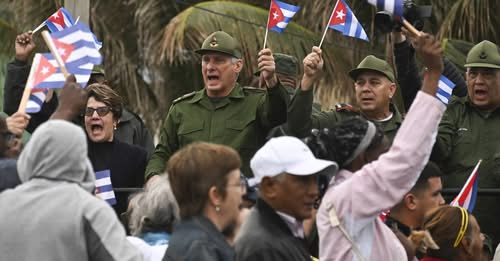
In a pointed rebuke to recent threats from the United States, Cuban President Miguel Díaz-Canel Bermúdez issued a resolute statement emphasizing Cuba’s unwavering commitment to sovereignty and independence. The response came after the U.S. president once again hinted at or directly threatened the possibility of invading the Caribbean nation, igniting tensions and reigniting longstanding debates over U.S.-Cuba relations.
During a government briefing, President Díaz-Canel boldly declared, “We would find a people determined to defend sovereignty and independence in every inch of the national territory.” His words echo decades of Cuba’s stance against foreign intervention and highlight the resilience that has defined the island nation since the Cuban Revolution of 1959.
Historically, U.S.-Cuba relations have been fraught with conflict, especially following the Cold War period. The U.S. government has maintained a strict embargo on the island for over 60 years, citing concerns over human rights and democracy. However, threats of military invasion periodically surface, often as part of broader political rhetoric or policy shifts. Recent comments by the current U.S. president have reignited fears of renewed military intervention, prompting Cuba’s leadership to reaffirm its sovereignty on the international stage.
“We are a sovereign nation, and no external threats will deter us from protecting our revolution and our people,” Díaz-Canel emphasized. “Any attempt at invasion will be met with the firm resolve of our entire society.” These sentiments reflect Cuba’s long history of resisting foreign influence, including its successful guerrilla resistance during the Cold War era, which cemented the island’s image as a symbol of anti-imperialism in Latin America.
The Cuban government has also criticized what it perceives as aggressive posture from Washington, arguing that such threats undermine prospects for diplomatic dialogue and peaceful coexistence. Cuban Foreign Minister Bruno Rodríguez called the latest threats “a clear violation of international norms and an attempt to intimidate a sovereign nation,” demanding respect for Cuba’s independence and sovereignty.
This renewed exchange of rhetoric occurs amid complex regional dynamics, including the ongoing U.S.-Cuba diplomatic rapprochement efforts and Cuba’s efforts to navigate economic challenges exacerbated by sanctions, the COVID-19 pandemic, and global economic shifts. The stance from both sides suggests that diplomatic tensions are unlikely to ease in the near term, and Cuba remains vigilant in defending what it considers to be its constitutional rights.
As the world watches these developments unfold, many analysts suggest that the Cuban government’s firm stance aims to send a message both domestically and internationally: Cuba will resist any form of external coercion and will defend its sovereignty at all costs. The statement also serves as a reminder to the international community of Cuba’s enduring desire to chart its own course, despite external pressures.