
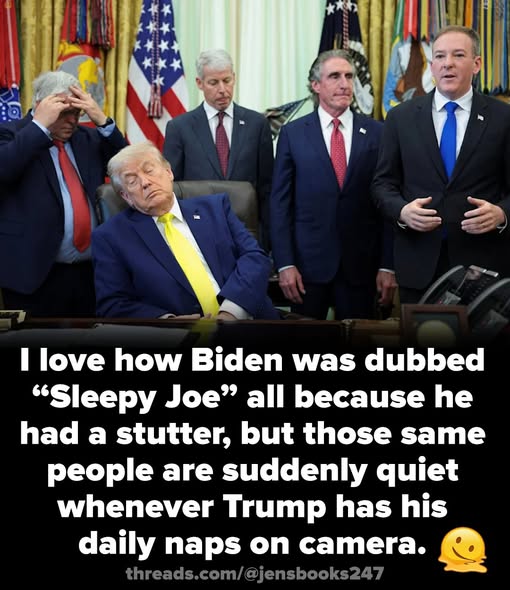
In the ever-evolving landscape of political discourse and social media activism, a new online debate has emerged that has captured the attention of many Americans. It revolves around the contrasting perceptions of President Joe Biden and former President Donald Trump, specifically regarding their public behaviors and how they are judged based on qualities like speech patterns and daily routines.
An image going viral on social media juxtaposes two widely recognized figures: President Biden, often labeled as “Sleepy Joe,” and Donald Trump, known for his sometimes unconventional sleep schedule. The post highlights a double standard: many critics previously mocked Biden for his stuttering and perceived sluggishness, yet they now remain notably silent—or at least less critical—of Trump’s nap habits, which have been publicly documented.
The “Sleepy Joe” nickname, originally intended as an insult during the 2020 campaign, centered partly on Biden’s verbal stumbles and slower speech delivery. Many political opponents and commentators criticized these traits as signs of frailty or lack of stamina. However, supporters and some observers argue that such criticisms are unfair and rooted in bias, especially as Biden exhibits moments of fatigue attributable to age or health considerations.
On the flip side, Donald Trump’s daily naps and extended rest periods have occasionally made headlines, but now garner less public scrutiny. Critics on social media point out this inconsistency, suggesting that the same individuals who mocked Biden’s speech imperfections are now oddly quiet about Trump’s sleep habits, which some describe as “routine” or “just taking a break.”
The social media post’s message underscores a broader conversation about fairness and double standards in political discourse. “Why is it okay to criticize one president for something that’s completely natural or benign while brushing off similar behaviors in another?” one user commented. Others have invoked the idea that political bias often colors perceptions, influencing which traits are accepted or ridiculed, regardless of the context or health considerations.
Experts note that focusing on a politician’s health or routine behaviors contributes to a proxy debate about their endurance, leadership qualities, and mental acuity. Still, many argue that such personal traits should not overshadow substantive policy discussions but acknowledge that the cultural context influences what gets amplified or dismissed.
The discussion gained momentum as it spotlights ongoing concerns about fairness in political coverage, the influence of social media narratives, and the importance of holding all leaders to consistent standards—without bias or double standards. Whether one agrees or disagrees, it’s clear that these conversations resonate widely, reflecting broader frustrations with political hypocrisy and media sensationalism.
Where to Learn More
- Analyzing the Double Standard in Presidential Criticism – Politico
- Trump’s Nap Schedule: Public Reactions and Implications – The Washington Post
- Why Do We Criticize Politicians’ Physical and Behavioral Traits? – NPR
- Research on Presidents’ Health and Public Perceptions – FactCheck.org