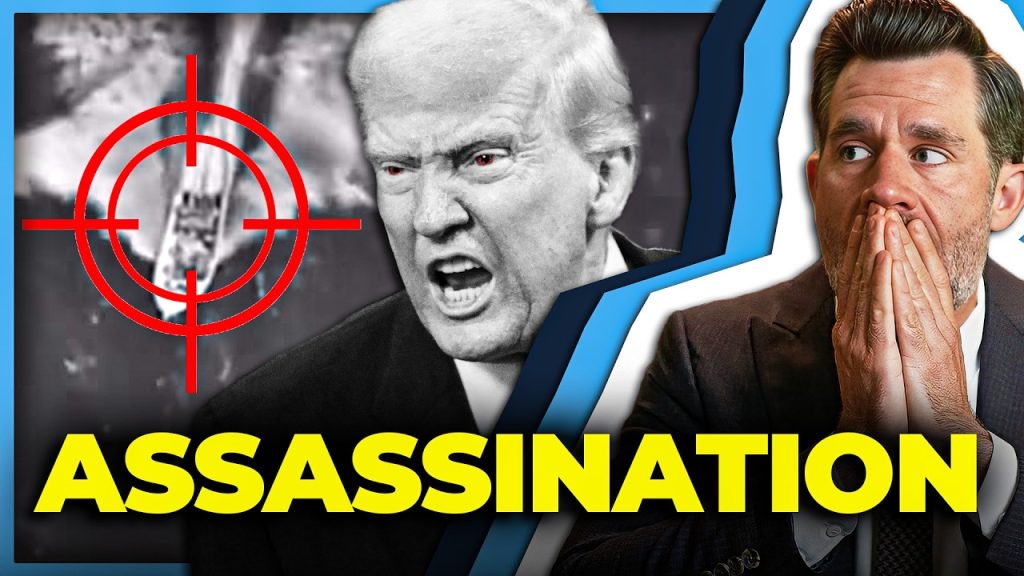
The political landscape is once again shaken as a recent video raises serious allegations against the Trump administration concerning a military operation that resulted in the deaths of 11 individuals purportedly linked to drug trafficking. The shocking transcript reveals assertions that these actions may equate to murder and raises questions about the legality and morality behind the administration’s approach to national security.

On September 2, 2025, the U.S. military was reported to have engaged in a targeted strike on a vessel in international waters of the Caribbean, allegedly identified as affiliated with the Trenagua criminal network, a group that the Trump administration officially classified as a foreign terrorist organization earlier that year. This action led to the deaths of 11 people, which has drawn intense criticism and sparked a debate on the ethics of military engagement outside conventional combat situations.
The video emphasizes the perceived transformation of U.S. foreign policy, with officials arguing that the label of “terrorist” enables the government to operate without the constraints of due process. Critics argue that such a stance dangerously undermines international law and human rights, suggesting that any group or individual categorized as a terrorist could be targeted for lethal action without judicial oversight. The implications of this doctrine could extend far beyond the immediate context, leading to potentially dire consequences for civilians around the globe.
The commentary in the video expresses disbelief at a supposed lack of coverage regarding these grave assertions, highlighting a perceived media silence on issues of accountability in military actions. It raises critical points about civilian safety and the prioritization of national security over legal norms. The narrative goes so far as to question whether the U.S. has crossed a moral line, suggesting that wars have been instigated over lesser provocations than those cited in this controversial strike.
Marco Rubio’s involvement, mentioned in the video, serves to further complicate the administration’s stance, positioning him alongside high-ranking officials such as the Secretary of State and Secretary of Defense. The video cites them discussing international law while maintaining that the military strike was justified. Secretary of Defense Hegsth’s remarks, which appear to dismiss the relevance of international law in the context of U.S. actions, further fuel the contentious debate over the legitimacy of such military operations.
As this narrative unfolds, it paints a stark picture of a precedent being set, one that normalizes extrajudicial actions in the guise of national security. The administration’s rhetoric suggests that with the right framing, lethal force can be perceived as a viable solution to complex issues, such as the burgeoning crisis of drug trafficking that has plagued the region. Yet, this raises ethical questions that are crucial in a democratic society—the balance between protecting citizens and adhering to principles of human rights.
This incident has the potential to ignite a broader discussion on the implications of such military policies, potentially affecting global perceptions of the United States. As the nation grapples with these revelations, the conversation around accountability, ethics in warfare, and the rule of law will likely grow in intensity, making it critical for citizens and lawmakers alike to reflect on the direction in which U.S. foreign policy is headed.
The fallout from these allegations is still unfolding, and as public discourse develops, it remains to be seen how this will impact the 2026 election cycle and the administration’s standing. Calls for transparency and accountability are growing louder, and the implications of this military operation may resonate far beyond the Caribbean waters.