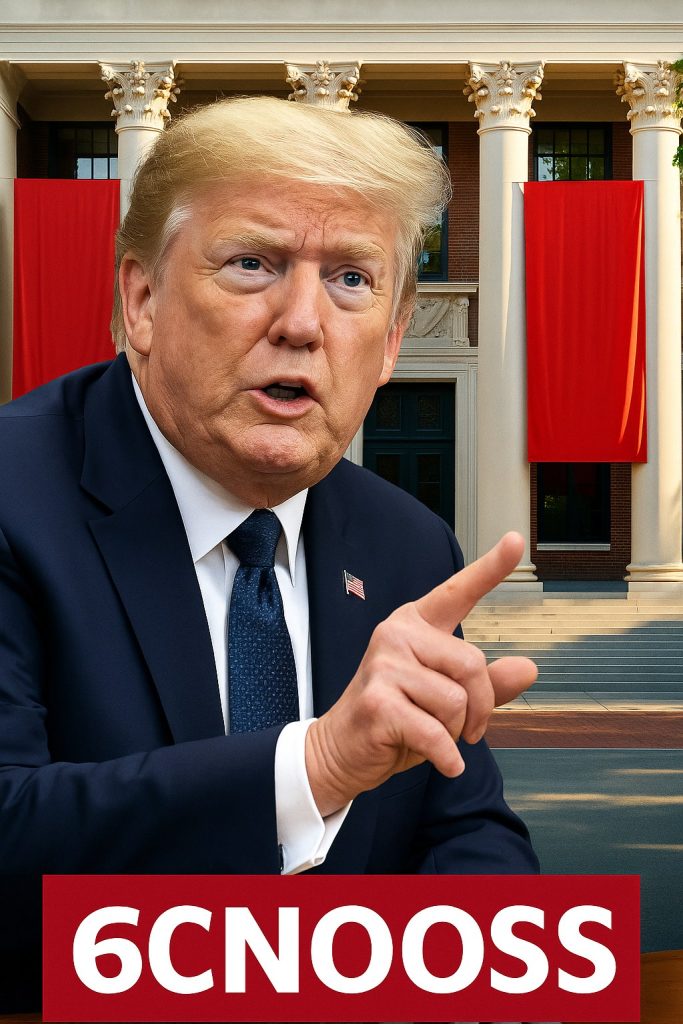
Former President Donald Trump’s recent proposal to allow up to 600,000 Chinese nationals to enter the United States on student visas has sparked fierce opposition from conservative groups, who argue the plan risks prioritizing foreign interests over American citizens and threatens the nation’s security.
According to the proposal details that have circulated in political and social media forums, the administration aims to significantly expand the number of Chinese students permitted to enroll in U.S. educational institutions. While proponents highlight this as a boost to cultural exchange and higher education revenue, conservative critics contend the move could have serious ramifications.
Key objections focus on several issues:
- National Security Concerns: Many conservatives warn that increasing the influx of Chinese students could be exploited by foreign intelligence operatives, given the ongoing tensions between the U.S. and China in cyber warfare and espionage. They caution that current vetting procedures may not sufficiently mitigate espionage risks posed by some students linked to Chinese state interests.
- Americans’ Job and Educational Opportunity: Opponents argue the plan essentially prioritizes foreign nationals over American students who face growing competition for limited educational resources and scholarships. They emphasize that U.S. citizens should come first when it comes to access to higher education and international student quotas.
- Economic and Social Impact: While some see foreign students as economically beneficial through tuition fees and living expenses, critics are worried about potential strain on local infrastructure and housing in university towns. They also express concerns about cultural integration challenges and the long-term impact on community cohesion.
Many conservative voices have called for a more balanced immigration policy that carefully weighs economic benefits against security risks and domestic priorities. They propose enhanced screening protocols and caps on visas specifically for nationals from countries seen as strategic rivals.
Supporters of the plan argue it reflects America’s tradition of educational openness and global leadership in intellectual exchange, pointing to decades of international students contributing to technological innovation and research excellence. They contend that blanket restrictions could hamper the U.S.’s position in the global academic arena and scientific collaboration.
The debate over this proposal unfolds amid broader tensions in U.S.-China relations, including trade disputes, military posturing in the South China Sea, and concerns over technological competition. Educational exchanges have historically been both a point of cultural diplomacy and a flashpoint for security discussions.
The Trump administration’s plan to admit hundreds of thousands of Chinese students this year has yet to be formalized into policy, but the discussion has illuminated deep divisions over immigration strategy, national security, and America’s role in an increasingly competitive world order.
As this debate intensifies, lawmakers and policy analysts will need to reconcile divergent priorities—protecting national interests without compromising America’s standing as a global education hub. The coming weeks are expected to bring further scrutiny and potential legislative responses regarding the scope and safeguards of the student visa program.