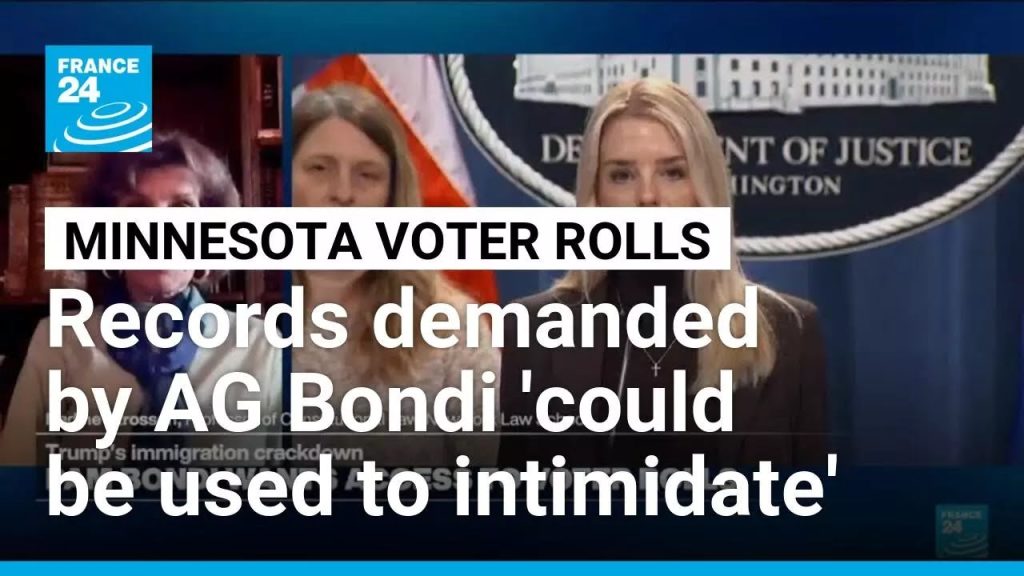
The recent development concerning Attorney General Pam Bondi’s request for Minnesota voter records has sparked significant debate and raised alarm among voting rights experts. A professor specializing in electoral processes warns that such voter rolls, if misused, could serve as tools of intimidation, potentially impacting voter participation and the integrity of elections.

Voter rolls are databases containing personal information about registered voters, including names, addresses, and sometimes party affiliations. While these records are generally public to ensure transparency in elections, their use has come under scrutiny due to fears that they could be weaponized against specific communities, suppressing voter turnout or creating undue pressure on individuals engaged in the democratic process.
The political backdrop of this situation is critical. Across the United States, election integrity and voter access have been focal points of partisan debates. Republican-led initiatives have at times sought access to voter data as part of investigations into alleged voter fraud, while Democrats and voting rights advocates emphasize the protection of voter privacy and caution against measures that could inadvertently disenfranchise eligible voters.
In Minnesota’s case, Bondi’s request for voter records aligns with a broader national pattern where state officials and political operatives pursue extensive voter information. Critics argue such requests may intimidate certain voters, especially minorities and marginalized groups historically vulnerable to disenfranchisement. Advocates emphasize the need for strict safeguards and transparency about how these records will be used to prevent abuse.
This episode contributes to the ongoing national conversation about balancing election transparency with voter protection. The dialogue underscores the importance of robust legal frameworks and vigilant oversight to maintain public trust in electoral processes while ensuring voters are free from coercion or intimidation.
Where to Learn More
- Brennan Center for Justice – Research and analysis on voting rights and election security
- CNN Politics – News coverage on election-related political developments
- The New York Times – Politics – In-depth articles on election laws and voting rights
- ACLU Voting Rights Project – Information on legal protections for voters
- Pew Research Center Politics & Policy – Data-driven insights on voter behavior and election issues