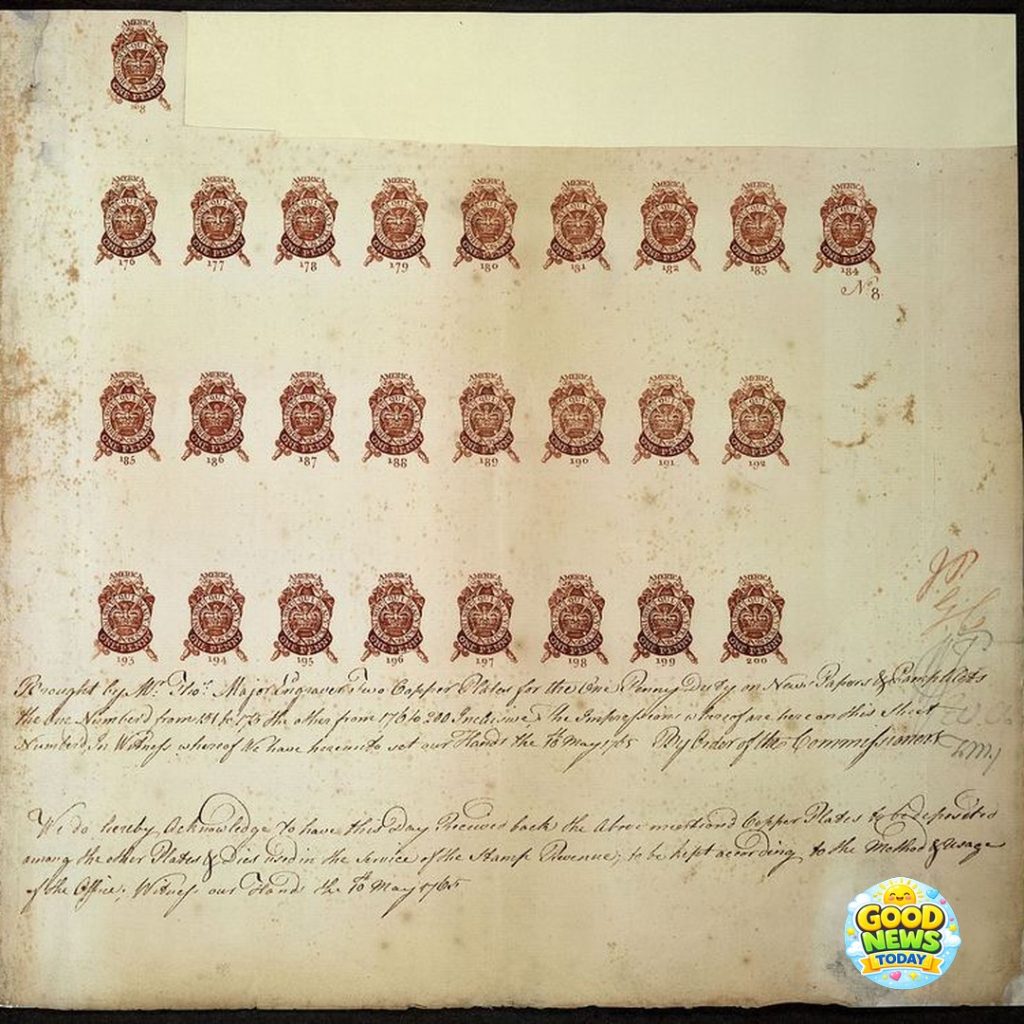
Today marks a significant milestone in history: 250 years ago, Great Britain lifted the Stamp Act of 1765, a decision that resonated deeply with American colonists who fiercely opposed it. This act imposed a direct tax on colonists and mandated that numerous printed materials be produced on stamped paper imported from London, complete with an embossed revenue stamp. Many colonists viewed this as an infringement on their rights as Englishmen, arguing that they should not be taxed without their consent—consent that should only come from their own colonial legislatures. Their rallying cry was clear: “No taxation without representation.”

The issue of taxation without representation sparked complex debates among the colonists. In British Parliament, it was suggested that colonists were similar to the approximately 90% of Englishmen who did not own property and were unable to vote. These individuals were claimed to be “virtually” represented by land-owning electors who supposedly shared their interests. However, this argument overlooked a vital distinction: the colonists had actual representation through their own legislative assemblies, and the core issue was whether these local legislatures, rather than Parliament, should hold the power regarding taxation decisions.
Opposition to this taxation principle was fierce, with Samuel Adams from Boston articulating the common American sentiment in May 1764. He stated: “If our Trade may be taxed, why not our Lands? Why not the Produce of our Lands & everything we possess or make use of? This we apprehend annihilates our Charter Right to govern & tax ourselves – It strikes at our British Privileges, which we have never forfeited, and we hold in common with our Fellow Subjects who are Natives of Britain. If Taxes are imposed upon us without our legal Representation, are we not reduced from the status of free Subjects to the miserable condition of tributary Slaves?”

In response to these sentiments, local protest groups formed Committees of Correspondence, fostering a network of resistance stretching from New England to Maryland. Protests and demonstrations grew in number, frequently spearheaded by the Sons of Liberty, and sometimes involved the hanging of effigies. As a result, all stamp tax distributors were intimidated into resigning, leading to a situation where the tax was never effectively collected and was soon repealed.
On this date, we also celebrate the 65th birthday of Mike Rowe, a beloved figure in American television. Renowned for his resonant voice and friendly demeanor, Rowe has hosted and narrated numerous long-running shows on networks such as Discovery and Nat Geo, including favorites like Dirty Jobs, Deadliest Catch, How the Universe Works, and Shark Week.

For fans of these programs, Rowe’s contributions, particularly as the host of Dirty Jobs and narrator of Deadliest Catch, are fondly remembered, showcasing the unique and engaging storytelling he brings to the screen.