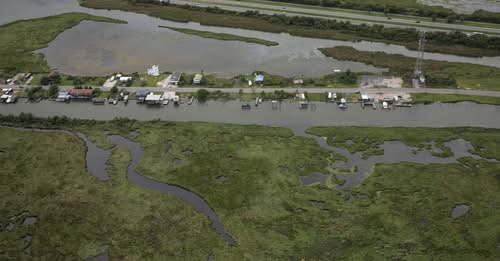
In a stark warning that has sent shockwaves through environmental and scientific communities, a recent study reveals that Coastal Louisiana has likely already crossed the point of no return in its ongoing battle against climate change and rising sea levels. This revelation underscores the urgency of addressing the rapidly accelerating threats to one of the most fragile and ecologically vital regions in the United States.
Louisiana’s coast, vital for its biodiversity, economic contributions—including oil, gas, and fishing industries—and cultural heritage, has long been an area of concern. Over recent decades, the region has experienced unprecedented land loss, with estimates indicating that the state is losing roughly a square mile of land every hour. The new study, conducted by prominent climate scientists, highlights that these losses are no longer simply reversible or manageable with current mitigation efforts.
The researchers employed advanced satellite imagery, geological surveys, and predictive modeling to analyze the pace of land subsidence, erosion, and rising sea levels. Their findings suggest that the natural and anthropogenic factors contributing to land degradation have pushed the region past a critical threshold—meaning restoration efforts may no longer be sufficient to prevent catastrophic consequences.
“This isn’t just a call for more conservation; it’s a warning that the tipping point has already been reached,” said Dr. Emily Hart, a lead scientist involved in the study. “The environmental, economic, and cultural impacts could be irreversible if we don’t take drastic and immediate action.”
One of the most alarming aspects of the report is the acceleration of land loss due to climate change. Melting glaciers, increased storm intensity, and rising sea levels compound the natural challenges facing Louisiana’s coast. The study projects that if current trends continue, large portions of the delta may be submerged within the next few decades, displacing thousands of residents and endangering vital ecosystems like the Louisiana Marshes and the Mississippi River Delta.
Local communities and policymakers are grappling with the implications of this dire prognosis. While some advocate for enhanced flood defenses and engineered barriers, many scientists warn that these measures may only serve as temporary solutions. Instead, the focus must shift toward reducing carbon emissions, restoring wetlands, and implementing sustainable land management practices.
President Joe Biden’s administration has announced initiatives aimed at coastal resilience, but critics argue that the urgency and scale of the problem demand more aggressive action. Meanwhile, residents along Louisiana’s coast are experiencing firsthand the tangible effects of land loss—home demolitions, increased flooding, and a sense of losing their heritage.
As this new study highlights an impending crisis, it serves as a stark reminder that time is running out. The question remains: will policymakers and the global community recognize the severity of the situation and act decisively to preserve what remains of Louisiana’s coastline? Or will this be another example of environmental decline that’s left to irreversible decline?