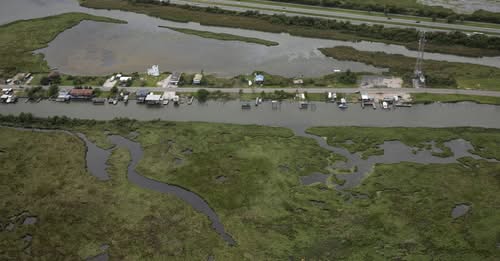
Scientists are sounding the alarm over the rapidly accelerating decline of Louisiana’s coast, with a recent study indicating that the region may have already crossed a critical tipping point. The findings suggest that the ongoing erosion and rising sea levels have pushed the area into an irreversible state, threatening not only local communities but also vital ecosystems and economic activities.
Louisiana’s coast has long been a delicate mosaic of wetlands, marshes, and barrier islands that act as natural buffers against storm surges and provide essential habitats for diverse wildlife. However, centuries of human activity—such as oil extraction, navigation projects, and levee construction—coupled with climate change-driven phenomena, have severely compromised these natural defenses.
The new study, conducted by a team of climate scientists and coastal researchers, employed advanced modeling techniques and extensive field data to assess the region’s current trajectory. According to the findings, nearly 50% of Louisiana’s wetlands have disappeared over the last 70 years. More startling is the conclusion that the rate of land loss has reached a point where natural recovery is no longer feasible, even if immediate conservation efforts are ramped up.
“Our models suggest that Louisiana has crossed the point of no return,” said Dr. Maria Gonzales, lead author of the study and a coastal geologist at the University of Louisiana. “What we’re witnessing is not just accelerated erosion, but a fundamental shift in the coastal landscape that now demands a rethinking of our approach to preservation and restoration.”
The implications are profound. The loss of wetlands exacerbates the vulnerability of coastal cities like New Orleans to hurricanes and flooding, and imperils countless livelihoods centered around fishing, tourism, and energy industries. Additionally, the ecological impacts threaten biodiversity, jeopardizing species that depend on these habitats.
While some experts have called for aggressive intervention through rebuilding barriers and restoring natural wetlands, the study emphasizes that the window for effective action has narrowed considerably. It advocates for a shift toward adaptation strategies focusing on resilience, including relocating vulnerable communities and investing in sustainable infrastructure.
President Joe Biden’s administration has acknowledged the urgency, pledging increased funding for coastal restoration projects. However, critics argue that ongoing policies have been insufficient to halt or even slow the region’s decline.
As Louisiana faces an uncertain future, the findings serve as a stark reminder of the cost of neglecting climate change and environmental stewardship. The question now is: can policymakers, scientists, and communities unite to adapt to these irreversible changes and safeguard what remains?