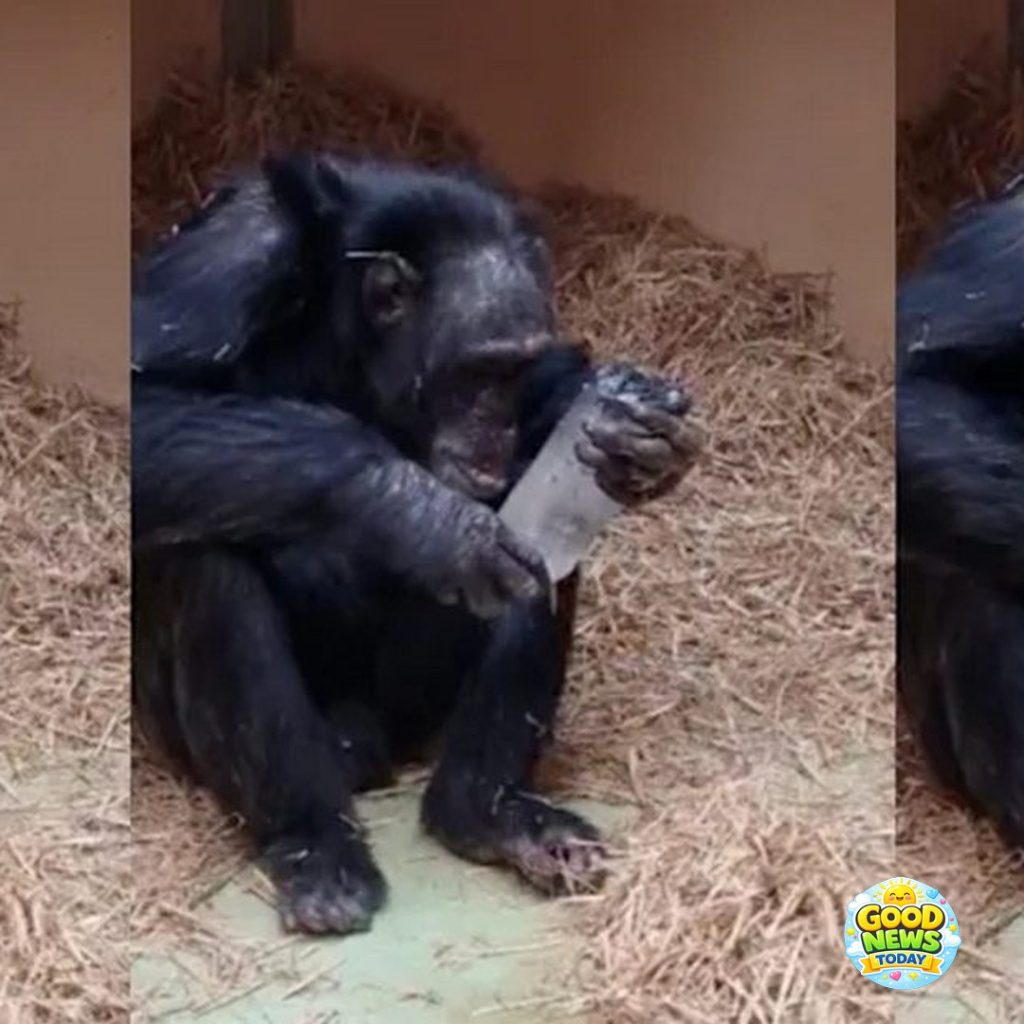
Recent research has uncovered that chimpanzees exhibit a clear attraction to crystals, demonstrating an interest in these shiny objects by wanting to keep them near their sleeping areas. These remarkable primates can easily differentiate between sparkling stones and those that lack luster.
The study aimed to delve into the roots of our species’ well-documented fascination with crystals, gems, and precious metals, raising intriguing questions about how far back this appreciation might extend in our evolutionary history.
While the findings should be considered with a touch of caution, they open up an exciting avenue for exploration into the origins of value. Many people have found themselves pondering the mystique of precious stones, especially when they hear of a diamond or ruby fetching a price comparable to a house. Why do these objects command such attention and value?
Even iconic investor Warren Buffet has famously remarked on gold, calling it merely “a shiny rock” and referring to it as “a barbarous relic.” Yet, the allure of such gleaming stones seems to transcend mere logic. This fascination has persisted not just throughout the 5,500-year history of gold as a form of currency but likely spans our entire existence.
Interestingly, archaeological evidence has shown that crystals were often found alongside hominin remains, revealing that our ancestors collected these stones for an astonishing 780,000 years. However, they did not utilize them as tools, weapons, or even adornments. This raises a compelling question: why were these stones so desirable?
To explore this mystery, a team of Spanish scientists conducted an experiment using nine encultured chimpanzees at a primate rescue center. “Encultured” refers to animals that have had significant interactions with humans, which is an important factor to keep in mind when interpreting the results. Nevertheless, the researchers were thrilled by the chimps’ apparent natural affinity for crystals.

According to lead author Juan Manuel García-Ruiz, a crystallography professor in San Sebastian, “We were pleasantly surprised by how strong and seemingly natural the chimpanzees’ attraction to crystals was. This suggests that sensitivity to such objects may have deep evolutionary roots.”
Considering that modern humans diverged from chimpanzees between 6 and 7 million years ago, we share a significant amount of genetic and behavioral traits. To investigate whether a fascination with crystals is one of these shared traits, the researchers introduced two groups of chimpanzees to a selection of crystals.
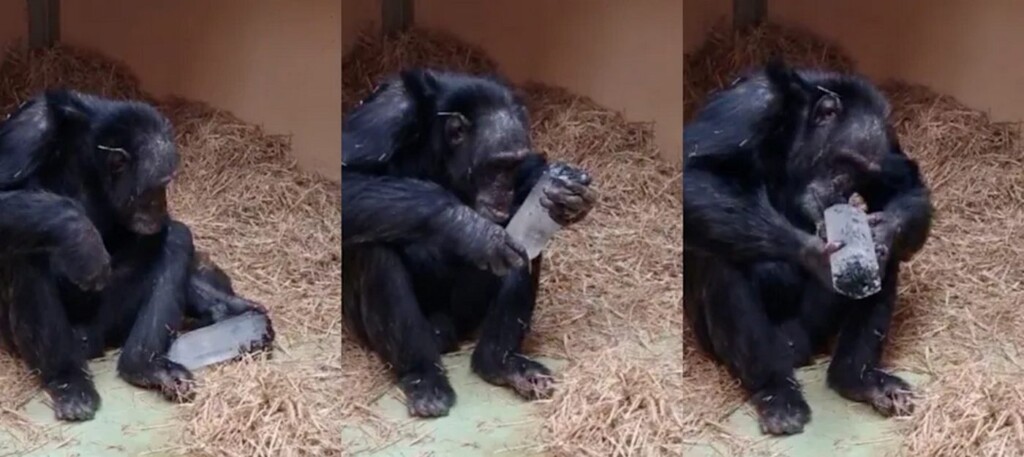
In the initial experiment, a large quartz crystal, dubbed the monolith, was placed alongside a regular rock of similar size. Initially, both objects piqued the chimps’ interest, but soon the crystal became the preferred choice. Once the chimps removed the crystal from the platform, they eagerly examined it, tilting and rotating it to view it from different angles. This exploration showcases the deep-rooted allure of these sparkling stones and hints at a shared heritage that may connect us with our primate relatives.