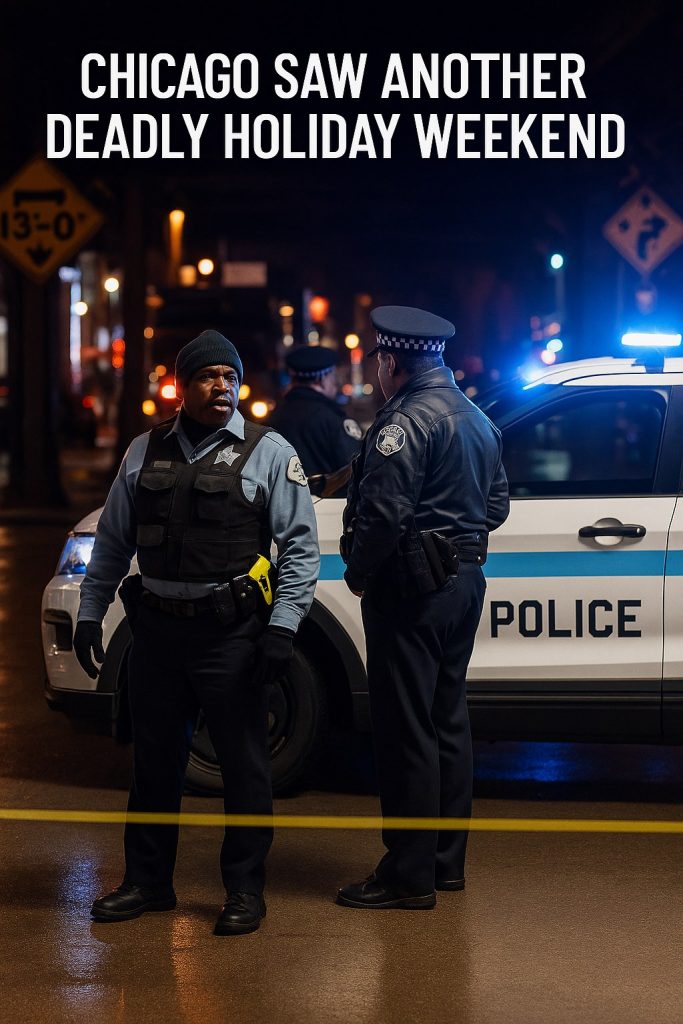
Chicago was once again gripped by violence over the recent holiday weekend, as the city experienced another surge in shootings and fatalities, underscoring ongoing concerns about public safety in America’s third-largest metropolis. Despite the tragic toll, Chicago’s Democratic leaders have continued to firmly reject calls for federal intervention, including offers of assistance from former President Donald Trump, maintaining that the city can and should handle its own crime challenges.
According to preliminary reports from city officials, more than a dozen people were killed and dozens more injured in shootings across Chicago from Friday through Sunday. The spike in violence marked yet another sorrowful chapter in what has been a disturbingly persistent pattern of holiday weekend bloodshed in the city.
The recent weekend’s casualties have reignited a national conversation about how best to address Chicago’s endemic gun violence. While some voices, including former President Trump, have publicly urged for increased federal support—including deployment of federal agents and enhanced law enforcement resources—Chicago’s top Democratic officials have repeatedly dismissed these overtures.
Mayor Lori Lightfoot emphasized in a statement that federal involvement has historically failed to produce sustainable results and asserted that city and state agencies, along with community organizations, are best positioned to develop long-term solutions tailored to Chicago’s unique challenges. “Chicago is not a problem to be solved by federal law enforcement boots on the ground,” Lightfoot said. “We need comprehensive social and economic strategies alongside smart policing, not a heavy federal hand.”
Similarly, Illinois Governor J.B. Pritzker has expressed skepticism about the effectiveness of federal law enforcement deployments, pointing to the need for greater investment in violence prevention programs, mental health services, and economic development initiatives that address root causes of crime. Both leaders have urged Washington to focus federal funding on these community-based strategies rather than direct policing measures.
This stance contrasts sharply with claims from some conservative commentators and politicians who argue that Chicago’s Democratic leadership is either unwilling or unable to combat violent crime, and that federal help is urgently needed to curb the escalation. The tensions highlight the broader national debate over gun violence policies, city autonomy, and federal intervention in local law enforcement matters.
Experts note that Chicago’s violence is a multifaceted problem linked to factors such as systemic poverty, gang activity, limited educational opportunities, and gaps in social services. They warn that while increased federal resources might provide temporary relief, sustainable reduction in violence requires holistic approaches involving multiple stakeholders, including law enforcement, local government, community groups, and residents themselves.
The debate also extends into the political arena, as the city’s handling of crime has become a flashpoint in upcoming elections and national conversations about public safety. Both supporters and critics of Chicago’s current leadership continue to weigh the balance between local control versus federal assistance, reflecting broader divisions about how best to protect urban communities from violence.
In the aftermath of the deadly weekend, calls for peace and unity have emerged from civic leaders, faith groups, and neighborhood organizations seeking to break the cycle of violence. As Chicago mourns its losses, the city faces mounting pressure to implement effective reforms that not only address immediate safety concerns but also foster long-term resilience.
Chicago’s deadly holiday weekend serves as a stark reminder of the challenging path ahead. Whether through coordinated community efforts, enhanced law enforcement strategies, or targeted policy changes, the quest for safer streets in Chicago remains a critical and urgent mission.