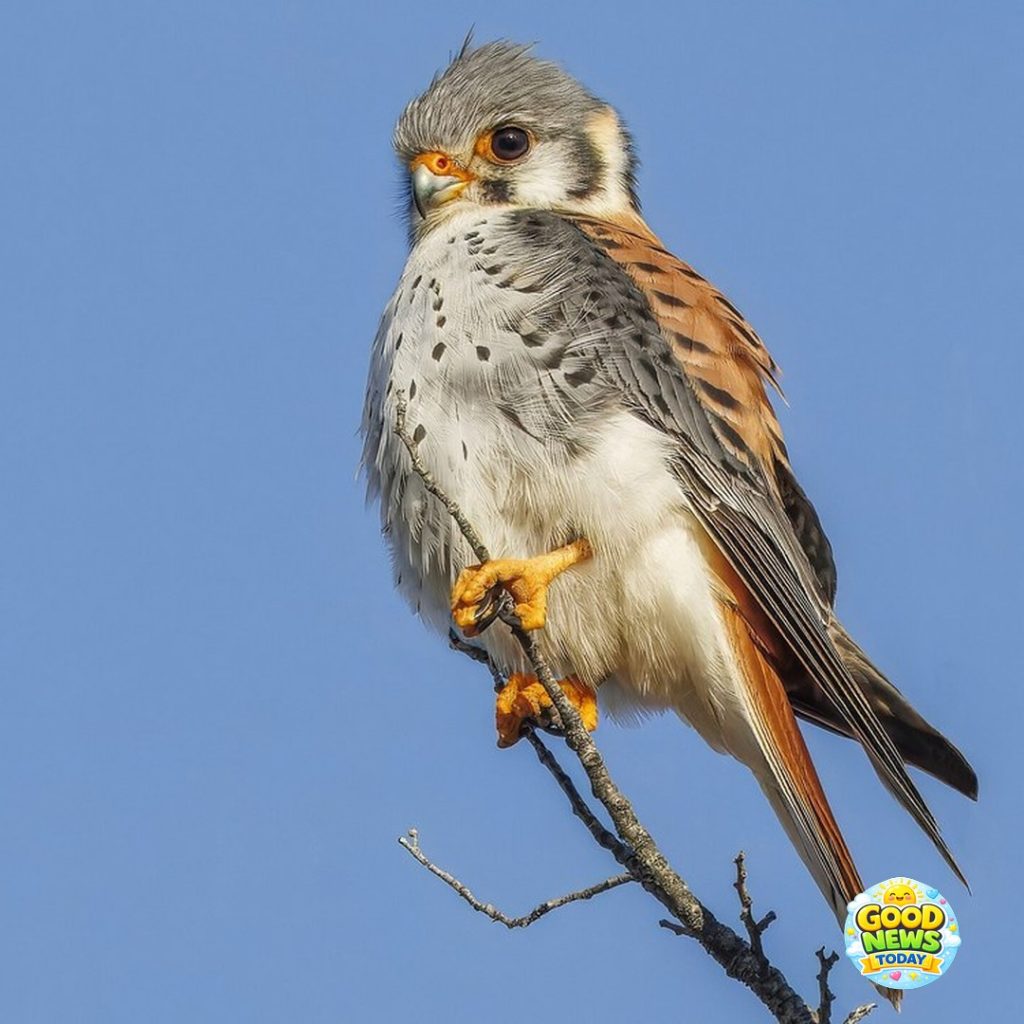
The American kestrel is truly a sight to behold. With its striking back adorned in pheasant rust and elegant black bars, coupled with wings of battleship grey speckled with white dots, it captivates birdwatchers everywhere. This small yet magnificent falcon is not only visually appealing but is also playing an important role in pest control for cherry orchards in Michigan.
A recent study conducted by Michigan State University in the Upper Peninsula has revealed that encouraging American kestrels to nest within cherry orchards significantly helps in reducing pest issues, leading to a decrease in crop loss. Additionally, this approach is contributing to safer fruit for consumers by minimizing the risk of foodborne illnesses that can be transmitted through contaminated fruit.
Kestrels are particularly effective at deterring pesky rodents and small fruit-eating birds, which are often responsible for damaging crops. “Kestrels are not very expensive to bring into orchards, but they work pretty well,” explains Olivia Smith, the lead author of the study and an assistant professor of horticulture at Michigan State University. “And people just like kestrels a lot, so I think it’s an attractive strategy.”
The research team hypothesized that by keeping fruit-eating birds at bay, the likelihood of avian pathogens contaminating the fruit would decrease. Their findings supported this theory, showing an impressive 81% reduction in crop damage, such as missing fruit and bite marks, alongside a 66% decrease in bird droppings on the trees.
Brad Thatcher, a farmer from Washington state who has welcomed kestrels to his April Joy Farm for over 13 years, shared his observations: “I’ve noticed a difference having the kestrels around, hovering over the spring crops. There’s very little fecal damage from small songbirds at that time of year versus the fall.”
In a world where cherry and fruit farmers face numerous challenges, from unpredictable weather to labor shortages, the presence of these perching birds has been a significant concern. In fact, losses from bird-related damage amount to a staggering $85 million annually in major agricultural states like Michigan and California.
Farmers have resorted to various methods to combat this issue, including chemical repellents, lethal shooting, trapping, hanging nets, visual and auditory scare tactics, and even clearing nearby forested areas.
However, the study found that kestrels not only outperformed these traditional methods but also helped lower the presence of Campylobacter, a common foodborne pathogen associated with bird droppings. In orchards equipped with kestrel nest boxes, the pathogen levels were significantly lower, at just 0.97%, compared to around 10% in orchards without these feathered guardians.
With such a positive impact, the American kestrel is not only a beautiful addition to the orchards but also a fantastic ally in ensuring the health and safety of our food supply.