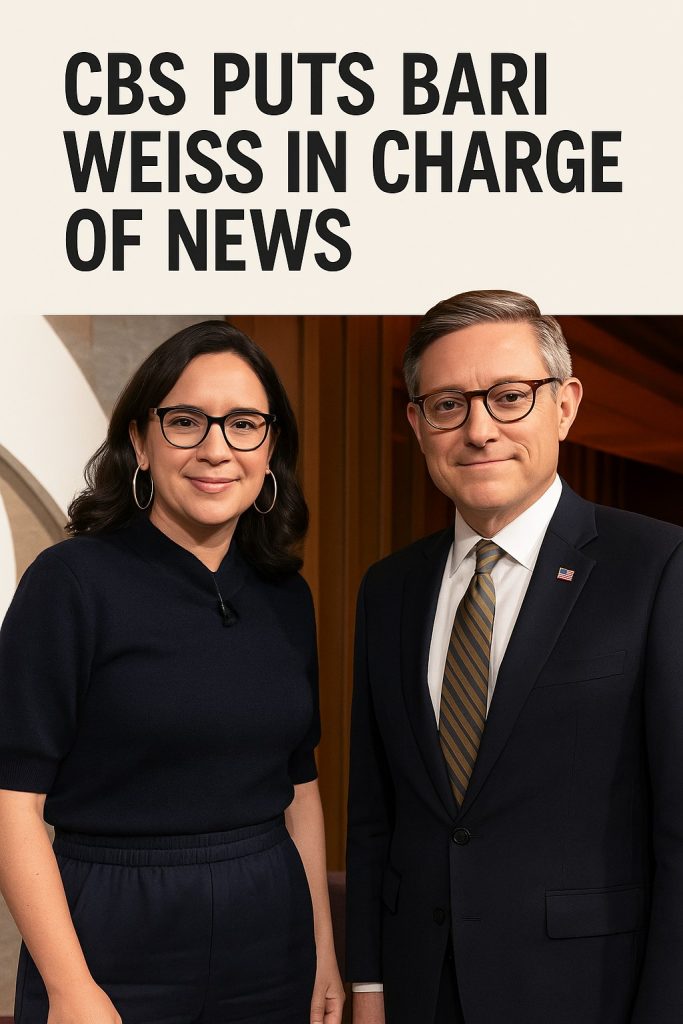
In a bold and controversial move, Paramount and Skydance have decided to acquire the Free Press, simultaneously handing over the reins of CBS News to Bari Weiss. This development has sent shockwaves through the journalism community, raising serious questions about the network’s commitment to factual reporting.
Weiss, a prominent figure known for her staunch criticism of “woke” culture, has built a career on discussing grievances rather than substantive issues. Critics argue that appointing her as the head of CBS News signals a dramatic shift in the landscape of mainstream media—one that prioritizes sensationalism and outrage over robust, fact-based journalism.
The decision is perceived by many as a troubling recognition that established media outlets are abandoning their commitment to presenting the unvarnished truth. Instead, CBS seems intent on adopting a model reminiscent of Fox News, where loud opinions often drown out objective reporting. This pattern has many viewers fearing that they will receive hot takes loaded with bias rather than informed observations grounded in reality.
Under Weiss’s leadership, critics anticipate the network will focus more on issues that pander to conservative audiences while marginalizing traditional values of journalism. Many believe her elevation embodies a disturbing trend toward prioritizing feelings over factual reporting, risking the role of the press as a reliable watchdog in democratic society.
Weiss has frequently dismissed advocacy for social justice as overreactions and has labeled movements she disagrees with as threats to intellectual freedom. This approach has ignited concern that CBS News, which once served as a bastion of serious journalism, is instead embracing a sensationalist culture that sensationalizes outrage while diminishing the importance of context and factual integrity.
Critics argue that in this new corporate media climate, where sensationalism prevails, long-standing values such as reliability, transparency, and accountability are being sacrificed at the altar of ratings and audience engagement. Viewers who have historically relied on major networks for honest news coverage are now facing the stark reality of being fed narrative-driven content designed to provoke rather than inform.
This shift, as lamented by numerous industry experts and journalists, serves as a dire warning for the future of news consumption. When corporate owners deliberately pivot toward an entertainment model that prioritizes self-righteous grievance and manufactured outrage, they fail to uphold the crucial standards of journalism that democracy depends upon. As traditional media loses its footing in objectivity, it raises a fundamental question: can we still trust news outlets to serve the public interest?
The move towards a narrative-driven, emotionally charged media landscape is not just ethically irresponsible; it is a retreat from the very principles that the press was established to guard against. As the audience begins to question the integrity of mainstream reporting, the consequences may reach far beyond evening news broadcasts. Journalism’s role as a pillar of democracy hangs precariously in the balance, prompting urgent calls for a reevaluation of what we deem acceptable in the pursuit of truth.
Where to Learn More
- Media Consolidation: The Flight from Facts? – The New York Times
- Bari Weiss and the Dangers of Sensationalism – The Washington Post
- Is Mainstream Media Losing Its Grip on Objectivity? – The Atlantic
- Journalism in Crisis: A New Era of Reporting? – CNN