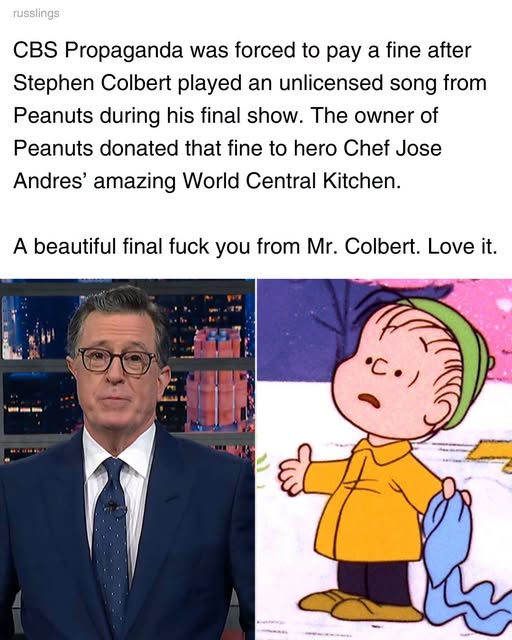
In a surprising turn of events, CBS has been hit with a significant fine after comedian and late-night host Stephen Colbert played an unlicensed song from the beloved Peanuts franchise during his final show. The incident has sparked widespread discussion about intellectual property rights, copyright enforcement, and the influence of iconic media properties.
The controversy began when Colbert chose to feature a nostalgic piece from the Peanuts soundtrack in a segment that celebrated his tenure on the network. The song in question, which is famously associated with the classic animated specials, was played without obtaining proper licensing from the rights holders. As a result, CBS was swiftly fined by copyright enforcement authorities.
The owner of the Peanuts franchise, Charles Schulz’s estate and company, reportedly took action to protect its intellectual property rights. It was revealed that the Peanuts estate had donated the proceeds from the fine to charity, emphasizing their ongoing commitment to preserving the integrity of the franchise and supporting various charitable causes.
This incident brings to light the ongoing debate surrounding music licensing in television and entertainment media. While many creators and broadcasters aim to evoke nostalgia and cultural touchstones, they are also bound by strict copyright laws designed to protect original creators’ rights.
The fine itself, although not disclosed in detail, serves as a reminder to producers and media giants about the importance of securing proper licenses before using copyrighted content—especially when involving iconic properties such as Peanuts. CBS has publicly acknowledged the oversight and expressed regret over the incident, stating that it was unintentional and has taken steps to ensure stricter compliance moving forward.
This case also underscores the legacy and influence of Peanuts, which continues to resonate with audiences of all ages decades after its debut. Its owner’s donation of the fine highlights how the franchise’s cultural impact extends beyond entertainment, playing a role in charitable endeavors and intellectual property advocacy.
As copyright enforcement becomes more stringent, content creators, broadcasters, and artists are urged to be vigilant in securing the necessary permissions to avoid similar disputes. The incident serves as a cautionary tale that even well-meaning tributes or nostalgic references can lead to legal complications without proper licensing.