
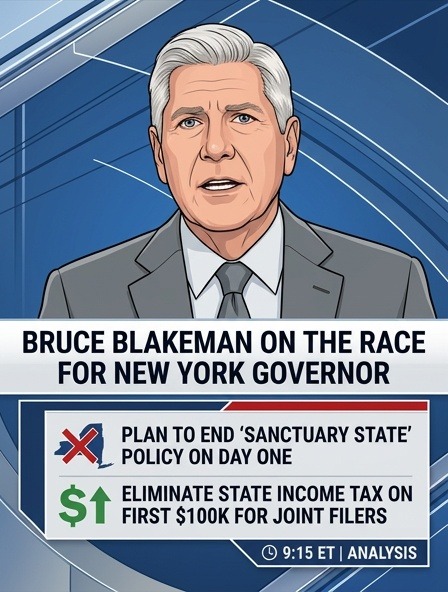
In a bold move sparking widespread attention, New York State Republican leader Bruce Blakeman has declared that on his first day as governor, he will take decisive steps to reshape the Empire State’s approach to immigration and tax policy. Addressing a passionate crowd, Blakeman announced, “On day one, when I become governor, we are no longer a sanctuary state.”
This statement sets the tone for Blakeman’s aggressive agenda aimed at reversing what he describes as excessive migrant spending and restoring fiscal responsibility. Critics have long accused New York’s sanctuary policies—designed to protect undocumented immigrants from federal immigration enforcement—as encouraging illegal entry and imposing significant burdens on state and local resources. Blakeman’s promise signals a sharp departure from current policies under Gov. Kathy Hochul, who has maintained New York’s stance as a welcoming refuge for immigrants.
Taking a direct swipe at the state’s financial policies, Blakeman unveiled a comprehensive plan to put more money back into taxpayers’ pockets. His centerpiece proposal is to eliminate the state income tax on the first $100,000 earned by joint filers, a move designed to stimulate economic growth and provide relief to middle-class families struggling with rising living costs.
“We need to change our immigration policies to prioritize the safety, security, and economic stability of New Yorkers,” Blakeman stated. “And we must reduce the tax burden that discourages investment and drives talented people and businesses out of the state.”
This dual-pronged approach aims to attract more residents and businesses, while simultaneously curbing what Blakeman calls ‘irresponsible’ spending on migrations and social programs. His plans have already ignited a political firestorm, with supporters praising the focus on fiscal discipline and opponents criticizing what they see as an overly aggressive stance on immigration.
Blakeman’s vow to end New York’s sanctuary status is part of a broader national debate about immigration policy and state sovereignty. Conservative leaders argue that sanctuary policies incentivize illegal crossings and strain public services, while advocates contend that such policies promote inclusivity and compassion for vulnerable populations.
As the campaign heats up, all eyes will be on Blakeman to see whether voters favor his bold promises or favor the status quo. His proposal for tax cuts, if enacted, could significantly alter New York’s economic landscape, making it more competitive for businesses and families seeking affordability and safety.
It remains to be seen how Governor Hochul responds, but Blakeman’s declaration underscores a pivotal moment in New York politics—a push to fundamentally redefine the state’s identity on immigration and fiscal policy from the very first day of his potential administration.