In the charged atmosphere of American politics, leaving a political identity—especially one as polarizing as MAGA—can be a fraught experience. A recent viral social media comment highlighted a perspective that resonates with many: it’s not just the ideology itself that makes departure difficult, but the intensity of backlash from the opposing political side.
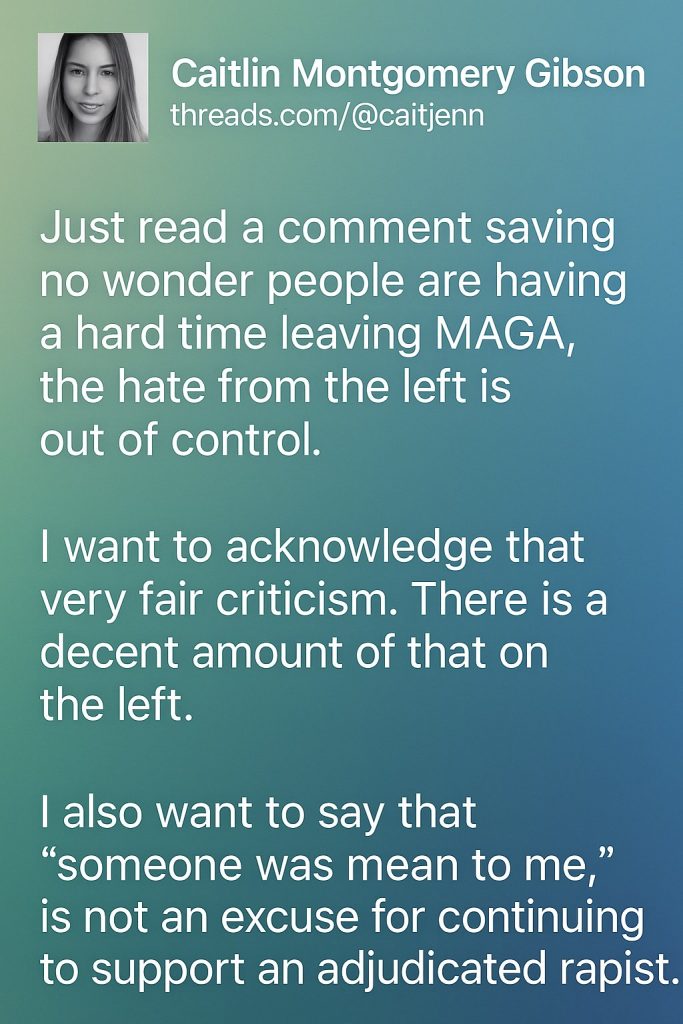
The comment, shared by Caitlin Montgomery Gibson on Threads, succinctly captures a nuanced reality: “No wonder people are having a hard time leaving MAGA, the hate from the left is out of control.” This statement has sparked widespread discussion about the social and emotional challenges involved when individuals attempt to change their deeply embedded political beliefs.
Why is this dynamic so challenging? Political identities are often linked with community, personal values, and social belonging. When someone tries to exit these groups, they risk alienation not only from their former political allies but also can face harsh judgment or vitriol from the opposing side. As online discourse becomes increasingly polarized, the space for open, respectful dialogue shrinks, leaving many feeling trapped.
Experts in political psychology suggest that most political identities function similarly to social tribes. Leaving such a tribe is akin to undergoing a form of social exile. It requires not only a change of mind but also navigating emotional and social repercussions. This is compounded by a digital era where social media platforms magnify conflict, and hostile exchanges can become viral, fostering an environment of fear and hostility.
Moreover, the right-left divide in the U.S. has grown so contentious that expressions of empathy or understanding toward former MAGA supporters can be rare. This often results in individuals who wish to distance themselves from former beliefs being met not with support, but with suspicion or condemnation. Such experiences deter many from publicly acknowledging any change in their political views.
Social media platforms can both help and hinder this process. They provide communities where people can express nuanced views; however, they also amplify the loudest and often angriest voices. This paradoxical situation complicates political transformation. People report feeling “stuck” in their chosen political camps, fearing backlash that could affect their social relationships, employment, or overall mental health.
In response to this climate, some former MAGA supporters and political moderation advocates have called for more compassionate conversations and less demonization across the political spectrum. By fostering understanding, these voices hope to break down barriers that discourage ideological change and growth.
The conversation sparked by Caitlin Montgomery Gibson’s post acts as a timely reminder: Political discourse is not just about policies or parties—it’s about human beings who crave respect and understanding, even as they reassess their beliefs.
As the nation continues to grapple with deep divisions, creating safe spaces for dialogue and encouraging empathy might be key steps toward healing and progress.
Where to Learn More
- Why Political Polarization is So Hard to Overcome – The New York Times
- How Partisan Antipathy Fuels Political Division – Pew Research Center
- The Psychology Underlying Political Tribes – Psychology Today
- Political Tribes Are Fueling Polarization: Here’s How We Break Apart – Brookings Institution